Showing posts with label Galaxy's Edge. Show all posts

Tuesday, August 28, 2018

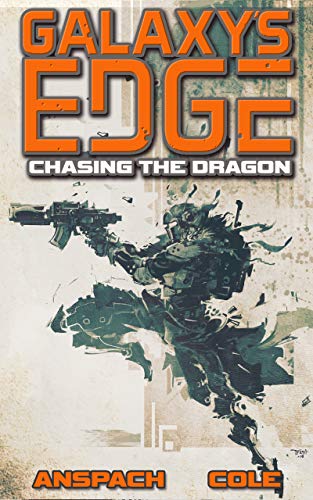
Chasing the Dragon

Just finished the latest Galaxy's Edge book, Chasing the Dragon.  It's book two of Contracts and Terminations, the spin-off series that is "prequel" in nature, dealing with the exploits of Tyrus Rechs that predates his appearance, of course, in book 2 of the Galaxy's Edge main series.

I also pre-ordered the last Galaxy's Edge main book yesterday.  Retribution is its title, and it says something new in the description; that it's the end of Season 1 rather than of the series overall.  Which isn't surprising, but it's new and it's not something that I'd been aware of before.

And I've got a slight bone to pick with Chasing the Dragon, quite honestly.  Near the end of the book, and this is hopefully not spoilerish to say, Rechs' big task that he takes on is preventing a war, because war is terrible.  While of course war is terrible, the people threatening war are enslaved by the Republic, really—under its boot heel completely.  And they want to go to war to regain their right to self-governance and to assert their right to sovereignty.  In other words; the cause of the people that Rechs wants to stop are more sympathetic than Rechs' goals himself are.  Anyone who's the descendant of an American Revolutionary who doesn't understand that... mystifies me, I have to admit.  A few quotes from the 16 Points:
5. The Alt Right is openly and avowedly nationalist. It supports all nationalisms and the right of all nations to exist, homogeneous and unadulterated by foreign invasion and immigration. 
15. The Alt Right does not believe in the general supremacy of any race, nation, people, or sub-species. Every race, nation, people, and human sub-species has its own unique strengths and weaknesses, and possesses the sovereign right to dwell unmolested in the native culture it prefers. 
16. The Alt Right is a philosophy that values peace among the various nations of the world and opposes wars to impose the values of one nation upon another as well as efforts to exterminate individual nations through war, genocide, immigration, or genetic assimilation.
To someone who believes in those principles, the idea that "war should always be avoided" doesn't make a lot of sense.  Now, the guy who's trying to start the war does so for his own reasons that are not necessarily related to securing the sovereignty of the... other nation involved, but that's an angle that if we're meant to accept that, is insufficiently explored to be convincing.

But that's a relatively minor quibble.  Or, well, maybe it's not, but it's not sufficient to affect my enjoyment of the series, I guess.

Friday, August 10, 2018

Galaxy's Edge

After getting a very late start, I'm now 40% done with Requiem for Medusa, the Tyrus Rechs prequel spin-off series.

That makes eight main-line Galaxy's Edge novels (so far; at least one more to go), one spin-off prequel detailing the rise of Goth Sullus, and one spin-off novel about Tyrus Rechs, with another announced (I've already pre-ordered.)  So that makes ten novels currently available with an eleventh due later this month.

Amazon calls the series mil-sci-fi, and I suppose often it is, but my favorite stuff is the skulduggery.  Crime and intrigue, etc.  Either way, it's space opera the way nothing since the original Star Wars movie has been able to be in the mainstream, and which you can only now find by pulling up old stories (older than I am by a generation or two) or reading from indie authors.  Sci-fi has never been this bad.  Which creates quite the opportunity for indie authors to find a market that's literally starved for what they want.

Anyway, this is my semi-regular plug for Galaxy's Edge; if you like Star Wars the way it used to be and the way that it should be, then Galaxy's Edge was written for you.  Go get the first book, Legionnaire, as quickly as you can and read it.  There isn't a single one of these books that I haven't enjoyed.  I'm loving the Tyrus Rechs spin-off series too (although admittedly Rechs isn't as charismatic a character was Wraith, he's more interesting on other ways.)  I'm really curious what Jason and Nick have in store for us readers down the line.  Rumors of spin-off novels authored by others, and a Savage Wars series all abound.  Can't wait.

Tuesday, May 01, 2018

Space opera vs sword & sorcery vs planetary romance


I sometimes read author blog posts and listen to their podcasts and stuff like that.  I've been particularly impressed with material that has come from Jason Anspach and Nick Cole—not only their work (the Galaxy's Edge series) but also their sales model and their discussions about how and why it works.  Cole seems to be more the "face" of the pair in terms of speaking up more as a podcast guest, etc.  I don't think that means that he's necessarily the leader of the pair, merely that by personality he's more suited to be the PR face.  So much of what I'm going to say is kind of taken from Cole's interviews and blog posts.  Although he also is pretty quick to admit that much of what the two of them do is little more than example of the Richard Fox method of selling on Amazon.

One key aspect of the Richard Fox method of selling is understanding Amazon's algorithm of finding potential buyers.  And for books, that means that when you launch a book, particularly if it has any success, you pretty much need to continue to release books in that same vein, and you pretty much need to do so very frequently.  The algorithm is actually bad for selling unless it concentrates on "power buyers" of a particular type of book.  What's the example Cole uses?  If you write a how-to book on gardening and then you write a space opera fiction, all you're doing is confusing the algorithm.  If you do that, then you need to sell them under different author names, really, so that the algorithm doesn't try to tie the two of them together and market your gardening book to people who want to buy space opera and vice versa.  However, because you also need to be very prolific and continue to add new releases at a pretty steady schedule—once every 60 days or so (once a month would be even better for the algorithm) what this effectively means is that if you hope to have any success with selling on Amazon utilizing its algorithm to help you find sales—and it does work quite well if you do it right, but if you don't, you'll be one of thousands of one-off books lingering out there with practically no attention—then you need to be concentrated and focuses on a single type of book.

Here's the rub for many authors.  Writers who write, for example, Star Warsian space opera also tend to love vaguely Lord of the Ringsian fantasy.  What if you want to write sword & sorcery and space opera?  You have to either give up any notion of reaching large audiences, or be so prolific that you're writing a new book every three weeks or so so that you can alternate between the two, selling them under different pen names.  This, needless to say, stretches the limit of practicality for most would-be writers (which is what I am, a would-be writer).  So hard decisions need to be made about what exactly to write.  Let's look at the (relatively narrow) spectrum of what I'm interested in, and see if we can come up with an area where I should focus?

Space Opera
By this, I don't just mean adventurous science fiction, but actual fantasy in space a la the Star Wars franchise.  I'm not only perfectly OK with the notion of space wizards, but I actually really quite like the idea and gravitate to it naturally.  My own AD ASTRA setting would be what I would work on here; a setting that originally was a deliberate attempt to get at Star Wars with the serial numbers filed off, but which has since evolved an identity its own.  (By this I don't mean to imply that it's innovative or unique; merely that it's obviously not just a Star Wars rip-off.  It rips off Traveller and Warhammer 40k just as much.  Not that all three of those weren't obviously ripping off all kinds of other, older space opera, much of which I'm also familiar with directly.)

What are some obvious advantages of working in this genre?
  • Lots of exotic locations.  If I don't think a fantasy location is exotic enough, I can always just fly the characters to another bizarre planet where they can have all kinds of crazy things happen to them.
  • Lots of exotic aliens.  Fantasy has its aliens too, so to speak, but elves and orcs and whatnot (or "original" analogues that actually fit those same archetypes) have a more folkloric background rather than space alien background; it seems like the door is much more widely open in this genre for truly unique and unusual aliens.  Not that we often actually get aliens that are truly unusual and unique.  But the expectation and what the audience will accept without saying to themselves, "hey, that doesn't fit this kind of work" is wider.
  • Technobabble gobbledygook can solve all kinds of plot problems if I need it to, or just add plot conveniences.
  • Thanks to Star Wars a comic books and whatnot, the tropes of this genre are pretty much as familiar to most people as those of fantasy.
  • The genre is flexible enough to accept just about any type of story.  You want Cold War spy thrillers?  You can do it.  You want hardcore military fiction?  You can do it.  You want a Western?  A noir mystery? A zombie outbreak?  Giant Godzilla-style monster story?  You can do any of those
Sword & Sorcery
I actually prefer actual sword & sorcery to stuff that more closely resembles high fantasy, but in this case, I'm not splitting genre hairs; I mean fantasy adventure with swordfighters and whatnot.  This obviously can contain fantasy monsters, fantasy races and magic—although I prefer to make all of those elements a little bit more muted than some other works, and therefore build them up to have a bigger impact when they do appear.  

As I've said many times in the past, quite honestly, I prefer an almost dark fantasy vibe.  A combination of supernatural horror and fantasy adventure rather than a closer focus on one vs the other.  Robin Hood and Ragnar Lodbrok hunting Dracula through the streets of early Medieval London is kind of what I have in mind here.  While it generally doesn't have the flexibility of space opera in terms of types of stories that can be told, you can still do a lot.  What you give up in terms of flexibility, you gain in terms of cultural resonance.  So what are the advantages of sword & sorcery?
  • Familiar and comfortable setting with great cultural resonance that readers love to explore
  • Ability to add threats that are visceral because they come from a resonant place of folklore, mythology and psychology.
  • Everybody loves the traditional concepts that make up the backbone of most fantasy settings.
  • If I had to pick between space opera and sword & sorcery just based on which genre I like better, this one wins by a hair.  While that seems like this whole discussion is knocked off there, that's not exactly true.  I like space opera nearly as much, and I can do different things with it.  But it may be true that if I do space opera, I'll eventually regret and resent it because it keeps me from sword & sorcery.  Of course, the reverse might well be true too.
Planetary Romance
On the surface, planetary romance would seem to split the difference.  It's kind of like space opera on one planet, with super-science nonsense replacing magic.  Also; my second favorite book of all time is planetary romance (is, in fact, the prototype for all planetary romance.  I'm referring, of course, to A Princess of Mars by Edgar Rice Burroughs.)  I'm also a huge fan of good Flash Gordon material, and I good, I mean the original Alex Raymond stuff, or pastiche that gets the tone and feel correct.

However, I doubt I could really do this.  Planetary romance is kind of a moribund genre, structured in such a way that it almost requires (although there are exceptions, even on Barsoom) the fish out of water character (usually from Earth) who serves as part tour guide part self-congratulatory back-pat, because he always has some advantage over the natives.  And I have no idea what the audience is for new entries in this genre; probably not a lot.  It's too bad, in many ways, because if you did it more like sword & sorcery except with some wahoo technology and truly alien wildlife and settings sometimes, it could be really fun.

Conclusion
I don't have one.  I'm still waffling on whether a dark fantasy or a space opera setting is more up my alley at the moment.  And for that matter, for many moments to come, because once I pick one and start really working on it, I'm stuck with it for a while.  Of course, that assumes that 1) I actually do pick something and start working on it in a meaningful way, as opposed to the intermittent dabbling that I do now, and 2) I actually strategically try to use the Amazon algorithm to boost my sales.  Which, if I'm doing this for fun rather than because I seriously want to supplement my day job income, is not necessarily a given.

Anyway, I threw an image of both types in, just for the heckuvit, although the sword & sorcery one is almost caricaturish, and the space opera one belongs to well-known existing franchises.

Tuesday, February 06, 2018

Goth Sullus stand-alone novel

So, I recently started reading the Goth Sullus stand-alone novel, a spin-off of the Galaxy's Edge series, called Imperator.  Goth Sullus is (so far) the only character who can use TheForceNotTheForce in this StarWarsNotStarWars—although there are clear indications that that's going to change soon; Wraith's HologramNotHologram (OK, I'm probably over-using that meme by now) Ravi is all set to teach the little girl how to use the LightSideNotLi...  Well, you know what I mean.

I think it's interesting the approach that Anspach and Cole took with their ersatz Force.  Rather than it being something like the chi in a Japanese karate game, where all kinds of characters can throw fireballs at each other while karate-fighting, or whatever (which is in most respects, a closer analog to the Force in Star Wars than Western magic), it's more like The Ring.  Only one person can use it, and it corrupts him to use it.

Whether the same will be true for Prisma Maydoon, and what exactly is the story with Ravi anyway, of course, remain TBD, at least to the audience, although I expect the authors have a plan for that specifically.

No, but what I really want to talk about is how it occurs to me that there isn't any point in explaining your Fake Force, I think.  Cole has talked about that before in some podcasts and elsewhere; the idea that you don't need to explain stuff that is already a cultural touchstone by now.  How do spaceships travel the vast distances of space?  Who cares?  They do.  They did in Star Wars.  They did in Star Trek.  They did in every freakin' space opera that anyone's ever read, seen, or heard about, and given the cultural ubiquitousness of Star Wars by now, it doesn't need to be explained.

Magic, even less so.  It goes back much longer than space travel as a cultural touchstone, and all Uncle Owen had to do was call Ben Kenobi an old wizard, or that one Death Star officer call out Vader's "sorcerous ways" for us to get the point.  Now, granted, it may be unexpected to have magic and space travel in the same story, but not really.  It's very easy to get over that, and with the exception of the movement in science fiction to brand all non-hard science fiction as not science fiction—a movement pioneered by a bunch of butthurt soyboys who resented the jocks for not acknowledging their superiority due to their alleged greater intelligence, mostly—nobody much has much cared about having magic in space before.  The literature of imagination isn't limited to men with screwdrivers, just as it isn't limited to hippies who believe that they're out of their proper place in some temporal stream.  Most people love good adventure stories with all kinds of exotic and interesting things to see; and this isn't just a feature of the pulps; literally almost all of literature prior to the modern age is made up of this exact same kind of story.  In fact, our rejection (at a higher, generic cultural level) of the stories of confident heroes boldly striding through exotic and dangerous foreign climes and conquering them with a combination of his wit, will, luck and strength can, in retrospect, clearly be seen as a early canary in the coal mine of cultural decadence and decrepitude; the hallmarks of a culture that is no longer healthy and is on its way to collapse if there can't be a renewal and repentance of the false "values" that we've embraced since then.

Anyway, that's a bit deeper than I meant to go; I really merely meant to say—yeah, in AD ASTRA there's a magical power, if you will.  There are psionic knights, and there are warlocks, and whatnot.  Although I have a handwavey semi-scientific explanation for how that might be, I'm almost certainly not going to bother with it, unless I can think of an interesting narrative specifically to tell that utilizes it.  Otherwise, it just is, and... well, why not?

EDIT: As an aside, while reading the first few novels of Galaxy's Edge, I would often listen to Star Wars soundtracks in the background.  My favorite here was the Old Republic soundtrack, actually, which sounds like Star Wars, but which doesn't have specific cues that are tightly linked to the movies—like the actual soundtrack does.  Now, I find that I'm listening to a lot of hard trance, which often has a science fiction theme.  In fact, I'm literally listening to some Pacific Link tracks like "Espace", "Planetary Collapse" and "Rings of Jupiter" while reading about Goth Sullus (before he picked up that name) crashlanding in the jungle.  In at least two remixes each.


ADDITIONAL EDIT: It's interesting right about there; discogs calls "Espace" both Hard Trance and Hardstyle.  To me, "Rings of Jupiter" sounds the most overtly hardstyle; especially if you listen to the original (as opposed to Luca Antolini) remix.  Keep in mind that Pacific Link was literally the same set of guys from the Saifam group who did, for instance, the KGBs, K-Traxx, Speedwave, Builder, etc.—in other words, the founders of Italian hardstyle. 

But it goes to show you that the dividing line between some hard trance and early hardstyle is literally quite impossible to find.  "Espace" calls itself the Hardstyle Mix 2 (there's also a Hardstyle Mix 1) but it sounds more trancy; "Rings of Jupiter" calls itself hard trance, and discogs calls it that too, but by sound, it's got reverse bass, some pitched kicks, and the screechy, scratchy sounds of Early Hardstyle.  It could have more pitching on the kicks to really be there, I suppose, but again—how can you really tell exactly where one starts and the other ends?

Friday, September 15, 2017

Galaxy's Edge: Attack of Shadows

Another month, another Galaxy's Edge book!  Anspach and Cole continue to deliver at a remarkable pace, and with remarkable quality!  They also continue to defy expectations by doing something different.  Let me explain a bit...

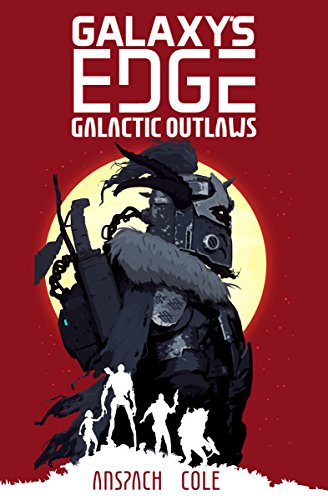
The tagline or hashtag for Galaxy's Edge has always been #StarWarsNotStarWars.  (You can easily see that vibe on the cover art right there, too.  A Boba Fett looking villain, standing in front of Scout walkers with Republic drop ships coming in over a big, bright moon, etc.)  In spite of that, the first Galaxy's Edge novel, Legionnaire, was not necessarily all that Star Wars like.  I've compared it frequently to the movie Zulu, which has become a real classic tale, told and retold, by now. (One could say that the history of Leonidas is the same story with a more tragic ending.)  If this was Star Wars, why is it the story in the jarhead (buckethead?) life of a stormtrooper, and why are the stormtroopers actually elite commandos rather than ineffective mooks?  It's a great book, but the mil-sci-fi look doesn't really fit Star Wars that well, which was always swashbuckling space opera.  So, it was a risky move.  They've sold and promoted their book as a "fork" of Star Wars—they take the concept of Star Wars, file the serial numbers and I/P off of it, and then tell it the way they think it should have been told, instead of the way Lucas and then later, Lucasfilm did.  There was a risk of audience mismatch there; but the book was good enough that it was successful.

The next volume, Galactic Outlaws was the one that is more specifically Star Wars like.  It's got the fringer space opera vibe down perfectly, with a plot that reminds you of westerns and other influences that directly inspired George Lucas back in the mid-70s.  These characters could absolutely exist side by side with Han Solo, young Luke Skywalker, Chewie, and even old Ben Kenobi (maybe not Clone Wars era Obiwan Kenobi, though.)  It has a similar feel to, especially, the very first Star Wars movie.  And if you've read any of my posts on the Secret History of Star Wars, you'll know that I 100% agree with that direction, if you're going to riff off of Star Wars, riff off of it at the very beginning!  So this one was a much less risky book.  Curiously, ties to the first book are relatively light.  It's clearly the same setting, but we don't (yet) have a sense that any of these characters have anything to do with characters from the first book (although in the next book, we find out that they do, actually.)

The third novel, Kill Team goes back to taking place immediately after the first volume (the second book takes place seven years later.)  This non-linear (or at least non-chronological) story-telling is interesting.  And we get yet another direction with this volume; this time, we've got a space-faring spy thriller.  James Bond meets Jack Ryan in space.  It's another excellent book, and another one that is bold; it does something quite a bit different than what you might expect from #StarWarsNotStarWars.  Nick Cole mentioned, when I asked him on Facebook, that I was totally right in seeing the influence of The Spy Who Came In From the Cold as well.  Of course, the other thing that this novel does, is bring together the seemingly disparate Legionnaire and Galactic Outlaws and demonstrating that they are intimately tied to each other in ways that are sure to surprise and delight readers (well, they did me, anyway.)

So for the fourth novel, what do Anspach and Cole do?  Another bold move; telling a tale in the space-faring version of yet another genre, and utilizing hardly any of the past characters!  Attack of Shadows is the opening move in trouble that's been brewing for three novels, and it describes a single day; one battle, from multiple perspectives.  There's another bold experiment with narrative structure; very short scenes that cut back and forth quickly between each other, showing the same events from multiple angles.  Most of the characters are brand new, and on both sides of the battle; shocktroopers and tri-fighter pilots of Goth Sullus' attacking force, fighter pilots from the Republic, a space-dreadnought admiral, a crooked space politician, etc.  This quick back and forth between characters that we don't know is unique; it was at first a little disorienting, but I learned to settle back and enjoy the flow of the narrative.  This book, more than the ones that preceded it, is about plot and description—the back and forth of a hard-fought surprise attack and major battle, and we get an entire novel describing the events of a single day.  I finished rather quickly, and was left somewhat breathless at the end of the novel.  I need to read it again to better absorb the details, because there were so many of them that I have no doubt that I missed some.  Plus, knowing now what I do having read the whole thing, I want to go do it again with enough context to better see what's going on with characters that I don't know well.  This is similar to how when you've just watched a very complex thriller or mystery movie, you need to watch it again to catch all of the stuff that you didn't realize was going to be important, so you didn't pay enough attention to it.

So, again—they could have blown it by doing something so bold, but yet again they manage not to by doing so skillfully.  I'm pretty pumped after reading what was a really cool battle in what's going to shake up to be a really cool war.  But I've also really had my appetite whetted to get back to the characters that I grew to know over the first three books.  Maybe knowing this (or maybe not; maybe it was just serendipitous luck) there's a three-chapter preview of the next book included at the end (Sword of the Legion) in which we see familiar characters (from both disparate main groups of characters) reacting to the events of Attack of the Shadows.  They go back in time to the beginning of the day, and foreshadow that some of the stuff that was only briefly touched upon in this novel—cameos, really—will be treated in more detail in book five, and our familiar cast will be the stars of this action.  It also foreshadows that one key event which takes place off-stage in this novel, which would seem to be an unaccountable and unforgivable mistake, will actually be the main course of action of the coming book.

So, again: in spite of the fact that so far Anspach and Cole are writing at a faster pace than anyone other than Dean Wesley Smith and his "pulp speed" crowd, I find it difficult to wait for the next novel.  This was an experimental piece, and it packed quite a punch, but most especially, it set up what is to follow.  In fact, that's my only concern (or maybe just question) at this point; if they're really going to tell Galaxy's Edge in 9-10 novels or so, which I seem to remember is what I saw or heard them say, in a podcast most likely, then we're nearly halfway through and the main story has just started!  Of course, maybe this means that they decided to take more volumes to finish it than they originally planned.  Or maybe, we'll skip ahead and then fill in details as desired with spin-offs in the future.  I dunno.   But I do know that I'm excited to continue the journey with them.  This has been a fun ride so far.  I'm glad I was able to get in on the ground floor.

Monday, September 11, 2017

Star Wars is Dead!

Disney has killed Star Wars.  The word just hasn't quite gotten out yet.

In theory, it doesn't have to be dead dead—it's just in critical condition in the intensive care unit of the hospital.  It's possible to revive it and return it to health.  It's just unlikely, because Disney itself—and LucasFilm specifically too (even before the buyout by Disney)—is completely and totally unsuited and unwilling and unwitting when it comes to the solutions needed.

Instead, do your own thing (AD ASTRA) or read a "fork" of it (GALAXY'S EDGE) and let Star Wars go off into the sunset with a little bit of dignity.

Not saying that I won't still watch the movies when they come out.  But, I won't really expect much of them, or go beyond them at all anymore.

Monday, August 14, 2017

Galaxy's Edge: Kill Team

Another month, another Galaxy's Edge release, and another review!  I didn't actually review the first book, Legionnaire, although I talked about it plenty.  I did review book 2: Galactic Outlaws and I may yet continue the streak.  In any case, I'll do Book 3: Kill Team.  So far, the schedule has been something like the following:
  • Every month, a new title is released (not only are Cole and Anspach writing at a furious pace, but they must have had a lot of groundwork laid ahead of time.)  I can't remember if they said that they're planning a 9 or 10 book arc, but it's something of that order of magnitude; so by next summer, we'll have done it.
  • I've got the book on pre-order as a Kindle download.
  • I get it on the day it's released.
  • I finish it by the next day.
There's not a lot of books that I tend to finish that fast—the only ones in many years until now that I consistently did so was with Butcher's Dresden novels.  And he hasn't even put one out in over three years now, so he's pretty overdue and behind schedule.)  But these seem to do the trick.  They're that good.

First; let me reiterate for those just catching up what the premise of Galaxy's Edge is, paraphrased by me from the authors' own words.  It can be neatly encapsulated in their hashtag, #StarWarsNotStarWars, and it means that the authors are fans of the Star Wars franchise... but are somewhat disheartened by much of what has happened to it.  While chatting about it, they decided to work together, writing it the way it should have been; the way it once was (read my Secret History of Star Wars posts for more info here, linked in the review to book 2).  It's kinda a pastiche of Star Wars, which of course was also a pastiche of Dune and Lensmen and especially Flash Gordon to begin with.

And like the Star Wars movies, which started off imitating the plots of unrelated genre movies, before "evolving" into something where the plot wasn't exactly the same, you can see clear analogs to some other plots you may be familiar with.  Legionnaire had a lot of obvious similarities to Zulu (1964) and Galactic Outlaws reminded me very closely of True Grit (1969 or 2010—take your pick.)  Kill Team reminded me strongly of John Le Carré's The Spy Who Came in From the Cold in one plot arc, but it also reminded me strongly of Frederick Forsyth's The Day of the Jackal, especially in how it went back and forth between an assassination (or terrorist) plot and those carrying it out, and those who are tasked and racing to thwart it.

The voice of the character "Tom" who makes up the more Le Carré-like half of the novel, is quite different than what we've seen in the series to date.  It felt a little more navel-gazing-like, especially early on, than I was expecting, but at the same time, I've read The Spy Who Came in From the Cold, albeit probably twenty years ago, so I was able to recognize immediately what it was probably meant to be a direct homage of, and thereby appreciate it.  And it didn't wallow in self-introspection all that much, really, which is of course would be death to any swashbuckling space opera action story.  This sounds like a complaint.  It's not; it's just a heads-up that they adopt a somewhat different voice for about half (roughly) of the novel which might have been a bad move if it had not been handled carefully.  But it works great here.  And for those (like me) who get and recognize the reference, it's actually kind of cool.

Once again, Cole and Anspach do not fail to disappoint, and I really enjoyed Kill Team.  It serves as a direct sequel to Legionnaire, and from the perspective of Galactic Outlaws I guess that would make it a flashback, or a prequel—although it does a fascinating job of tying together elements of both of those books, just in case you were starting to think that maybe the first was just a somewhat more distantly related prologue.  It's not.  The two story lines from the two respective novels are actually deeply intertwined.

But I can't tell you much about them without spoiling stuff, so I won't.  

I also don't know for sure what more to say about this novel that I didn't say about the last one.  The premise of the series, and any grand philosophical maundering about that, I've already done.  The fact that they're still great; I've also done.  I did also appreciate that the subtle (yet quite pointed) social and political satire that's there for those with the wit to see it, but it never even comes close to the ham-handed message fic that the Left loves to indulge in.  It actually—like, OMG!—serves the needs of the plot and creates believable and plausible motivations for functional, normal characters to do things that we readers can relate to as functional, normal people ourselves.  So, not knowing what else to say about the book other than that, well—just get it and read it!  You will not be disappointed.

Wednesday, August 02, 2017

More thoughts on Clone Wars, StarWarsNotStarWars and Ad Astra

I just recently found out that Star Wars: Rebels, the show that replaced The Clone Wars was renewed for a 4th season (I petered out a couple of episodes into season 3).  It is also revealed that this will be the final season.  I don't know why it is ending much earlier than Clone Wars, although Filoni did point out the fact that knowing it was going to end made it a lot easier to plan for the ending, rather than having a whole season of partially completed episodes to deal with after the show ended (almost half of which subsequently got a release on Netflix as a "season 6".  Another two story arcs got Youtube roughs; all the voice acting and sound effects, etc. were recorded, but the animation was still at CGI storyboard state.  Another story arc was converted into a comic book series, and another double story arc that was converted into a novel.  This may seem like a lot of episodes, which it kind of does, but maybe some of them would have spilled over into a season 7.  The novel is 8 episodes, and the two story arcs that are roughs are another 8.  The comic book miniseries had to have been at least four. )  That's already twenty episodes—plus the 13 we got in the "Lost Missions."  There are references, if you can find them, to other arcs; enough for a season 7 and 8, at least, including episodes that take place concurrently with Revenge of the Sith.


It was not actually the intention of the Clone Wars team to end the show after season 5, it was a business decision by the new suits after the Disney/Lucasfilm buy-out to get content off of Cartoon Network and create new content for DisneyXD.  I do have to wonder if the greatly reduced story arc of Rebels has to do with it never matching Clone Wars in audience excitement.  Or maybe I'm just projecting.

Anyway, regardless of the second half of season 6, and seasons 7 and 8, which we never actually got to see as regular episodes anyway, I powered through the remainder of season 3 yesterday.  I'm actually feeling a bit burned out, after watching the better part of two seasons in just a few days.  The degree to which I'm still committed to watching all of the rest of them in relatively short order is fading.  I'm seriously considering skipping to episodes that I like and foregoing some of the mediocre filler episodes in between.  Even episodes that I've earlier said that I do like in season 4 are kind of... I dunno—I just don't want to watch them right now.  Maybe I just need to take a little break.

So, rather, I had a bit more free time and thought I'd play some of my Old Republic.  But it started trying to update the launcher, and something weird happened.  I couldn't ever get it to launch.  I have no idea what was happening, but it made me impatient after trying the better part of half an hour to get Old Republic started, so I said, "screw it" and played some Ultra Street Fighter IV instead.  It ended up being a bit of a frustrating evening.  And I now blame Star Wars generally, since I'm a little burned out on Clone Wars, and was frustrated with the Old Republic.

But don't worry.  I'll try again soon.  I still have some hopes that the Star Wars franchise as a whole can still deliver some entertainment to me.  I only hit you because I love you, baby.

Meanwhile, I've listened to a few more podcasts by Jason Anspach and Nick Cole.  I referenced one briefly a few posts ago, but most recently, I just listened to this one.  Although it covers some of the same ground as the last one (including the "playing with your action figures" concept) it also has some more detail about the alt.Force and other things.  I think Nick makes an excellent point in suggesting that thinking that you have to explain everything is a mistake.  Just go with it.  Spaceships travel faster than light?  Yeah, by now everybody who is interested in any kind of science fiction accepts that.  There's no reason to explain how it works.  If you want an explanation for yourself as a writer or developer or whatever—cool.  But trying to tell your readers about it?  That's fine for hard science fiction; in fact, that's probably the whole point.  But for popular science fiction, just go with it.  Star Wars never bothered explaining anything.  How did hyperspace work?  It actually doesn't make a lot of sense in the movies.  What the heck is a blaster?  It doesn't behave like a laser; it behaves like a regular gun with cooler sound and visual effects.  So what?  What the heck is a light-saber and how does it work?  Who cares?  The Force?  It's magic, pure and simple, and old Ben Kenobi is a wizard.  Uncle Owen even calls him one, and Death Star staff speak somewhat disparagingly to Darth Vader about his "sorcerous ways"—right up until he nearly chokes them, of course.  Anyway—the point is, this stuff is in the zeitgeist.  If Star Wars could get away with it, then certainly anyone dabbling in this field post-Star Wars can.  Don't take yourself too seriously.  This is Funyuns and Diet Coke.

Which is a good reminder to me, because I know that I'm sometimes prone to sperging out on something that interests me.  But nobody else tends to be, so it's best to leave it alone.  Also; I think I'm ready to start migrating AD ASTRA from being some RPG material to being a story.  I've got some character and plot concepts in mind, and I just need to get moving with it.  One thing to keep in mind is that Star Wars is really an ensemble piece.  Is Luke the star?  Yeah, probably, but it wouldn't be very interesting without Leia, and Han and R2 and 3PO, etc.

So, I've got a little more work to do, but having a gunfighter hotshot lead who's maybe a bit more like Peter Blood than Han Solo (from Captain Blood—the novel is great, but I've only read it twice and I've seen the Errol Flynn movie at least half a dozen times, so that's the more immediate inspiration) and his partner/Chewbacca will be a psionic knight who's basically one of the alternate costumes of Evil Ryu, except with an energy sword and shield instead of hadoukens and shoryukens.

Thursday, July 27, 2017

Playing with your action figures in the dirt

Safari guide
Something Nick Cole said in the podcast I linked to yesterday struck a nerve; what Galaxy's Edge is is him and Jason Anspach playing with their Kenner action figures in the dirt as kids.

I'm 45 years old, which means that when Star Wars first came out on Memorial Day 1977, I was all of 5½ years old.  And, of course, I immediately started picking up Kenner Star Wars action figures, and did so for a good five years or so before I kinda grew out of it, I guess.  I started with the normal ones; the Luke and Vader figures where the lightsabers slid in and out of their wrists like Wolverine claws, an R2-D2 and C-3PO, a Han Solo, a Hammerhead and a Walrus man, a stormtrooper, etc.  I used proof of purchases to get a Boba Fett figure in advance of the release of Empire Strikes Back, and picked up a few more Empire level figures here and there—I don't recall that I got very many (if any) Return of the Jedi figures, although my little brothers might well have.

I also had a few of the more expensive things; I had a TIE fighter and an X-wing, for instance, although I recall keenly wanting the Death Star playset and never getting it.

Rather, what I did was mix and mingle these Star Wars figures with my Fisher Price Adventure People, which I had a lot of (probably because they were a lot cheaper) and which were to the same scale.  Granted, they weren't really the same genre—Boba Fett getting into a fist-fight with a rally car racer, construction worker, paramedic, or safari guide on the back of a neon green van like Indiana Jones fighting Nazis on the back of a truck is the kind of thing I'm talking about. While a submarine flew around like a space ship trying to grab him with its claw arms, and a rubber octopus wrapped its tentacles around his neck. Meanwhile, a gigantic, over-sized tiger toy with an articulated jaw that was to the wrong scale so that he was roughly the size of a T. rex, as well as some of those 70s style rubber dinosaurs needed to be fought.  Boba Fett was usually pretty awesome in these fights, because of course he had a blaster, a gigantic missile on his back, and a smaller missile on his wrist.  Plus, he looked a little bit like a space crusader in that armor.

By the early 80s, the Adventure People line had picked up some space stuff, almost certainly as a reaction to the success of Star Wars.  At first, it was stuff like pretty realistic astronaut and space shuttles and stuff, but they later picked up pretty gnarly looking robots and aliens and "astroknights."  This meant, of course, that it "matched" the Star Wars characters a bit better.  That bad-ass "Clawtron" robot was a formidable foe for Boba Fett, and "X-Ray Man" felt like some kind of Guardians of the Galaxy-esque supervillain.


This is a big part of what they mean, I think, when they talk about playing with your toys in the sand.  It doesn't mean trying to replicate the Star Wars setting or the Star Wars characters, really—it means playing around with Star Wars elements in a unique environment that is Star Wars-esque... but not really Star Wars.

Wednesday, July 26, 2017

Back in town...

http://hankgarner.com/episode-206-jason-anspach-and-nick-cole-galaxys-edge/

Nice listen.  Something I stumbled across this morning. I was disconnected from my internet most of the last week and a half, so I'll just drop that for now rather than try to create some kind of new content while I'm actually still fairly distracted.  This podcast elucidates an interesting take on "how to approach reconstructing Star Wars."

A few notes:
  • Don't take yourself seriously.  This isn't "important art"; it's an entertaining story.
  • Don't try to rebuild Star Wars exactly.  This is more like playing with the Star Wars toys outside, where you use Star Wars elements, but rename them and reimagine them like we did when we were 7 year old kids with the old Kenner action figures and stuff.  In my opinion, this is the real key.  L. Sprague de Camp tried to "reconstruct" better writers' stories, but "fix" esoteric and nerdy details about them (Pusadian Cycle vs. Howard's Hyborian stories, etc.) and it just makes him look like a self-important goober.
  • The Force in Galaxy's Edge is maybe more like the Ring in Tolkien.  There's probably only one Sith so far, Goth Sullust (or whatever exactly his name was) and a whole galaxy worth of Gollums, and Frodo Bagginses, who can carry the Ring more or less safely to Mount Doom, don't really exist; they're singular characters.
  • Grand destinies aren't often really what we want.  Let's tell stories about normal people in fun, entertaining situations. (I will point out that few of the characters are really normal people in Galaxy's Edge so far, though.  Wraith the bounty hunter, or Chuun the Legionnaire brevet lieutenant are not normal.  Even the little girl looking for a bounty hunter wasn't just a "normal" character.)  But the idea that maybe there could be better stories about Lobot or 4-LOM, for instance, is a great point.  As Star Wars became more and more focused on the Skywalker family, who apparently are the only truly important people in the entire galaxy, it somehow lost what it was.
  • Like Lucas originally meant; Galaxy's Edge will be "serial like"—nine novels, one out every month, and then a "prequel" series (maybe) after that about the Savage Wars.
  • The first four novels have titles; two are already out, and the third is available for pre-order, by the way:
    • Legionnaire
    • Galactic Outlaws
    • Kill Team
    • Attack of the Shadow

Friday, July 14, 2017

Galaxy's Edge: Galactic Outlaws

I don't post a lot of book reviews here anymore, but here's one, because I can't help it.  I just finished reading Nick Cole and Jason Anspach's Galaxy's Edge: Galactic Outlaws, the second book in the Galaxy's Edge series. Legionnaire was the first, and Kill Team promises to be the third.  It was just released yesterday and I had it on pre-order.  It was delivered to my Kindle first thing in the morning when I logged on.  Needless to say, I read it pretty quickly.

First off; I'm intrigued by their business model.  Follow the link above to see how it works; it's kind of a Kickstarter-like proposal although they manage the business end themselves rather than through something like Kickstarter. You pay a monthly fee and get content each month of various kinds—but although I'm intrigued, I'm also cheap and wary of new ideas, so I just bought the books the "old fashioned" ebook way—on Amazon.  But because this series is so good so far, I might overcome my inherent cheapness and just buy a membership in their club.  There's a lot of stuff that you get with some of those memberships besides advanced copies of chapters of the next book as it develops: concept art, podcasts, webinars, signed hard-copies, personalized contacts from the authors, etc.
Which isn't necessarily unwarranted.  The Partner level subscription will run you $120 a year, which even for a few great books, is a fair bit of money, but to all appearances, they make sure to provide plenty of value to justify that.

In the meantime, for $2.99 (twice) you can get the two books that are out as Kindle files from Amazon.  The first book is a kind of "prologue"—it's a great space war story, that feels a bit like the Michael Caine movie Zulu set in space.  In retrospect, it appears to have been merely setting the stage for what is to come in the series proper, which starts with this book.  It's still early on, and it ends with things just getting started, in some ways, but at the same time, it's a very satisfying story, and lives up to the promise that the authors' provided when this whole project first came to my attention: it's #StarWarsNotStarWars.  To quote from the blurb for the book itself: It's sleek starfighters, exotic aliens, loyal bots, blasters, scoundrels, heroes and powerful enemies in a thrilling adventure that will take you back to that magic place a from a long time ago…

It's Star Wars as the franchise was.  As it should have been.  It makes no bones about being pastiche, just as George Lucas really made no bones about Star Wars being pastiche (read some of the posts I've made on the subject, particularly here, here, here, here, and here—in that order) of a number of things, most especially Flash Gordon plus Dune plus the Lensmen series.

Anyhoo—while the first book reads like space Zulu, this story, which is really two plots involving two groups of characters who combine near the end, is very reminiscent of space True Grit.  Considering the degree to which Westerns contributed themes and character beats to the oldest Star Wars movies, this shouldn't be a surprising twist.  The setting feels an awful lot like Star Wars (except some internal character monologues give it a slightly darker feel sometimes), and there are a few interesting call-backs to the first book, which is less like a sequel and more like a spin-off, if the whole series were a spin-off of the prologue.

Minor spoilers in this next paragraph, although they're telegraphed pretty early and transparently, so not really—one character that we're introduced to early on is quite obviously effectively immortal or at least very long-lived—space Wolverine from the X-Men, if you will.  One character that is hinted at for the entire book turns out to be the first (and maybe only, although where's the fun in that?) ersatz Sith Lord, and while there is no tradition of ersatz Jedi that we are shown, there is a character (and maybe even more than one) who may yet end up playing the role of Obi-wan Kenobi. At least they're set up so that they could, and they hint at it.

It's amusing and entertaining to see the chemistry established as the group of what reads like the space opera version of "the D&D party" starts to come together—the hot-shot gunslinger who's kind of the lead protagonist and reads like Boba Fett's capabilities with Han Solo's personality, and a bit of a Batman/Bruce Wayne dichotomy going on.  The young "Mattie" from True Grit who is his de facto ward and student, kinda, and her side-kick, the C-3PO analog who's build on an old war bot chassis and can still access its old programming and armament, making him a much more interesting C-3PO than C-3PO himself ever was.  The talented ship's mechanic, who—although I'm not really very familiar with this franchise, I know enough to recognize this one—is very similar in many respects to Kaylee from Firefly.  The nerdy, young hacker who can create mechanical and electronic deus ex machina effects to keep the plot moving as needed. A human R2-D2 if you will. The ChewbaccaNotChewbacca co-pilot who's very Kzin-like in many ways, but who is still obviously Chewbacca anyway.

It's also amusing and entertaining to count (and I noted quite a few already) clear correspondences with the Star Wars setting—where Star Wars has the Clone Wars, mentioned briefly for a bit of color in the first movie, here we have the Savage Wars, which play a similar function.  While in Star Wars, we had only brief exposure in the very early 80s to the concept of the Mandalorean "supercommandos", the early legionnaires play a similar role; watered down current legionnaires feel more like stormtroopers.  Brief mention is made of what sound an awful lot like the ruins of Death Stars from the past, although the super-weapon referred to briefly here is equally grim.

If you see the Republic as an analog to the US today, which wouldn't necessarily be unfair (although not necessarily deliberate) then its fall from what it once was to what it is now is less iconic than the overthrow of the Republic and establishment of the Empire we're shown in Star Wars. And yet, it's also more tragic and more true to life; the degeneracy of a once powerful state consumed by a political class of parasites that hollows it out and guts it from the inside is all too familiar.

In many ways, this feels an awful lot as if they'd done their research by not just watching the very earliest Star Wars movie, and a bit of Empire, and then "fixing" where Star Wars started going wrong by creating a pastiche that doesn't, but rather, it's as if they were steeped in the early drafts of the first two movies and borrowed as much from them as from the screenplays as they actually turned out.  I doubt that they actually did, but if they had, the result would be eerily similar.  This is the grand vision of what Star Wars tried to be, and ultimately ended up not being able to sustain.  I've said many times before (read my links above) that the Star Wars of the late 70s and even early 80s is very different than the franchise as it evolved.  Although in many respects, Empire was an even better movie than Star Wars was, in some ways, it set the stage for things to go wrong, and Return of the Jedi coasted by on momentum, with many things already starting to go wrong.  (And obviously, the franchise went really off the rails after that, in spite of flashes of brilliance here and there in some of the video games, some of the episodes of shows like The Clone Wars and the possibility that we'll actually still get a really good new movie out of the franchise yet.  Maybe.)  And it's hard to see what Star Wars once used to be without squinting really hard and deliberately ignoring stuff that we've been steeped in for decades now.  But if you could somehow do that, Galaxy's Edge is in many ways, exactly what I'd expect it to look like.  What I said back in March about my own modest efforts, who's end result is still mostly TBD, is absolutely and completely true for Galaxy's Edge, so I'll repeat it:
It's new, yet should feel very familiar to anyone who's familiar with space opera tales of swashbuckling derring-do featuring laconic alpha male space cowboys who shoot first, space Templar-like warrior-monks who get into crazy martial arts sword-fights on space-ships, vast legions of faceless soldiers, and sassy space princess damsels in distress.  It may not feel exactly like such stories that you're already familiar with—and that's on purpose—but it should feel like those stories deconstructed... and then reconstructed all over again.  This time, all of the confusion over good and evil, black and white, what heroism is, who the good guys are, what a good guy is, what the dickens SJW dogma and political correctness has to do with space opera at all, etc. has all been washed away and what had become tired and disappointing is now a blank slate, ready to be made new, fresh and exciting again.
Ladies and gentlemen; that's Galaxy's Edge.  I highly recommend it.

Wednesday, July 12, 2017

Reading...

I've spent some considerable time lately out of town, and am about to do so again, so this may be the only blog post I'm able to sneak in for another ten days or so.

One advantage of traveling is that I get to read a bit more than normal.  This time, I mostly did so on my phone.  I've finished several books—and I can't remember for sure which ones I finished right before I left, and which ones I finished more recently.  Looking back at my latest Kindle post, I see that I didn't actually read the ones that are highlighted in green.  I'll probably update that one and keep it as a kind of constantly updating archive, or something.  Let's do a quick round-up, shall we?
  • Ivanhoe by Sir Walter Scott.  I'm pretty sure that I finished this before leaving, actually, but I hadn't mentioned it here.  It's a true classic.  In at least some ways, the Robert Taylor, Joan Fontaine, and Elizabeth Taylor movie from 1952 loosely based on this novel is more exciting, but in others, of course, it can't compare.  If you haven't read it, you should.  It may try your patience, and will certainly increase your vocabulary.  It's amusing sometimes to read older novels and remark on the pacing and the prose style, which is verbose and sometimes so baroque that it feels rococo.  
  • Galaxy of Heroes by Gus Flory.  This imagines a space opera setting in which humans are kind of at the bottom of the totem pole and always getting chased from one place to another, in danger of imminent extinction.  Kind of how the Jews imagine their history to be, maybe.  It took a while to grow on me, but I ended up being satisfied with the book in the end.  It felt like the whole novel was set-up for a series of sequels, though—in some ways, it doesn't stand on its own as well as it should.
  • Albion Lost: The Exiled Fleet by Richard Fox.  This took a while to grow on me too, partly because it bounced around between too many characters, who only near the end of the book finally started to warm up to the audience.  And then, the whole thing was clearly a prologue to a series—which doesn't exist yet (although I think at least the immediate sequel just came out recently.)  It was intriguing, but clearly can't be seen as anything other than part of a whole which has yet to materialize.  As with Galaxy of Heroes, I found I was further into the novel before it really grabbed me than I'd have liked.  If I wasn't traveling, I might have ditched it and read something else at about the 25-30% mark, but I persisted, and as with Galaxy of Heroes, in the end, I'm glad that I did, and I'm intrigued enough by this prologue to think that actually seeing what the series proper looks like now that it's primed to get moving, wouldn't be such a bad idea.
  • Galaxy's Edge: Legionnaire by Nick Cole and Jason Anspach.  Fabulous novel.  Absolutely wonderful.  Can't wait for the follow-up, which is due out tomorrow (I've already got it pre-ordered.)  Although this is the first of the #StarWarsNotStarWars series, i.e. an ersatz Star Wars not unlike my own AD ASTRA at least in gross conception, I should point out that this initial offering is fairly different than classic Star Wars.  It's military fiction with truly elite troops, and the "Empire" (the Republic, as it's called here) is not so much evil in the mustache-twirling, Nazi-uniform wearing Star Wars style as they are incompetent, bureaucratic, and careless with the lives of its citizens and others alike in a all-too realistically cold manner.  In other words, they're much more realistic and frightening—yet ironically a bit less iconic.  That said, it misses almost all of the Star Wars beats—it's pretty much a straight up war story with a plot borrowed from Michael Caine's Zulu at a high level.  And the epilogue seems to suggest that it too was prologue-like in nature (three for three with space opera books I've read recently) and somewhat atypical (for Star Wars) approach was setting the stage for one of the characters to emerge as a more cynical bounty hunter type character in the future—as if there were a Boba Fett with a Heart of Gold variant or something.  We'll see how it develops, but faulting the story for not being as Star Wars-like as I anticipated when it's still uniformly excellent seems a bit unfair somehow.
  • Enemy of Man by Scott Moon.  I really wanted to like this, as Scott Moon seems like a nice guy, but I admit that I've been kinda struggling with it.  I'm not really liking the protagonist character very much, because he seems like one of those "buffeted about by stronger personalities" types of characters rather than someone who takes charge.  I'm not giving this up, but I am not finishing it until after I read the next Galaxy's Edge book, so it's on the back burner for now.

Monday, June 26, 2017

Ad Astra "creatures"

Well, the only thing that AD ASTRA really needs (other than some better presentation and maybe some editing) is a bestiary.  A monster manual.  An alien anthology.  Something to represent the foes that the PCs will face that is other than "create PCs and run them as NPCs."

I meant to do this a while ago, but didn't get around to it.  Then I got busy.  Then I made a few DARK•HERITAGE and FANTASY HACK posts instead of AD ASTRA posts.  Then I was on vacation out in the woods with no access to blogger.  Then I got back, but was really busy—buried in post-vacation pile-up and stuff.

So it didn't happen.  Not yet.

To be honest, I'm not overly concerned about it.  You can use the FANTASY HACK version of monsters and whatnot and just rename or reskin them as aliens.  In fact, that's really all I intend to do; take maybe 20-25% of the most interesting entries, give AD ASTRA style weapon damage to the humanoids, and rename everything.  So, it's going to be a lower priority, and I probably won't get to it for several weeks, as I have not only plenty of other things to do, but two more relatively big vacations coming up in short order.  Quite honestly, I doubt there'll be an AD ASTRA ALIEN ANTHOLOGY—4A—until August.  Don't hold your breath.

In the meantime, I obviously haven't had much activity lately that's of interest to the reader(s) of my blog (other than myself.  And mom.)  But I do have a few minor notes.
  • Don't forget to by Nick Cole and Jason Anspach's Galaxy's Edge novel.  Heck, go ahead and pre-order the sequel; it comes out next month fer cryin' out loud.  As a proponent of the ersatz, hopefully "fixed" Star Wars, they are offering what I think is one of the most credible offerings coming out.  Castalia House has been teasing a series called Faraway Wars, and although he's being a little coy, I think I sussed out that Brian Niemeier is the author, and that it's also coming out this summer sometime.  It's a great time to be a fan of the Star Wars oeuvre, even if you're disappointed in the actual Star Wars franchise lately.
  • I've been reading Galaxy of Heroes by Gus Flory, and I almost gave up on it.  It started inauspiciously, with a character captured and forced into being a plot device patsy, but I never give up Kindle books without reading at least 25% of them.  Right around then, it found its feet and got interesting.  I'm still only about 30% right now, but it's pretty quick moving.  I think I'll stick around.

    As an aside, the main hero being a passive figure dragged by fate, other characters, or even worse; merely the demands of the plot, is one of my big-time pet peeves.  I just don't like reading about characters who are passive and have things happen to them.  The only thing worse is characters who clearly need to do something, and clearly will, but first the author has to pretend like his reluctance might actually mean that he won't.  Seriously?  Please don't.
  • I got Rogue One for Father's Day.  I agreed to put off getting it until then so they'd have something to give me.  That's probably not very exciting anymore, given that it's been out for a couple of months, I suppose.
  • I mentioned a few days ago watching the Robert and Elizabeth (no relation) Taylor Ivanhoe but I also just finished the novel recently.  And changed my blogger profile name to match Ivanhoe's alias; Desdichado.  It doesn't really mean disinherited, but eh.  Ivanhoe is a classic work of English literature that will still be read many years after whatever stupid tripe our English teachers are pushing on us is long forgotten.
  • I've got another big trip coming up, complete with lots of time on a plane, and on a cruise ship.  Of course, we'll be busy while touring Alaska, but when on the ship and not hanging out with my folks or my son, I'll hopefully log a lot of Kindle screen "pages", finish Galaxy of Heroes and start Galaxy's Edge: Legionnaire.  I think next on my plate after that will be the long-deferred A Throne of Bones.  I really have a lot of Kindle books to get through, though, so I better stay on target.  To quote Gold Leader, or whomever it was.

Monday, March 27, 2017

Another Non-Star Wars Star Wars

Castalia House has been teasing a Star Lords or The Farthest Star, or whatever they're going to call it—a kind of Star Wars without being technically Star Wars.  My own setting and new rule-set, AD ASTRA is the same—it's not Star Wars, but it should feel just like Star Wars (without the SJWisms) but... of course, a good idea is rarely unique.

Here's Nick Cole's fake Star Wars—which I expect that I'll either subscribe to very shortly, or at least keep a very close eye on the release of the final book.

https://www.galacticoutlaws.com/

Check it out!