Showing posts with label DH5. Show all posts

Thursday, November 03, 2022

Possible expansion of the Dark Fantasy X setting

Let me give some context. Where did the Dark Fantasy X setting come from, and what are its direct antecedents? This is a brief summary of my history, which I've documented here, if you want a more long-winded version.

Back in 2002 I was already tired (again) of the D&Disms and started experimenting with settings that were obviously sword & sorcery fantasy settings, but not D&D-like settings, with elves, dwarves, dragons, etc. featuring prominently. Bloodlines was the first setting that I worked on that diverged significantly from D&D basic. The setting was a kind of analog to prehistoric Lake Bonneville with Rancholabrean fauna, and the non-human races were the aasimar, tieflings and the four genasi as they were presented in the 3e era of the game. This fairly early moved into a version of Dark•Heritage that was a kind of "steampunk Barsoom" overlay on the same idea. The giant lake disappeared in favor of more desert features, and the genasi and other planetouched races evolved into races that were superficially similar, but had a very different genesis. 

By 2004-5 or so, I'd gotten rid of the desert and resurrected an old floating islands idea that I'd had (which isn't unique; I've seen plenty of other people dabble with this concept) and I abandoned much of the steampunk aesthetic. This was now Dark•Heritage Mk. II. Although I actually ran this version of the setting for a while,  it was Mk. III that had the most development (up to this point) when I ditched the floating islands and went more with a Medieval Tarim Basin geography model. This version of the setting was fairly well developed, and I even had novel outlines for it. I did find, however, that I was a little too prone to moving in to esoteric purity spirals of certain setting elements that really didn't need as much development as I was giving them. In fact, the development was starting to hurt the setting rather than help it.

Meanwhile, I was doing some other stuff outside of the direct line of Dark•Heritage. I toyed with a big ole Jupiter-sized setting  (obviously I didn't develop that much surface area, but that was the idea) that used some ideas I had that probably fit a little better with a more traditional D&D-like setting, rather than the more esoteric desert environment that DH had become. I later reskinned some of these elements and the basic geography for another D&D-like game that I ran called Pirates of the Mezzovian Main, around a fantasy Mediterranean of sorts, but with Golden Age of Piracy like stuff from the Caribbean. And, noticing that I was re-using a lot of setting elements from my Jupiter-sized Leng Calling setting, I created a Modular DND Setting wikispaces.  What were originally meant to be drag and drop modules eventually started to coalesce into a setting that would deliberately be based around them being in more or less fixed geographical areas.

All of these threads combined; using Modular elements hung on a Mezzovian Main geography eventually became DH Mk. IV. I developed this quite a lot too; a lot of that development is still here on this blog, for instance. I drew a big map of the setting on a poster board (which I still have stuck behind my dresser and the bedroom wall; I occasionally pull it out and look at it even now.) Mks. III and IV got a lot of development compared to I and II, but ultimately, they weren't exactly what I wanted. Also, things were changing in the pop culture landscape, as well as my reaction to the pop culture landscape. While in the early 00s I was probably tired of traditional fantasy and experimenting with using another cultural baseline (14th and 15th century Crown of Aragon thalassocracy being a notable influence) and steampunk and whatnot all playing big roles for a time—until I decided that I didn't want to do exotica for its own sake anymore. In addition, I feel that maybe I was inadvertently getting caught up in movements that I didn't agree with; while maybe I was ready to  move on from overly traditional Anglo-Saxon, Norse or Celtic influenced fantasy after having been steeped in it for so many years, the fantasy zeitgeist was doing the same thing, but for different reasons. Not because they were caught up in novelty, like I was, but because they hated Western Civilization and deliberately wanted to avoid it. In other words, the seeds of what would become blatant wokeism were starting to infect the genre, and I guess maybe I was a little bit on the early side of detecting it and getting turned off.

So I started tinkering with stuff that would combine Old Country England and Viking nations (mostly) with either colonial or frontier American geography. These were separate activities from Mk. IV, but I gradually started to believe that I needed to leave behind the Crown of Aragon Mk. IV with its pseudo-Spanish "protagonist" nation and replace it with one that was more in line with the majority of my heritage; British-American. I settled on the protagonist nations being essentially calques of Robin Hood like Anglo-Saxons, except in an American Old West like frontier setting. Then, I jammed some other settings that I'd developed into it, notably the Timischburg "fantasy Transylvania" setting that I'd developed for my CULT OF UNDEATH project, and Mk. V was born.

But Mk. V actually was stuck at a fairly high level without much real development for quite a long time. I had a sketchy map and talked a bit about stuff, but mostly I was still referring to Mk. IV stuff in a new geographical setting. By the time I really buckled down and drew a good map, started updating the rules for the game that it was meant to support, and really doing some unique new setting development, I was on the verge of converting Mk. V to DH5, which quickly evolved into Dark Fantasy X. Dark Fantasy X could therefore be seen as either a second draft of Mk. V, which only got minimalist unique development in its first draft, or possible Mk. VI of Dark•Heritage. But it's instead been rebranded as it's own new thing, Dark Fantasy X. Dark•Heritage, while it remains the name of this blog, is now officially a dead brand otherwise in my mind; the setting has now moved on and turned in to something fairly different than what Dark•Heritage in any iteration had ever been. 

It's still probably kind of weird and esoteric in terms of fantasy, but also it represents a focus on my own heritage coming through instead of being de-valued, and as such, is probably in part a reaction to all of the wokeness in our entertainment. I've decided that I'm now more tired of looking for something that's not "lily white" than I ever was of fantasy that is clearly based on the Northwestern European Medieval baseline that was the foundation of most of the fantasy I read from the 80s and earlier. The experiment with experimentation, if you will, was played out and I found I didn't like it as much as I thought I would when I started it years earlier.

Anyway, the Dark Fantasy X setting is mostly made up of three large constituent areas; not by coincidence, the three campaign 5x5s that I'm proposing are each centered on one of these, giving me the full coverage of all three areas when they're all done. It was my original intention to have a lot of discipline about not going beyond these, and for a long time that's exactly what I did. I'm kinda sorta rethinking that premise... but let's not get ahead of ourselves just yet. These three Realms are:

  • The Hill Country; the most Anglo-Saxon frontier America part of the setting.
  • Timischburg, the Austrian Empire hinterlands that is fantasy Transylvania.
  • Baal Hamazi, the most exotic of them, where the kemlings are from. Although it's also heavily based on my love of the geography of the American West.
While I'd made vague references to areas beyond these three realms, I'd never intended to do any real development of them. However, I may want to make some smaller "satellite" mini-settings that are associated with the main setting. These won't receive the same level of detail as the main Three Realms—at least that's not what I'm planning now—but we'll see how much development they do or don't get. These elements include:
  • Nizrekh, a kind of island nation that's the stub of ancient, sunken Atlantis, which has a combination Yog-Sothothery snake cult and ancient Egypt vibe to it. The people living there aren't the descendants of Atlanteans; there's already a race for that, but rather some group that arrived and developed in isolation.
  • The wreckage of old Hyperborea; a kind of Ice Age glacier and snow-socked analog to Kadath.
  • Lower Kurushat, which actually does appear on my map, but which I haven't given much thought to yet.
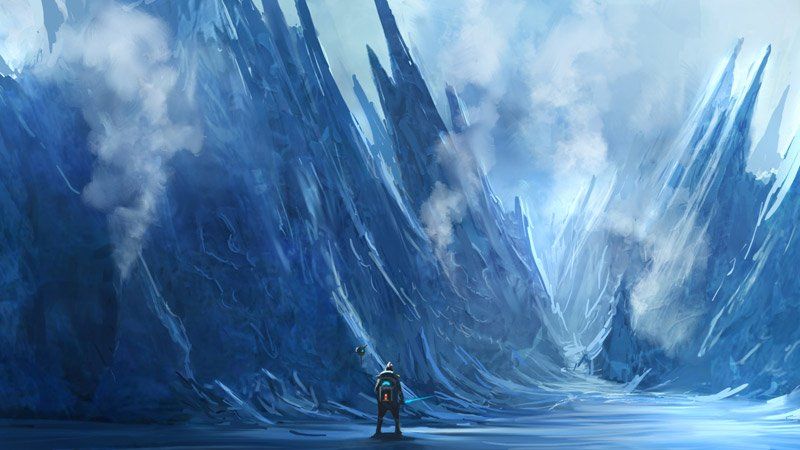
Of course, I doubt I'll do any of these until I finish my racial deep dives and my 5x5s, because that will lay the seeds for this to be done by really expanding the material on the races and the main three areas before I start haring after the afterthought areas.  This makes some sense; although Nizrekh has been floating around on the periphery of the setting for a long time, Hyperborea was never meant to make any appearance at all until I did the Hyperborean Racial Deep Dive and "discovered" that there was potentially interesting material still lingering in Hyperborea. (It probably doesn't hurt that I got back into SWTOR again and did some stuff wandering around on Hoth, and that I've been very slowly going through a youtube zoom playthrough that some guys did of the Icewind Dale campaign of D&D.)


Monday, August 01, 2022

Borrowing from new editions

I say frequently that I'm not old school, but I am old fashioned. By this I mean that while I don't really like the rules of old D&D, most of the aspects of how the game as played that I hold were formed during the Holmes BD&D, Moldvay/Cook B/X or earliest AD&D eras of the game, when I played as a young chap. But that's a little bit vague and maybe ephemeral. While many aspects of my game would be familiar to the OSR (even if the rules are quite different in many ways) they'd probably be extremely confused by my lack of dungeons and focus on mysteries, intrigue, skulduggery and horror. In many ways, my game would feel more like a Call of Cthulhu game in a fantasy setting, or maybe a spin-off of some kind of the old WFRP game moreso than a D&D game at all. (I do, however, claim those as old school. WFRP was written specifically for a British market in the 80s where Call of Cthulhu was more influential in many ways than D&D was.) To quote from an earlier post of my own:

I'd been familiar with the expression, said by a guy online years ago, but which I thought was very clever, that Warhammer Fantasy Roleplay was the game where you started off thinking that you were playing Dungeons & Dragons, but before very long, you discovered that you were actually playing Call of Cthulhu

As some of the discussion in the Enemy in Shadows Companion says, this is actually more literally true than I ever imagined. When Bryan Ansell, the original owner of Games Workshop when it was still a scrappy independent little company, tasked some of his folks to write WFRP, his mandate was to write a Cthulhu adventure for Warhammer. Davis himself notes that at the time (1986 or so) the state of British roleplaying in particular had moved out of the dungeon; Call of Cthulhu was very popular in the British market, and had done a ton for encouraging investigation and NPC interaction. The Thieves' World product was also very successful at the time. It's little surprising then that on reading the first volume (before I read that in the commentary for the companion) that I thought that the adventure felt very little like a D&D adventure and quite a bit like a Cthulhu campaign, although set in a High Middle Ages setting rather than a 1920s or modern setting, and with a lot of tools to encourage people who weren't used to this paradigm to explore almost sandboxy elements too. The closest thing to a dungeon is some sewer exploration, but you just go in looking for clues, not to "clear them" of monsters, or find treasure or secret doors, or traps, or whatever. 

That said, there are plenty of good ideas in more modern versions of D&D, and I've specifically implemented many of them. The rules of Dark Fantasy X are based on m20, which is a somewhat radical restructuring and stripping down of the d20 (3e) rules. I've included a beefed up Heroism Points, which works better than Action Points, but are basically the same idea, and they can also be used as Healing Surges, a 4e mechanic. This is in part because I've eschewed the typical D&D healer/cleric "archetype" as non-archetypal anyway, and have instead decided on trying to make the recovery system feel like an action movie.

While I haven't specifically called out minions as an option in the text of Dark Fantasy X or any of the X-family games (or the games that led up to them, for that matter) I definitely consider the 4e minion concept as fair game to be used. There's really nothing to it; they're anything that you would have the PCs fight normally, but they go down with one hit; i.e., they only have one functional hit point. Because of this, you can throw a great deal more of them at the characters than you otherwise might, and it creates a very different dynamic. But it's such a simple concept that it hardly needs to be repeated.

While I understand (sometimes) the appeal of 5e, at least relative to 4e, I have had very little interest in that edition, in part due to the often ugly art direction; although that was hardly new to this edition, the aggressive diversity quotas is obnoxious beyond reason in 5e compared even to 3e or 4e. Mostly, though, in the words of Mr. Darcy (which are ironically quoted in the noble background as a personality trait), my good opinion, once lost, is lost forever, and my good opinion of WotC was teetering before the end of the 3e era, and was lost shortly thereafter. I decided that I don't need D&D at all anymore, and I have little interest in playing it when I have Dark Fantasy X that I could be playing instead, which meets my personal quirks and tastes much better. I seriously doubt that WotC could possibly lure me back unless they did something so dramatic that they turned off the majority of their current audiance to do so. That said, I know people who have many of the books, and I've (somewhat in spite of myself) flipped through and even read some of them, and I've specifically looked up rules that I decided I might like to adapt.

Notably, the X-family of games has adapted advantage/disadvantage as a core rule to "swashbuckle" up any action scenes and encourage players and GMs alike to use the task resolution system to do things more interesting than "I hit it with my sword." By describing in natural language something that your character would like to do to gain some kind of tactical advantage or just to do something cool and entertaining, you can make a check to see if you gain advantage. What an elegant and quite honestly brilliant rule.

I have not read the players handbook all the way through, but on a whim, I decided to borrow a copy again and have a look at the backgrounds. I also looked at the background in the Curse of Strahd as well as the backgrounds in the Sword Coast Adventurer's Guide. Normally I'm not a fan of very much character backstory, in part because it can inadvertently enable and encourage My Precious Character Syndrome™, which I quite cordially dislike. However, these are quick and dirty points that take little effort to understand and implement, and hardly make for overly twee emotional attachment to your character. That said, there's an art to implementing them in a game for which they weren't really designed.

(It's hardly a unique idea, of course. I mean, Traveller was having you role up character backgrounds as part of character generation way back in ye olden days, and I toyed with some space opera backgrounds for Ad Astra, that became Space Opera X, several years ago. I prefer them to not include mechanical perks, however, and be focused on roleplaying opportunities. If the player can't immediately use them to bring the character to life right out of the gate, then they aren't very useful, and a +something to some skill check or whatever isn't very useful to roleplaying.)

One of my favorites of these systems was included with the OSR space opera game White Star, which gave many if not most characters a specific ally and a nemesis, both of which are gold for GMs and should be tons of fun for players too. I might whip up an ally and nemesis table just for the heck of it that applies to the Dark Fantasy X setting specifically.

Backgrounds, as described in the PHB5e, have a number of elements. Not all of them are relevant if you want to port backgrounds into Dark Fantasy X, which I would not only approve of, but actively encourage.

  • Proficiencies. This is a mechanic specific to 5e, and is not relevant to Dark Fantasy X, except as a suggestion on how you might want to attempt to build your character.
  • Languages. This is unique to D&D. Dark Fantasy X actually doesn't have any languages built in, or rather, they are inherent to the setting, but not spelled out in the rules. Hmm... Maybe I should add a small section for them. But if I don't, that's OK. Regardless, my languages will be unique to the setting, and will have little bearing on whatever D&D languages are in use in the backgrounds as written.
  • Equipment. You don't get equipment for free in Dark Fantasy X, but most of the equipment I've seen in the backgrounds that I've read is of nominal value and almost any starting character could buy everything listed therein with his spare change. You may want to, to roleplay out your background.
  • Favorite xyz. Not every background has one of these, but this would be like the Charlatan's favorite scheme, or the Criminal's criminal specialty. I wouldn't roll on the table; I'd handpick one, and occasionally more than one, as a roleplaying hook.
  • Feature. This is a roleplaying element rather than a mechanical one, and while they're a little D&D specific, they can be tailored to Dark Fantasy X with very little trouble, unless they're for a very specific D&D element, like heathen religious cults and whatnot.
  • Personality trait. I wouldn't roll on this table. I'd pick from it, and I'd maybe pick even two or three of them.
  • Ideal. I'm not a huge fan of what they've included here, but it's harmless enough. Look them over and decide if they actually offer you anything helpful. If so, feel free to use one, if not, ignore this category.
  • Bond. These are pretty good, but you may have to read the list and extrapolate one from there to get exactly what you want. To be fair, the rules for backgrounds already tell you to do that. It's just a roleplaying hook. Go for it.
  • Flaw. I love a good flaw or two in a character, to give the player a simple hook to sink his roleplaying teeth into right away, and as a springboard for potential future adventure. Feel free to pick as many as you like.

Dark Fantasy X Rules Document

Monday, September 20, 2021

Dark Fantasy X

Sometimes thought and action are quick and decisive with me, while other times I just sit around indecisive. In this case, I'm being decisive. I had already created a new YouTube channel for my D&D discussions specifically, DarkFantasyGamerX. I decided to create a new blog, DarkFantasyX, and I'll amend my Dark Heritage 2 game to be called Dark Fantasy X. I was never super happy with the name Ad Astra for my space opera, because it was a little too obvious and too many other people had also just used the Latin phrase for various spacey related things, so maybe I'll call that Dark Space Opera X too. That blog will be devoted specifically to my gaming related discussion once I get it running with some actual content, in the next weeks. I've also created a new blog Archaeoeuropean, to talk about archaeology, history, genetics and linguistics of the Indo-European peoples. All of them will get fewer posts than Dark Heritage, but all of the blogs will be much more focused on a particular topic rather than bouncing around between topics that may or may not be related to each other at all.

I'll probably also migrate some of my older series of posts to the new blog, particularly with regards to Remixing/Revisiting posts. And because I'm renaming and possibly reformatting the documents, I'll probably go ahead and finally synchronize the rules systems for Ad Astra, Dark Fantasy X (formerly Dark Heritage 2) and Fantasy Hack. I'll also talk more in depth about why I made the decisions I made with regards to those design details. 

I'll also go back and forth between YouTube videos (eventually; I may need to get more gear and stuff to make better YouTube videos than I do now) and blog posts in talking about my games and gaming projects. Don't expect this change to be immediate, but I doubt I'll spend much time getting this set up and ready to move.

What will I continue to do with this blog in the meantime? I'm not sure. Probably random and pop culture related posts will be here. Mostly, though, this blog will start getting quieter over time as more and more posts are relegated to the blogs to which they really should belong in a set up where I have a more focused family of blogs.

Thursday, September 16, 2021

Dark Heritage 2 update needed

I'm on version 2.7, but I looked at my copy and actually read through much of it just recently. I found a number of errors, some of them minor, but others of them a bit more substantial. The source of this is mostly changes to the rules themselves that I've made over time, but forgot to go change everything that was impacted by them; for example the MND damage for reading blasphemous tomes and learning spells was based on a 3-18 MND score instead of the -3 to 4 MND score. In other words, when I got rid of hte extraneous 3d6 step and turned the modifiers into the score, I didn't make all of the cascading changes that I had needed to. I found a number of other minor errors, typos, and a few formatting issues, so I'll be updating the document to 2.8 once I've finished.

I know this is a moot point, since this document is really only here for my own sake, and I doubt anyone else reads it. But if for some reason you do use it, then hold off and wait for the updated, patched version in the next day or so.

EDIT: Done. Go check out the new document in the Games tab to your hearts' content now.

Wednesday, September 15, 2021

Replace session zero

I said not that long ago, the following:
I favored a so-called "session zero" before play actually started; we'd get together like for a session, but the main goal would be to create characters and get them primed and ready to go; if we actually played very much at that session zero, that would be a bonus.

I suppose if I was playing D&D as written, I might still have [that preference], but most of them are no longer necessary in my current context, and since it's not the most exciting way to kick off a campaign and my stripped down rules-lite game doesn't require nearly as much of an investment in time to get ready to play, I no longer favor the session zero at all. The "session zero" will take forty-five minutes to an hour—and that's if the players are chatty and unfocused, but realistically they probably will be—and then we're ready to play. My habit has always been 4-5 hour sessions.

Professor Dungeon Master addresses this as well, and his take is very similar to mine. There are a few interesting details; his questions vs. my player connectedness exercise, although I think many of his questions are unlikely to ever come up, and I think they focus on individuals thinking about their characters in isolation, which I'd rather not. I think I still like my system better.

I also like his idea of creating a back-up character, and having the backup character level up in synch with your main character. That's a great idea, and makes the concept of creating higher player lethality much more palatable.


Saturday, September 11, 2021

Dark Heritage, mapmaking and post summer update

Because I made a YouTube video, rather than recreating it in text, I'll just link to it here.

Actually, I've already talked about some of these issues here, although even then it's been a couple of months.

Wednesday, May 26, 2021

DH5: beyond the map

At the risk of reintegrating everything that I'd explicitly decided not to bother with as I transitioned the older Timischburg "megasetting" into becoming DH5, I thought it worth while to think again about the lands beyond the three main regions I'm developing: the Hill Country, Timischburg and Baal Hamazi. I still reaffirm that I have no intention of developing these territories or spending any time on them other than to think about very roughly where they are and how that has contributed to the setting, where they can be referred to in off-handed references to help build verisimilitude with the notion that something exists besides just blank space beyond the map. But, like how Tolkien had people from far Harad and the Easterlings of various stripes that all came from beyond the map (not to mention Near Harad and Khand, which were just names on a blank space), I think there's some value in at least knowing very vaguely what is beyond the map. He was always able to keep it consistent because although he wasn't interested in developing those areas, he clearly had an idea of what was there.

Let me first reaffirm my list of races, the peoples of the three regions, and see what is kind of... missing.

  1. Humans, coming in at least four different varieties in the three regions, the 1) Drylanders who are natives of the Baal Hamazi region (and presumably the stock from which the kemlings sprang once they acquired some fiendish admixture), the 2) Tarushans, who are the natives of Timischburg from before the Timischer ethnic group established itself as an upper caste in the region, which are meant to be a combination of Gypsies and eastern Europeans like Vlachs or Romanians under the Austro-Hungarian regime, the aforementioned 3) Timischers, who are like the Austrians, except there's no Austria here in this Austria-Hungarian analog, just the part that feels like Transylvania, and 5) the Hillmen, or people of the Hill Country, who are explicitly linked to the Robin Hood era British. I say British specifically so I can make room for some kind of Welsh or Cumbric and Scottish, but really they're mostly English. And even then, specifically mostly Anglo-Saxon. 
  2. Skraelings are the descendants of fallen Atlantis, and although they tend to look like a somewhat exotic and primitive ethnic group of humans, the curse of Atlantis which still follows them sets them apart from that race. They are kind of scattered in small numbers in quiet and forgotten places all over the map; the deserts and steppes of Baal Hamazi, the woodlands of the Boneyard, and the Haunted Forest, most especially. But smaller tribal enclaves of them linger elsewhere too. The Tazitta Death Cults might be a kind of human/Skraeling hybrid. (Haven't decided for sure yet.)
  3. Orcs and Goblins are spread in small numbers across the setting, and they even have a few small towns of their own, but mostly they are an intrusion from outside. Their homeland is Gunaakt which is not shown on the map.
  4. Cursed are from Zobna in long-lost Hyperborea, but their descendants in exile live in Lomar. Lomar is a city-state shown on the northeast border of the map. I haven't really done any development of it other than to mark that its there, and I had vague ideas that it may have been merely the most southerly point of a larger area. Cursed also live in Timischburg in some communities of reasonable size, like Inganok.
  5. Jann are also from outside the map, although as the Baal Hamazi section developed, and used a few Kurushat names too, I decided that they were the places where the jann came from. Subsequently, Kurushat, I guess, had to be to the immediate north of Baal Hamazi, and the southernmost edge of it was still on the map. In the past, the jann's empire extended further south; the tremendous battles between a waning Kurushat and a waxing Baal Hamazi in the past centuries are what gave the Boneyard region its name.
  6. Kemlings are from Baal Hamazi, of course, and that region is now an integral part of the slightly expanded DH5 (expanded from it's Hill Country + Timischburg roots, that is.)
  7. Nephilim don't have a homeland, and don't appear commonly enough to be anything other than an exotic oddity no matter where the go.
  8. Woses are native to the area, and are especially common in some of the forests of Timischburg and the Hill Country, especially the Bitterwood.
Going back to the first entry, humans, it's reasonable to assume that the Tarushans and Drylanders are truly autochthonous, but the Timischer and the Hillmen, who seem to be linguistically and culturally somewhat related to each other, are by definition intrusive. The Timischer because they are a recently installed overcaste of conquerors, and the Hillmen because by definition they are relatively newly arrived settlers to the Hill Country, and with the exception of the large cities of Waychester and Dunsbury, most of the Hill Country is still wilderness and frontier. This implies that they come from somewhere else, probably in two waves separated by several centuries, but from a common source of pseudo-Germanic peoples, such as you'd expect from the common source of Austrians and Anglo-Saxons. As it happens, I do have a few nations named (yet never really described) that would fit this bill: Carlovingia, a kind of Holy Roman Empire from the Carolingian period, Normaund which is a kind of Normandy (these names aren't meant to be subtle, have you noticed?) Brynach, a kind of British Celtic kingdom of lingering non-Anglicized Scots and Brythonic peoples, and Skeldale, and kind of faux Viking Scandinavia.

Anyway, because I kind of wanted to have this information handy, just in case I wanted to make the aforementioned off-hand reference to it, I thought it'd be nice to have a consistent image in my head of where the map is in relation to these regions. The map itself is the black square, with the colored ovals representing (in super stylized fashion) the relative size and position of the other nations mentioned. Nizrekh is the only nation mentioned that I haven't mentioned yet, but I have no intention of doing much with that either, other than to point out that it's a kind of an evil undead and vaguely ancient Egyptian themed country; possibly even the remnant archipelago that was left over from the sinking of Atlantis. Actually, I just thought of that right now as I was typing, so take that statement with a grain of salt. In any case, the Nizrekh heresiarchs come from here, which is really all that matters for the most part. Other unusual stuff could be from here too, like Medusa, the original template on which medusae were made, given the snaky imagery associated with these guys. 


EDIT: Deja vu! I said that I just now thought of linking Atlantis and Nizrekh, but looking at some my old blog posts about Nizrekh, I realize that I had thought of that before and then forgotten it. Either the idea is good enough that it keeps popping up, or my memory was seeping through there. Not sure which. I had specifically linked the Nizrekh Heresiarchs with the idea of Skull-face from the Robert E. Howard novella of the same name (go read it; it's really good! Even if deliberately imitative of Sax Rohmer's Fu Manchu stories, and it has an interesting nod to Lovecraft in it too!)

A mapmaker's nightmare

After spending most of an evening drawing a map only to ink in a couple of features that look terrible, out of scale, or otherwise not pretty. Sigh. And then apply liquid paper to it, only to find out that your liquid paper is a bit old and clumpy rather than smooth, not to mention blueish and discolored compared to the paper that it's sitting on. I was ~85% or so finished with this map, and now I'm wondering if I should just go ahead knowing that I can fix it in post (i.e. digitally) but I'll always hate the paper version, or start over (what's a few hours?) knowing that I've learned my lesson about sketching in pencil first?

The map in question was a re-doing of the Baal Hamazi region of my map; i.e., about a third in the northwest of the main map. I was pretty happy with it, although to be honest with you, the Gorgelands wasn't turning out ideal either. I'm just not good at those canyons yet. Maybe I should bust out some scratch paper and practice more, and do the whole thing over again. Sigh.

That said, I was quite happy with the forests. I'd returned to a less belabored version of them, more like how I drew them years ago on the big posterboard Dark•Heritage Mk. IV map. But a few minor tweaks to the process were added, mostly because with the varied width tips of the Pixma Micron pen set, I could. In fact, I need to really remember to only use the Pixma pens; I had used my gel pen for some of it, gotten an icon that I'd drawn transferred to the side of my little finger because the gel pens bleed, and then retransferred that same icon back on the map at a place I didn't want it! That was easily enough fixed; I guess I'm just adding another ruins site or something. But again, I think I want to just start over. Kind of a shame; I spend a good three-four hours on this, and the only reason that I didn't spend more was because I already knew the layout of the map, mostly. Sigh again.

The map was capable of standing in for either a regional focus on the Baal Hamazi (+ Boneyard  + the edge of Kurushat up there at the far north) or for the MIND-WIZARDS OF THE DAEMON WASTELAND campaign either one. The replacement will as well, I presume. I'd also added a few new features to the Boneyard specifically. While I said earlier that the majority of it would be represented by a rough pinyon-juniper woodland biome—a relatively high altitude semi-desert semi-forest eocsystem with loads of red rock formations—that's pretty difficult to represent in this kind of map, so I'm mostly just putting in my "rolling terrain" hash marks with a few Monument Valley style rock formations. I did, however, have the forest actually turn into a legitimate, thick forest for part of the map. This forest was going to be filled with bandits and cannibals. In my mind it was Cannibal Forest, although that's just the first thought that came to me, not exactly what I expected to end up with. Maneater Forest? Long Pork Forest? I dunno. Do I really need to make this forest so unfriendly? The DH5 setting doesn't have any lack of forests that are seriously bad news. The Bitterwood further south in Timischburg is famous for xenophobic woses and even werewolves, the Thursewood further east is obviously full of maneating thurses. The Haunted Forest has angry Skraelings, Lovecraftian horrors and necromancers and other undead. The Wolfwood further north is the closest thing to a friendly forest; it "only" has bandits and loads of natural predators like wolves, bears, sabertooths and giant red-furred lions. Yeah, well. Land of adventure, right? I'm also thinking of putting a society of intelligent apes and baboons in this forest. It'll be a little cooler than their habitat normally is, but they'll manage. After all, they're intelligent; they can wear additional furs in the winter months or something.

I had also added a thin, snaky mountain range I was going to call the Dragon's Spine or maybe the Serpent's Spine (after I checked to see if that totally obvious name had already been used somewhere or not first.) It is meant to be less like a normal mountain range and more like an enormous and curiously curving dike that stretches for many leagues. And I thought a big solo mountain somewhere in that region, like a Mount Shasta or Mount Hood or something like that (or a Lonely Mountain, for that matter)

Tuesday, May 25, 2021

A few new mapmaking styles

While I'm still not 100% sure what my next mapmaking steps are going to be, I know that I'm going to draw smaller maps. Whether they will be campaign proposal specific ones, or simply smaller, more detailed regional maps is TBD. I'm sure I'll eventually do both to the degree to which they don't overlap anyway, but the question is which one will I do next? Either way, I have a few notes, both about some changes to the setting and some changes to my map drawing styles.

First off; a change to a major feature. The Boneyard is a large wilderness that offers some separation between the Baal Hamazi region to the northwest, the edge of Kurushat at the very north, the Hill Country to the east (in it's initial form, it was part of the Hill Country, but still remained a barrier of sorts) and Timischburg in the south. It's almost like a hub to which all of the other constituent regions are connected, but because it was a vast desert meant to remind you of the American southwest, but maybe the least friendly parts of it: dry, hot, rugged, dangerous to cross, full of bandits and savage tribes, and with wildlife that would have been common at the end of the Ice Age (think of the La Brea Tar Pits museum.)


Pretty bleak; and honestly, that was the point. I'm actually leaning towards making it less bleak yet more rough. Think of the North Rim of the Grand Canyon. Or Bryce Canyon. Or Sedona. It's desert, but not nearly as dry and sandy and "cactusy." Rather, you have low, scrubby forests over rough hills, canyons, cliffs and rocks. The forests are dry, but they're not as dry; pinyon pines and Utah junipers is what makes up this biome. I doubt I'll refer specifically to Utah junipers, because that makes it sound less like a fantasy world to refer to a real-life location, but the California juniper, Sierra juniper and western juniper are also part of the classic pinyon-juniper woodland biome.


I'll replace the dryness and emptiness as a barrier with actual barriers; rough country that's difficult to pass. (Dryness is still an issue, but not as much of one.) This allows me to feel a little bitter about stuffing the Boneyard with gangs of bandits and tribes of savages and more wildlife; because the biome is more productive than that of the original incarnation up above.

Maybe in the long run that doesn't make as much of a difference as all that. I'm not quite sure how to map that; I'm not interested in drawing a gigantic forest with buttes and mesas and cliffs in it, but I'll figure that out before I get too far into this. Most people see forest on a fantasy map and they're not thinking about this kind of open forest, with short, shrubby trees that are only 5-10 ft. tall, and widely enough spaced that you have good views most of the time; they think of thick forest under a leafy canopy. Probably by putting in some scattered bushes and shrubs in the area, along with the buttes and spires of red-rock sandstone. It's also still notable for the large number of bleaching bones laying on, or partly exposed to the ground. Most of these are leftovers of battles fought by vast armies of the jann and kemlings and their human (and other) auxiliary troops when Baal Hamazi was sweeping away the last remnants of the older Kurushat Empire, back when it still stretched as far south as the Boneyard. 

Speaking of which, I'm revisiting in my mind some of my techniques used on my last big map. While I'm happy with it still, it is important to keep in mind that I hadn't used the Pixma pens before, and having the large number of tip thicknesses made me maybe a little too over-eager to use them all. My forests in particular are looking, I think, a little too belabored compared to forests that I've done in the past, such as on my Mk. IV version of the setting on posterboard (check out the MAPMAKING tag to see some quick snapshots of that on an older post. I think I may stick with a hatched shading on my mountains too, rather than hard black shading, like I've always used in the past. Although I do note that if I draw the maps and then switch to the brush pen, I can probably get that darker look easier, quicker and maybe even prettier than I've done in the past. One more think to mess around with on some scratch paper before I start, I guess.

I like my coastline approach too, but it sometimes looks a little belabored too; maybe the wavy rippled effect would look better. I like having a few different styles here too as I do this. It may take quite a while before I settle on what my favorite styles really are, especially as I'm experimenting with new styles that would potentially replace what I've been doing for decades.

I have picked up some art pencils. They're soft pencils, which probably isn't exactly what I should have picked up, but they also are not all "black" in color, so I can use three shades of gray, including one that's quite light, for my drafting. That's another thing that I was unhappy with; my regular No. 2 mechanical didn't erase quite as well as I'd have liked because the lines were too dark and hard-pressed into the paper.

Monday, May 24, 2021

DH5 Calendar

I've said before that I didn't want to mess with the calendar for my fantasy setting, because I think that trying to get people to remember fantasy month and day names is too much effort. What you gain in some nice fantasy-sounding touches you lose in coherency, because when you say that something happens on Far, the 4th of Olarune, that means very little because I doubt even Keith Baker himself would be able to immediately associate that with Friday, the 4th of February. He'd have to stop and think and do the calculations in his head. This is exactly why I get irritated with globalists and other morons who run around in America using the metric system. It doesn't mean anything to anyone. Who cares if meters are easier to use than feet, yards or miles from a mathematical perspective if you have to translate it into your head every time you see them before it actually makes any sense to you? Unless you don't mean to imply anything, like the time of year and the weather, or something, with your dates, then don't use fantasied up names for the names of the months and the days of the week.

However, I have thought of one way to do a different (and therefore cool) calendar for Dark Heritage that doesn't cause confusion in all but the most stupid of people; instead of being based on months, it's based on the seasons and weeks, and it uses the good old-fashioned English words for each of the seasons. This will lead to a few differences from our calendar, but not in such a way that it will confuse anyone. 

I'll also note that for convenience, I'm "rounding" and not worrying about the weird little things. Our year is 365 days, except for Leap Year when it's 366. Neither of these numbers is divisible by anything sensible, which is why we have a calendar where the exact number of days in each month varies. Years work better with weeks, in which 52 weeks is a year, although even then you're one day short. I'm not putting together a Dark Heritage calendar so that I can go around carefully tracking the passage of time in the setting, though—I'm doing it so I can round to something that's sensible, sounds different from how we do it here so it gives it that slight bit of "otherness" but which is easy to follow for those who may need to make a reference to a date.

Anyway, there are four seasons in a year, obviously, starting with Spring, Summer, Autumn and Winter. You'll note that this means the year starts more or less on March 1st rather than January 1st. Because the ancient world, and even many cultures of the Medieval world, still did this, until the adoption of the Gregorian calendar in the 1500s, that shouldn't feel too odd. And it doesn't really matter too much anyway. 

Lacking months, people refer to the date as the number of the season, i.e., the 45th day of Summer, for instance, which would be about halfway through it. Each season has 13 weeks, which are also sometimes referred to (just like we occasionally refer to the 3rd week of March), but in a more informal capacity. Now, this isn't exactly true that months don't exist; merely that the calendar isn't based on them. Months become a reference for four weeks, just like a fortnight is a reference for two weeks. We know that fortnights exist, and we use the term (I use we loosely; obviously fortnight is common in most of the English speaking world except America, where it's used very infrequently, and often in an attempt to sound British or old fashioned). We don't talk about the 5th fortnight of the year, but we may say that "You have a fortnight to come up with the money before I break your kneecaps." Months are used in the same fashion, but there are no formalized months in this calendar.

You'll note that if each season has 13 weeks, then they also have 91 days. The 91st day of each season is traditionally the last day of each season, and often the start of a holiday that lasts for the two days on either side of the changeover from one season to another. This doesn't exactly add up to 365 days a year (although it's only one short, so I'm not sweating it) and worrying about Leap Day is silly in a fantasy setting unless for some odd reason it's important to the plot. Like I said, I'm not trying to exactly match up the passage of time in the fantasy world and the real world; I'm trying to come up with a system that's easy to use and which, when rounded a bit here and there, still corresponds to a year of our time so that a year of Dark Heritage and a year in the real world aren't vastly different. 

While I don't know that there's necessarily any value in attempting to match up the real calendar to the fantasy one exactly, but one can exist completely without reference to the other, but I'll do it anyway, just for kicks. Spring corresponds more or less to our months of March, April and May, Summer to our months of June, July and August, Autumn to September, October and November, and Winter to December, January and February. I'm not making any references to solstices, or anything like that; I suppose that I could, but I prefer to go with a more "average weather" pattern; the changeovers of the months that correspond to the ends of the seasons tend to be, on average in the continental United States, when you start to notice the weather has consistently switched from one season to the other. There's obviously some variability here, depending on latitude and elevation and just the yearly variation you get, but that's mostly true that by the time September rolls around, you don't have to wait until the equinox to notice slightly cooler temps and shortening days. Again, going with the principle that rounding rather than exacting calendars make more sense, I like this.

People refer to the actual day of the season, as mentioned above (i.e., the 57th day of Summer) or to the day and the week; i.e, the 3rd day of the 9th week of Winter.

I am not going to do anything to change the days of the week. There really isn't any change that can be made to them that isn't going to just cause confusion in everyone involved.

As an aside, I'm tempted not to worry too much about this, because I already know that I have as a bad habit the tendency to get caught up in hyper-detailing some dumb little esoteric detail of something that literally nobody cares about. But in this case, I think it's good like this, and I like the idea of being able to just refer to the third week of autumn, or the first day of the twelfth week of winter or whatever. Everyone will know what that means in terms of weather, climate and what's going on.

Thursday, May 20, 2021

On second thought...

Yesterday, I started a new series; how would I actually approach setting up a campaign?  I discussed my campaign brief (and wrote one) and what I'd do before and during the first session before play actually began. But then, this morning another thought occurred to me: I've already talked about potential campaigns for some time. (Heck, although I haven't updated it in a few weeks, I'm in the middle of one right now!) While I ultimately decided that I wasn't terribly happy with the final result of CULT OF UNDEATH project, because even trying to trim and rework published adventures just isn't my style of running the game; how can I have this material prepared if I have no idea that the PCs will ever get to that direction anyway? It's just not my style to prepare games very far ahead of time. But... if I did want to run Cult of Undeath, focusing more on the set-up and less on the plot beats that the adventure path that it's very loosely based on (Paizo's Carrion Crown), how would I do it? And for that matter, wouldn't that be a fitting ending or finale or epilogue or whatever you want to call it to the Cult of Undeath? Finding out that I'd never run an adventure path, even heavily reworked, because it still implies a level of pre-written expectations for the campaign that is out of synch with how I work—but how would I take the same material and actually use it, then? Well, now we're cooking with gas!

I do like the campaign brief that I wrote yesterday, but I've whipped up a second one focused on this newest idea. I could potentially run both of these campaigns in my setting, seriously. But let's shift from the first idea to this resurrected Cult of Undeath project. If I'm not going to relying on the actual modules that I read, because modules are nothing more than raw material that is only useful to someone who runs like I do if taken completely out of context. Even then, I can't plan too far ahead on using any of that raw material, because it depends on the direction the campaign goes as driven by the players. But what I would prepare is the following campaign brief, then I'd dedicate the first hour or so of the first session to being a kind of "session zero" phase, as described yesterday. Following the link, I'll rework the details of how I'd do that.

https://drive.google.com/file/d/1GJJsv0l-7RN1YIv5tdIyQGAgxP5TXDK-/view?usp=sharing

I also yesterday said that I'd send the rules system out with the brief. I've actually changed my mind. Because the rules are easy to explain and I can help anyone play the game, I'd rather just say that the rules are available upon request. It'd be great if my players read them thoroughly before the game, but I don't want to ask that of them; I want them to want to do so, otherwise, we'll do without, and we won't miss a beat doing so.

The number one task to do when sitting down and getting everybody settled in and ready to go is to have them build characters. You'll notice that in my prior campaign brief, I had them choose from patrons that may be their reason for being involved; in this case, I have instead a brief background sketch that would connect the PC to the deceased Professor Lechfeld that they can choose from instead. As before, I'd go through the character ties exercise, which will make for an immediate hook for roleplaying and investment on the players' part with the group. 

I do want to keep the initial set-up, which is based on a pretty heavily reworking of the first two modules though, and maybe create out of them the "fronts" that I want the game to eventually focus on. The haunted house that makes up much of the first adventure should be a "Grim Portent" from the first Front, which will be around Grigore Stefanescu and his attempt to unlock one of the Primogenitors. More on that in my next post on this topic when I create the fronts.

The second module, which is about the murders associated with a Frankenstein monster can be tied to the second front, and will be a "Grim Portent" for that one, which also highlights that things are moving before the PCs even know much about the nature of the threats facing them. This will be where I rework Otto von Szell, who will be the former protégé mentioned in the new campaign brief. Here, I'll decide that he was a Timischer noble, who has since become a vampire. In the past, he worked with Prof. Lechfeld on an exciting yet forbidden project that became the monster. Once it came to unholy life, and von Szell let slip his ambitions to become undead, Lechfeld cut off communication with him, and eventually fled Timischburg entirely to set up here in Cockrill's Hill. However, the professor had a crucial piece of the research that made the monster experiment successful, and von Szell has finally felt confident to come for it in a more direct fashion. I like this front, because not only is it important to the story of the campaign, but it would be a pretty big (and dark) twist if any of the characters picked the background that they were related to von Szell, and thought they were coming on a peaceful mission of reconciliation. If nobody picks that, I'll almost certainly still use it, but I hope that they do, because I love that connection.

Although too vague for me to tell you how I'm going to end up working these, I'd like to have two additional, albeit somewhat smaller in scope and threat, fronts based on geography. The Tazitta Death Cult lands are located nearby, and I'd love to find a way to use them. I did mention in my old Cult of Undeath outline that there could be signs of ghoulish activity in the cemetery where the Professor is to be buried, and maybe that can be the first clue that points towards these sinister tribesmen. Secondly, you can't get from Cockrill's Hill to Mittermarkt (unless you go way out of your way) without going through the Eltdown Pass, including the foreboding small town of Eltdown itself, and the Eltdown Fens where the lost, sunken city dedicated to Bokrug is hidden. And the malevolent Eltdown Shards themselves should make at least a cameo appearance! I haven't yet determined what this front would look like, but it seems pretty obvious to include it somehow since it begs the question otherwise; the PCs will almost certainly have to travel right past it. Plus, it gives me the opportunity to potentially use some of the thematically similar Deep Ones stuff from the adventure path.

A final thought that's noodling around in my head; of course, I expect this to be limited in scope relative to the campaign setting's full geography, but it's a bit unusual in that it pulls from a Hill Country hinterlands village towards Timischburg. I wonder if I shouldn't use the "main" setting map as a template, but then draw entirely new, more regionally relevant maps for each campaign? Huh. Lots of work, but then again, I like drawing maps anyway, and I've got loads of sheets of sketch paper and few immediate plans to use them. Why not, other than that I might get tired of doing it before I'm done? When has that ever stopped any of my hobby endeavors before, though?

Wednesday, May 12, 2021

The Whys

Got a few links with my own commentary for today. This is mostly on "why" I do certain things the way that I do them in my games. This is particularly focused on the fact that after years and years of doing so, I dislike using miniatures, battle mats, combat grids and all that jazz in my roleplaying games. In my case, this probably goes all the way back to the vector by which I came into the hobby; as a fan of fantasy fiction rather than of wargames. This is somewhat in contrast to the development of the game itself. Gary Gygax and Dave Arneson certainly seem to have been fans of fantasy fiction, but their hobby was wargames, and D&D grew out of an adaptation of wargaming into a novel approach of playing the game.

Now, I don't dislike wargames, although I will admit that it's a hobby that I've only dabbled in, not embraced. However, I dislike wargames and roleplaying games mixing tropes and mechanics. Having your roleplaying game "stop" while you indulge in a mini-game that's of a completely different nature has never facilitated the kind of experience that I want, which is more like an interactive and impromptu fiction created by a group. I've always wanted the RPG experience to resemble as much as is reasonably possible, the medium that was my vector into it in the first place, namely fantasy novels, stories and occasionally movies (because of the sucess of the Conan the Barbarian movie, fantasy movies were a thing when I was a kid in the 80s. Most of them were pretty dang cheesy, but still. It was a source of inspiration, and not every 80s fantasy movie was terrible. Dragonslayer for instance is really quite good, and I've got a fond nostalgia for Willow. And more recently, of course, we've got the Lord of the Rings movies as better inspiration. Albeit still secondary to the Lord of the Rings texts.)

I recognize that most people play modern versions of the game with terrain or at least a battlemat of some kind. In part, this is because it's very difficult to run combat "correctly" without it. How do you do flanking, for instance, without a grid? I wonder if, if given better "theater of the mind" options in the base rules themselves, if more people would prefer to run their combats that way, however. I believe that they would, although naturally I can't prove it at all. Anyway, rather than attempt to describe all of the reasons that I prefer "theater of the mind" combat, and systems that enable it, I'll link to "Sly Flourish's" page that already does so quite capably. This link is especially focused on the why, although it links to a "how." This how is really only particularly useful to you if you're in a 5e milieu. Since I am not, the why is the more interesting and useful link for me.

https://slyflourish.com/tyranny_of_the_grid.html

Now, from all that I hear, 5e has been a good direction to take "3e-ish" D&D mechanics and make them both easier and more fun to use. But because I'd already accepted a much more drastic take on modifying "3e-ish" mechanics by using Microlite, or m20. There's a buttload of options in m20. Here's the big collection: https://microlite20.org/

But my specific versions are my specific versions, and are devised specifically for my own tastes and my own settings and the tone that they're supposed to represent. I am finally at a point where I think I've been convinced that there's a 5e rule that I should import. My first thought on understanding this rule is that I wasn't interested, but I've been gradually convinced over time, including by the essays linked to below, also from Sly Flourish. While some of those essays are written in a 5e context, it also shows that the subsystem works. In fact, it's a much better motivator than the old action points mechanic which Eberron thought would encourage more swashbuckling action. It didn't. This does, however, because it isn't just a mechanic, it's also a player motivator. The mechanic in question is advantage/disadvantage. And it can be used to improvise combat to become much more dynamic, interesting and fun without making it more mechanically complex. I'm really coming around to the idea that it will make combat much better.

https://slyflourish.com/improvising_combat_with_advantage.html

I talked about this in my last post, although I didn't link to it, but it's a slight iteration on the same idea.

https://slyflourish.com/cinematic_advantage.html

Anyway, I'll think about exactly how to implement in m20. I'll probably take most of the advice from the articles linked just above, but keep in mind that those are from a more typical D&D paradigm, and a specifically D&D 5e paradigm, so there may be a few things it lists which I find in context don't make sense for Dark Heritage. And I have to decide if adding advantage/disadvantage means that my Heroism points are now something that I no longer need. Sigh. Cascading effects are a minor deal with rules lite games, but occasionally they're still a thing.

But I do find it likely that this is the missing piece I was looking for to draw out interesting, swashbucklery combat more reliably.

Tuesday, May 11, 2021

A possible new rule...

Although Fantasy Hack and Dark Heritage 2 have diverged, and I'm not really making updates to Fantasy Hack anymore, I am still making minor tweaks to the rules of Dark Heritage 2. I'm a little unsure how to proceed if I ever decide I want to use Fantasy Hack instead of Dark Heritage 2 again; probably just use Dark Heritage 2, update the races, and maybe a few of the appendixes to be the same as the current iteration of Dark Heritage. There are two rules tweaks that I've either already implemented in one case or am seriously entertaining implementing in the other, thanks to the convincing videos provided by Dungeon Craft below. Dungeon Craft is a curious guy, who plays 5e, but who uses a lot of old school paradigms and old school themed house rules in his game. Naturally, as a player of m20, which is based off of d20, my game is somewhat different, but then again, I'm perfectly happy to adopt a houserule from any system whatsoever, if it works better than what I'm already doing. 

The first change is to initiative, and the Dungeon Craft guy proposes a number of scenarios all the way from "there is no initiative at all" to team iniative, to just straight, static DEX score as your initiative. I'm leaning more towards team initiative with a d6 (in fact, I'm actually updated the document to include that as of its latest revision, but I might yet tweak it a bit more after further thought). Anyway, I'll let you watch the following video and decide for yourself what you think would work best for your game, however.

The second change I'm considering doesn't replace anything that I'm currently doing. I have the same problem with "griddy" combat that he refers to, but I dislike representational combat at all, and lean heavily towards "narrative" combat. I don't need miniatures, terrain, battle mats, or any other physical representation for combat, nor do I want to explicitly encourage it with rules that make that seem more likely to be used than not. Now, this doesn't mean that I think those things are bad, or that you shouldn't use them. Although I will admit that I like to draw perhaps a harder, brighter line than most between role-playing games and tactical miniatures games. I do, however, want to make sure that any games I dabble with are perfectly and comfortably usable without them, although if you wish to, you certainly could.

This video talks about replacing a rule from 3e on (flanking) that I don't use in my m20 game with a 5e rule for advantage. In other words, it adds a rule, but as he says, it's a rule that I think encourages the game to play out much more like how I'd like it to play out. And the advantage of advantage (ahem) is that it's incredibly simple to implement.

Anyway, I'm fairly certain that I'll be adopting these two systems into the game. As I think about and write up the text that explains my use of cinematic advantage, I'll also revisit my initiative system and make sure that I'm happy with the implementation of it that I have.

Monday, May 03, 2021

Mapmaker mapmaker

It's been a little while since I've talked about my setting and its map, but I did make a youtube video discussing it, which I thought I'd link. I actually just rewatched this earlier today, and doing so made me think... I need to revise it slightly again. A few changes I wanted to make are cosmetic, but others are a bit more substantive. An example of the former is that I dislike the marshmallow look of the Plateau of Leng. It needs to be less "squishy" looking, and the Vale of Pnath on top of it probably needs to look more like my sharp canyon or gorge visual. An example of the latter is that I want to have the coastline of Timischburg swell out and maybe eliminate Vampyr Bay altogether to give a bigger coastal plain territory so I can fit more of my older Timischburg territory on it without it feeling cramped or that I have to cut material because there just isn't space. I'd like to find a way to make Baal Hamazi a bit bigger too, and maybe more explicitly point ouf that the top section up there is part of Kurushat, which otherwise isn't labeled at all. Here's the map reproduced again.


Anyway, I'l also looking forward to doing what I initially intended to do, although in the video below I specifically seemed to be leaning towards not doing this; redrawing the map, incorporating these (and other) minor updates. Maybe I even do it as two maps; an eastern and a western half that would nominally be "attached" to each other. Although I don't love that, because it's hard create the seams in analog drawing. But it gives me more space, and there are things about the idea that I like. I dunno. I'll play around in my mind for a few days or weeks before deciding how to proceed.


Saturday, March 20, 2021

DH5 hand drawn map options

My first (possibly my last; we'll see) hand drawn map for DH5 has now been scanned. I also spent some time creating a digitally aged version, and one that has just a little bit of coloration to make it easier to read some features at a glance. Enjoy! Or don't, if you don't like this kind of thing.


You'll see, of course, that it's not exactly the same as the Inkarnate version of the map, but close enough. I tend to see that as typical for "Medieval" style maps; they simply aren't exact enough to look the same. That's OK. It's actually a feature not a bug.

Some people like to put things like scale, compass rose, borders and name of the "world" on the map. I elected not to do any of those things, for various reasons. The compass rose and borders were just for issues of space. It's kind of a busy map, with a lot going on, and I just didn't really have space to put either of those features without making it look even more crowded than it already did.

I left the scale off, because I want the scale to be somewhat elastic, and expand or contract as needed, on occasion. And I didn't put a world name, because I don't believe in world names. What do we call our world? We call it "the world." The setting is Dark•Heritage. Specifically, Dark•Heritage Mk. V, or DH5 for short, but that's just a label for my own convenience. Nobody else would call the world that, especially not anyone living in it. Any campaigns run in this setting would have their own names. If I called a campaign "Dunsbury Vice" or "Waychester 5-O", the setting would be referred to outside of the game as "the setting of Dunsbury Vice" or whatever. 

Or I'd just continue to call it DH5, more likely. But I certainly wouldn't label the map with that nickname.

Wednesday, March 17, 2021

Calendar, coinage and most importantly... languages

I'm bucking tradition just a bit with a few items of worldbuilding. I notice that many fantasy settings, for both gaming and for fiction, do things differently than I'm going to do. In fact, in the past, I've often done differently. I'll be referring to what I did in the Mk. IV iteration of the setting, as a matter of fact, to compare and contrast with where I'm at now.

The first is the calendar. Some settings, like Eberron and Forgotten Realms, for instance, use calendars that sound all fantasied-up, with renamed days of the week, ten day long weeks, months that are unfamiliar, and a big tale of years stretching back tens of thousands of years. Tolkien, on the other hand, certainly did the latter (maybe not tens of thousands, but thousands) but otherwise used normal days of the week and months. The more I think about it, the more I'm in favor of familiar time-keeping. While it may add some color to talk about dates with weird names of days and months, it never means anything to your readers or players. It's kinda like trying to force the metric system on Americans; sure, we can understand it, but we can't really envision it, so it won't catch on. If you tell me that a city is a certain number of kilometres away by car, that means absolutely nothing to me until I do the conversion in my head to miles. I've kind of rebelled more overtly recently against the globalist nonsense that's tried to push that system on us, and refuse to talk about kilometers, kilograms, meters, or what have you in any fashion at all whatsoever. It's just not worth the effort to learn a new system to make somebody else happy, nor is it worth the effort to try and convert what that actually means in my head every time. The same is true for days of the week and months of the year. And honestly, those long tale of years type chronologies, with all these ages of this and ages of that? Does anyone really care? Does it even matter? I suppose some people sometimes like them for their own sake, but I'm much more leaning towards just having maybe half a dozen dot points in order with vague order of magnitude distance in the past. Because, honestly, otherwise, who really cares? It's not likely to matter, and if you just want facts to "namedrop" on occasion to give your setting depth (like a reference to the cats of Queen Beruthiel—shout out to Tolkien) just make up the name-drop already; you don't need to put it in context with a detailed chronological history.

I didn't always think this; this is where I've gotten by experience, struggling to make stuff actually work and having to admit that it either distracted from what I was trying to do and confused people at worst, or added nothing of any value at best.

The same is true for money. For DH4, I actually came up with a quite detailed and realistic approach, where different political entities minted their own coins, which had their own names, and their own weights and purity and which therefore weren't necessarily interchangeable on a one to one basis. Now, I couldn't use this stuff now because DH4 was heavily focused on a pseudo-"Thalassocracy of Aragon" type vibe, and I don't want any of this pistoles and pieces of eight and doubloons kind of thing going on anymore, because I'm now using Robin Hood or Ivanhoe era Anglo-Saxons instead. Even then, this was mostly meant for color; in an actual gaming environment, I never intended to treat money as anything more complicated than the default D&D-like gold pieces, silver pieces and copper pieces, where they represented dollars, dimes and pennies respectively. Anything other than that; unless you have a really unusual group who likes worrying about exchange rates of different coins and spending time on those kinds of tasks that most groups will find too banal to want to worry about, is worrying about a color element to the point where it becomes a tedious chore, and should be avoided.

The last one is languages. I really haven't given (yet) any thought at all to languages for DH5, and while I did obviously have languages for DH4, they never actually made their way into the rules. And this is an easy thing to over-do too; there's a reason why going all the way back to Tolkien, he defaulted to almost everyone speaking Common, so that characters could talk to each other, because stories in which characters couldn't communicate didn't tend to be very interesting stories, even if it was realistic after a fashion. Again, my DH4 languages won't work, because I'm not having a pseudo-Spanish as my "main" language. But let's look at what I did there, and see how much of it could be ported into DH5?

Terrasan (Standard Dialect): name list drawn mostly from Occitan, Catalan and a bit of Portuguese to give it that Spanish-like sound without sounding like it just comes from southern California. Not that southern California isn't a strange and alien place to most normal people, but... y'know.

Terrasan (Northern Dialect): name list drawn from minority languages of Italy, mostly—like Ligurian, Sardinian, etc. so they were similar but had a slightly different cast to them. In terms of actual language use, though, this was never meant to be more than color in the names used and maybe the fact that I'd describe someone as speaking with a strong northern accent.

Terrasan (Eastern Dialect): this worked the same as North Terrasan except that the namelist mostly came from Romanian. As Timischburg gradually emerged, the language of the peasant underclass would probably be represented by names from this language, although how often they'd actually speak it in the public square is TBD.

Balshatoi: a totally foreign language; my namelist had Russian and Old Norse names on it, and it was mostly supposed to mimic the rising Rus ethnicity in the 10th century or so.

Hamazin: This was associated with the Baal Hamazi nation, and therefore the kemling nationalisty is most likely to speak it, although it's probably the native language of most drylander humans as well. Given the politically fractured nature of the Hamazin speakers, it probably comes in multiple dialects too. Most of the names come from a combination of old Egyptian words and names and old Elamite words and names. I could us this pretty much as is for the kemlings and Baal Hamazi in DH5 too.

Tarushan: Tarush Noptii was a nation in DH4, that's been replaced by the similar but not exactly the same concept in Timischburg. I used mostly Hungarian names and words for this namelist, and I could mix them in a bit with the pseudo-Romanian of East Terrasan for the same purpose; the peasant underclass of Timischburg.

Sylvan: This namelist is mostly made up of Georgian names (the Caucasus Mountains country, not the southern US state), and I used it frequently for my woses. In DH5, the woses wouldn't have their own language, and they would probably be most thickly found in Timischburg, therefore speaking a Timischer language.

Qazmiri: I had al-Qazmir as a pseudo-Persian state, using Persian and Arabic names. I now have the jann acting a bit more like the Kurushat of DH4, and using names more properly associated with them instead. I know, I know... City of Brass and all that normally has a kind of Arabian Nights romanticism about it, but let's face it; we know too much about the Middle East and MENAS in general to see it as romanticized anymore. I'm just not interested in including any calques of their culture anymore.

Kurushi: This is the language of Kurushat, and I use Barsoom and Barsoom-like names here. (Why not? the jann are red too, right?) This is a bit interesting, because Kurushat was originally a hobgoblin empire that went through a number of changes over time to emerge on the other side as the northern western region of the map; kinda sorta bordering on Baal Hamazi, the politically unaligned Boneyard wilderness area, and coming into contact with the westernmost Hill Country towns. This isn't the entirety of Kurushat, but these represent colonial city-states that are in the region and that would be from Kurushat in DH5. 

Kvuustu: I now transliterate this as either Kavoost or Cavoost, because the hillmen are the most likely to refer to it and it's an unintelligble mess of consonants and weird vowels to the typical hillman. But the language itself comes from an old language generator file that I have somewhere (if I can still find it, that is.) I'd mix this up with some Lovecraftian Dreamlands type names, and have it be the language of Lomar and Zobna and the Cursed in general... when the Cursed don't just speak Timischer, which they probably do if they live in Timischburg. Ironically, because the Cursed aren't really anything like them, I initially devised Kvuustu to be an orc language, but it later became a Neanderthal language, and... well, it just got kicked around a lot.

So out of the DH4 language list, I can retain Hamazin was a de facto kemling language, Kurushi as a de facto jann language, Kvuustu as a de facto Cursed language (at least from the Curseds' own native lands) and the underclass language of Timischburg. 

The hillmen just speak what is represented with English, and would have pretty typical early Medieval English (Anglo-Saxon) and/or Scottish/British (Cumbric, Welsh) type names; pretty familiar stuff to us, but without the really Norman influence. I wouldn't use the really exotic Cumbric, Welsh or Scottish names, but I probably wouldn't use really common names like John or Robert without giving them at least a little bit of a spelling facelift to sound just a tad less banal. (I certainly would not entertain the Forgotten Realms custom of just replacing all of the vowels with y's and adding gratuitous apostrophes either though.)

And the Timischer upper class use German names, to represent Timischburg as the eastern, Transylvania-including part of the old Austro-Hungarian Empire during the time of Bram Stoker's Dracula. So my list of languages spoken normally on the face of the world would include High Timischer, Low Timischer, Hill-speech, Hamazin, Kurushi and Kvuustu. Although it doesn't necessarily make total sense, I'll have Hill-speech be a kind of common; not terribly unlike the position of English in Western Europe today. Most people speak at least a smattering of it, and almost everywhere you go, you can find locals who are fluent in it, albeit probably with localized strong accents. 

D&D also has "supernatural" languages; the language of dragons, demons, angels, elementals, etc. I'll probably grab two that I used to use in early DH4 before I kind of forgot about them, and assume that they exist, although few people know these languages, and for that matter, many people don't even know that these languages exist. There could be other languages spoken "off screen" in DH5, and in fact there probably are (orcish at the very least comes to mind; maybe Normaundian and a few others, but I'm not interested in digging in to any of them at the moment.)

Infernal: This is the primary language spoken by those from the Realms Outside, although myriad other tongues exist amongst this diverse breed as well. In addition, this is the language of magic, so a smattering of it, at least, is known by any practitioner of the arcane arts. Perfect fluency in this language, on the other hand, is almost impossible for any mortal to achieve. Because of this, it takes two skill points to earn this language, not one.

Despite that, it was always very fashionable in Baal Hamazi, where the demonic taint of their bloodline was a source of pride to the ruling caste, to speak Infernal natively, and many noble houses took great pains to ensure that their children didn't hear any other language until they were five years of age. Some households still speak Infernal in the home, and it is still a living language of some importance in some of the successor states to Baal Hamazi, and amongst the hamazin in particular.

Dagonic: This is a bizarre pre-human language, remnants of which float around on isolated and moldy standing stones and other areas. Intriguingly, it appears to have originally been a underwater language. Few people on the surface can even make an attempt to learn it, due to the challenges of speech that an underwater language had to have overcome, and the language itself is only known from very scanty and fragmentary remains, making fluency all but impossible for even the most dedicated scholar. Roleplaying note: Because of the difficulty in learning this language, it takes three skill points rather than one to do so. Also, for all intents and purposes, it is a written language only, not a spoken language, since there are no speakers that anyone knows of at all, and how to pronounce the language is anyone's guess.

And finally, that list predates my use of the Microlite ruleset. Referring to skill points to learn the language is a d20 houserule, after all. How do I do languages in Microlite? I think for Dark•Heritage, at least, at character creation, I'd let characters roll a d4, modified by MND score (but never able to go lower than 1 or higher than 5) be the number of languages you know, and you can pick them from the list. I wouldn't adapt the colorful rules about how many skill points it takes to learn Infernal or Dagonic, if someone wanted to do so, but I would insist that each player who picked one of those languages explain how they learned it, since you can't just go buy the Rosetta Stone program for Dagonic or Infernal.

I'd probably also insist that everyone pick Hill-speech as a language, since it serves as a Common tongue. In fact, I'll probably just drop the Hill-speech label and call it Common already. Going back to my discussion on why not mess with days, weeks, months and coins because it just confuses players/readers, I'll use the same convention and not create a new name for what is basically just Common.

Saturday, March 13, 2021

Tolkien Quest System

An interesting aside; when I was younger, I had three of Iron Crown's Tolkien Quest fantasy gamebooks. These were sorta like Choose Your Own Adventure games, except instead of a single page, you went to an "entry" and there were several entries on most pages. There was also a small system of sorts for you to play a game, kinda like a solo D&D game, while you read the book, made choices, fought monsters, and tried to get to the end without dying. The most famous of them were the Fighting Fantasy Gamebooks, and they were fine as what they were, but their system was laughably simple and would never hold water as something you'd want to use as a roleplaying system.

The better (i.e., more detailed) series were Tolkien Quest (later Middle-earth Quest) and the Lone Wolf books. Both actually had systems that allowed you to create somewhat customized characters. While the system was dirt simple compared to D&D, which was at the peak of its mainstream faddish popularity at about the time this game out, I did always think that with the right GM, the system was adequate to actually play in a game, not just a solo run through the book kind of affair. The Tolkien Quest books in particular were unusual; it allowed you to use ICE's MERP system optionally and run yourself through the book. I had at least half a dozen of the Lone Wolf books, probably a few more than that of the Fighting Fantasy Gamebooks, and I had three of ICE's books, Night of the Nazgul, The Legend of Weathertop, and Rescue in Mirkwood. While the copies I had referred to upcoming titles; a good 8-9 or so of them, I never actually saw any of them at all beyond those three. Apparently, at some point, three more did actually show up, somewhere. The other three or four that were announced never did.

The other thing that made it very unusual compared to others that on some thick, slick paper with colored ink, like a color plate illustration, they had a hex map. Instead of simply moving around like a Choose Your Own Adventure like book, you were supposed to pay attention to what hex you were in, and when you finished doing whatever in that hex, it just said move on. You were then supposed to know that you were moving from hex 8D or whatever, pick a direction; say 9D, and go to the text for 9D. The Tolkien Quest books, more than any other of these, felt like playing an actual role-playing game. It was the closest thing to a usable system (outside of the confines of the solo adventure book itself, that is) that any of them had ever produced too.

In any case, I found a reproduction of the system, called QuestGame, and re-read it. Mostly, it is surprisingly usable. You could actually run a Middle-earth based game (or one with similar context on races and whatnot) with the system exactly as is. But for short campaigns, one-shots, etc. it would actually work very well, and have a similar rules-lite feel to OD&D. That's not to say that it would feel like OD&D. As was typical for ICE, you'd have to consult a chart every time you got into combat, for instance, it's one major downside for use in a generic sense; I doubt more rules-like fans would find that an attractive addition. Other than that, I'm actually surprised at how closely, in some ways, it resembles Microlite.

It has only three stats instead of the D&D-standard 6: although the names are slightly different, they are also the same stats as m20 (I think Mind is called Intelligence, and maybe Dexterity is called Agility.) It's got about 7-8 skills, although melee and missile attacks are skills, so that's really only one or two more than m20. They are also very similar. Weapons and armor lists are brief, and about the same complexity and similar mechanics as m20. Armor class (called defense bonus, or something like that) is also one of the skills. In this, they are if anything more streamlined than m20, by treating combat as simply part of their brusquely simplified skill system. Hit points, called endurance, are a bit on the generous side, but healing is slow and a bit difficult compared to D&D. And the magic system is much simpler; instead of spending some of your skill points, you can use skill points at character creation to get spells. There are about 15 to pick from, and their mechanics are very simple and modest, requiring very little interpretation to figure out, if any.

The advanced rules, which weren't really necessarily all that advanced, even offered modest (similar to skill-based systems like Chaosium's) advancement from one gamebook to another, if you chose to use the same character multiple times. And they had a formula option for those who didn't want to consult the combat table.

The Lone Wolf books were probably the only other ones that offered anything like an actual RPG-like experience, or a system that could be used for an RPG, including book to book character progression. I actually found this quite compelling when I was a middle-schooler in 1984-6 or so; the heyday of this kind of gamebook. Not that I've ever tried to use either system; Lone Wolf's or the Tolkien Quest QuestGame system (QG? Like GQ, but backwards?), but the point is that you could and the experience wouldn't be one that is unpleasant if you like rules-lite, OD&D-like gaming. If anything, it's an interesting case study in how lite can a rules-lite system go and still be usable. The super simple "basic" system is only three pages long (and these are pages that don't have a ton of text on them, let's remember), although that's the absolute bare minimum, which assumes you use the pregen character, and mostly just read the book while rolling a few dice here and there. Three more pages allow you to create a unique character, although the options for doing so are almost nonexistent; the only variation, really, will be in the dice rolls used to create the characters.

The Advanced System adds another nine and a half pages of rules, or so. Keep in mind that a few of these rules, like movement on the hex map, and time tracked, are unique to the gamebook experience and therefore have little if any application outside of it. This is a rules-lite system that is only about fifteen pages long. Granted, it has no antagonists; those appear in the book as needed.

I'm almost wondering if I could adapt these to use in Dark•Heritage. I'm not sure that I'd want to ever use it, but I do find the idea of doing so just as an experiment to see how well it could be done, kinda intriguing. Like I said, I'm not a huge fan of the combat table, and the combat formula is better, but probably still not great. Combat would probably be tedious and repetitive after a time, because few opponents have any abilities other than attacking; all you really ever do is swing your weapons back and forth until someone dies. But clearly, combat was meant to be somewhat infrequent in the book environment, and takes a back seat to enjoying the Choose Your Own Adventure in Middle-earth experience. ICE also made the interesting, although probably sensible decision to make the book self-contained; you could even pick a number without using any dice, using a table in the book, or flipping to numbers on the corners of the pages. Otherwise, they also didn't assume that the readers would have funny shaped D&D dice, so the range of numbers was 2-12; i.e., two regular dice like you probably had in several board games in your games closet or basement or wherever had what you needed without you having to go search out a somewhat esoteric tool from a weird hobby shop that maybe your town had and maybe it didn't, still back in the mid-80s. (Although most likely it did. Heck; you could buy D&D in department stores in the early 80s.)

In any case, the system wasn't really designed to be used by a GM as a rules-lite alternative to "regular" systems. Heck, this is ICE we're talking about, the inventors of Rolemaster. Rules-lite wasn't in their DNA; complex, chart-heavy simulationist gaming was their DNA. But it was meant to be simple enough that even younger readers could indulge in solo-adventuring using the Choose Your Own Adventure-like nature of the book, and get an honest-to-goodness RPG experience out of it with their character sheet. But seeing how eerily similar in some ways it ends up being to m20, I don't see any reason why you couldn't use the system as a "regular" RPG experience, if you're the kind of person who likes that kind of rules-lite, referee-rulings heavy experience that very early D&D would have been anyway.

As an aside, due to some lawyer passive-aggressiveness, this indulgence by ICE ended up mostly costing them their company. The Tolkien Estate brought Saul Zaentz company to court, saying that they didn't have the rights to license to ICE for this kind of book, and ICE was forced to pulp most of their unsold inventory, worth well north of two million dollars. Sadly, the three books that I had, which I bought before all of that happened, are quite rare now and sell for obscene prices online; like ~$200 a piece. By the time they were able to revive the line with a "fixed" license, the gamebook fad was fading, and they'd missed the chance to make big bank with it.