Wednesday, February 04, 2015

An interesting facebook exchange...

Normally, I don't do these kinds of posts, but .... man, I just can't resist.  Don't be this guy.  Please.

In a discussion about vaccinations on Facebook, this is the last part of an exchange.  The name of my .... fellow discourser is changed to protect the pitiable.

Let me set the stage.  First off, I'm in favor of vaccines.  I like 'em. I have 'em.  My kids have 'em.  But I'm not in favor of ignorance or propaganda, especially when, as we've seen in the news recently, it's being used as a peer pressure bludgeon, or to influence public debate in such as way as to cede more of our freedom to the bureaucratic tyrants of the government.

So, I pointed out the following:


Joshua Dyal To add more grist to the debate; measles cases in the US dropped 91.5% in 1960. TWO YEARS before the vaccine was available. 

The notion that the vaccine led to the near eradication of the disease, sadly for proponents of government coerced vaccinations, is not supported by the evidence.
5 hrs · Like

Joshua Dyal http://jid.oxfordjournals.org/.../189/Supplement_1/S1.long

We use cookies to enhance your experience on our website. By continuing to use our website, you are...
JID.OXFORDJOURNALS.ORG
5 hrs · Edited · Like · Remove Preview

Joshua Dyal  AND.... in spite of the scary pictures, I've spoken with about half a dozen people who have memory of the time before measles vaccinations in the last day or so. All of them said getting measles was a right of passage; almost everyone got it, and it wasn't much scarier than getting the flu.

Polio, on the other hand, was scary.
5 hrs · Like

Some Guy  "Although the first 2 elimination efforts did not achieve elimination, they resulted in a substantial reduction in measles incidence: An average of 1.3 cases per 100,000 population was reported during 1982–1988, compared with an average of 313 cases per 100,000 during 1956–1960 (figure 1). Nevertheless, a resurgence of measles occurred during 1989–1991, again demonstrating the serious medical burden of the disease. More than 55,000 cases, 123 deaths, and 11,000 hospitalizations were reported [7]. Two major causes of this epidemic were vaccine failure among a small percentage of school-aged children who had received 1 dose of measles vaccine and low measles vaccine coverage among preschool-aged children. "
2 hrs · Like

Some Guy "On the basis of the lessons learned from the measles resurgence and the first 2 elimination efforts, the elimination strategy for the third effort was refined. Four major lessons were learned. First, high coverage with the first dose of measles vaccine is required by age 2 years to prevent measles in preschool-aged children. Second, school students require especially high levels of immunity because of their high risk of exposure to measles. Higher immunity can be achieved with 2 doses of measles vaccine. Third, well-implemented state requirements for immunization are very effective in achieving high 1-dose measles vaccine coverage among students (requirements that were amended to achieve high 2-dose coverage). Fourth, molecular epidemiology is a powerful tool for tracking measles virus strains and for identifying potentially endemic strains [10]."
2 hrs · Like

Some Guy Your study Joshua....
2 hrs · Like

Joshua Dyal What about it? I did the math based on the numbers presented. Did you? The number of cases reduced over 90% prior to the introduction of the vaccine. Therefore, the measles vaccine can hardly be credited with the elimination of the disease. Some selective quoting doesn't change that.
2 hrs · Edited · Like
Some Guy it's not selective. It's vital. You ignoring the actual findings of the study and pretending it supports your claim. Which a quick read of the study shows that it does anything but that.
2 hrs · Like

Joshua Dyal No, I'm reacting to the data and ignoring the commentary. You're doing the opposite.

One is the scientific approach. The other.... well, it is not.
2 hrs · Like
Some Guy sure thing
2 hrs · Like


Joshua Dyal Fine. Then answer this: if the vaccine is so crucial to the containment of measles, explain how the number of cases dropped by over 90% in the ten years or so PRIOR to the introduction of the vaccine. Rather than focusing on the red herring of what happened since then, just explain that phenomena.

I'll tell you one thing: the answer is NOT in the study. It made no effort whatsoever to address that. Your reading of the study has nothing whatsoever to do with the reason I linked it, which was to highlight that particular data point. You're distracted by the study's commentary and ignoring the actual crucial data point, which it doesn't discuss.

But it's there nonetheless.
2 hrs · Edited · Like

Some Guy Have you read a scientific survey? The written part explains the numbers. The two are not independent. Try reading something before posting it and making yourself look like a fool.

    The study says that nutrition and improved healthcare are the reasons for the decrease.
    2 hrs · Like


      Joshua Dyal Heh. Yes, frequently. Have you ever interpreted data, or do you always simply rely on the canned interpretation provided to you? I promise, although you may not see it, I am not the one looking like a fool. The logical formula is quite simple: 1) over 90% of the reduction in measles cases occurred between 1956 and 1960. 2) the measles vaccine was not available until 1962. 3) unbelievably, I have to spell this out apparently, but ergo it is impossible to credit the measles vaccine with the reduction in measles cases. At best, it can be credited with cleaning up the little that was left after measles had already been rendered a non threat in America. That may not have been the point that the author of the paper was attempting to make, but it is clearly an unavoidable conclusion of the data anyway.
      2 hrs · Like

        Some Guy Wow you found something that is so obvious that even the scientists who wrote this survey didn't see it. You should call their academic institutions and report them for making super basic mistakes.

        Face it, you're making stuff up in a sad attempt to save face.
        2 hrs · Like


          Some Guy What figures or charts are you referring to?
          2 hrs · Like

            Some Guy Where are you getting these numbers that are so radically different than those who performed the survey reported?
              2 hrs · Like
              Joshua Dyal Are you for real? Are you sure you read the study? Or did you just skim and and gloss over the numbers and the dates? You're now demanding that unless I reproduce them in graphical form--preferably in bright primary colors, no doubt--that you will refuse to understand it?

              Let me spell out in childishly simple terms the thrust of my argument, backed up with numbers from the article I linked (which was the reason I linked it, foolishly believing that those who read it would have a reading comprehension greater than your average box of rocks):

              1) Prior to 1956, per the introduction to the study, roughly 4 million Americans contracted measles each year.

              2) Between 1956-1960, just over half a million cases were reported annually. Surely, even you can see that is a dramatic drop.

              3) Similarly measles related deaths plummeted from an average of 5,300 annually between 1912-1916 to 450 annually between 1956-1960; the 91.5% decrease I referenced earlier. And that is unadjusted for the substantially higher population--adjusted, it's much higher (but I'm not going to bother with it, because the lower number is still sufficiently dramatic to prove my point.)

              4) In 1962 the measles vaccine is introduced and approved by the FDA.

              5) The study references three measles eradication efforts and subsequent spikes that postdate the advent of the vaccine. NONE OF THESE SPIKES ever rise to anywhere close to the 1956-1960 numbers. In fact, in the 1989-1991 "spike" he refers to as the worst of them, the numbers are, averaged per year, 18,000 cases reported and 41 deaths. Again; compared to over half a million and 450 respectively during 1956-1960 and 4 million and 5,300 respectively in the Teens.

              6) In 2004 this paper is written, discussing the efforts to use the vaccination to eradicate the last few percentage points which remained after over 90% of the cases had ALREADY been PERMANENTLY REMOVED FROM THE SYSTEM SEVERAL YEARS PRIOR TO THE INTRODUCTION OF THE VACCINE. The author makes NO EFFORT to explain away the fact that measles had already had a greater than 90% retreat PRIOR to the vaccine; he merely points that out as a matter of historical context.

              7) A few hours ago today, I post a link to this study, not to discuss the efforts to eradicate the disease--even though admittedly that is the main point of the paper, but to point out that it had already had an incredible decrease PRIOR to the advent of the vaccine, which proves conclusively that the vaccine cannot be credited with the reduction in the disease in the US, barring some kind of time dilation that's unknown to our current understanding of physics where the vaccine eliminates the disease BEFORE the vaccine even exists.

              Normally, I wouldn't mind just pointing this out to anyone who doesn't see the implications on their own in a friendly manner, but you've been so unrelentingly smug, arrogant, and condescending, plus for some reason you decided it was a good idea to call me a liar, that I'm happy to take your petard, which you've so blissfully ignorantly offered me, and hoisted it away. All of these numbers are in the first (admittedly longish; maybe you got distracted) paragraph of the article. I hesitate to speculate, but I can only presume that you skimmed through the article, glossed over both numbers and dates without even registering them at all, read the efforts to reduce the last few percentage points of measles cases and--rather spectacularly, I might add--jumped to the fallacious conclusion that I was somehow making up both my numbers and my analysis, because you are either incapable or unwilling to understand data, numbers, dates, or even most text, and can only chew on pre-digested commentary spoon-fed directly to you.

              I freely admit that some schadenfreude, even of those who are REALLY asking for it isn't exactly a Christ-like attribute. But I never claimed to be perfect. I merely claimed to be able to read, and make logical conclusions from the information I read.
              50 mins · Edited · Like

                Some Guy You are a lost cause.
                25 mins · Like


                  Joshua Dyal Sigh. I'm wasting my time. Even at the elementary school level summary, you're not tall enough for this ride.
                  13 mins · Like

                  Tuesday, February 03, 2015

                  Balshatoi = Kozaki

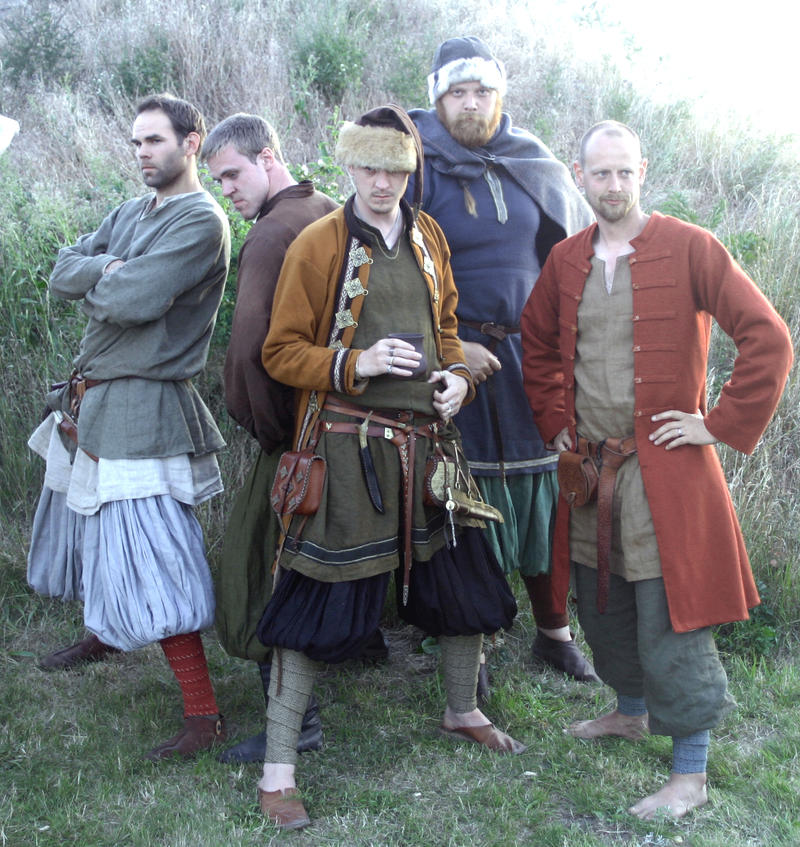
                  I'm going through the setting, adding information to the Google Site.  One immediate change that I made is that I'm changing the name of the balshatoi ethnicity--a name which I've become more and more unhappy with over time--to Kozaki.  This is, more or less, a more "true" transcription of the word that renders in English normally as Cossacks.

                  Of course, the balshatoi aren't really the Cossacks.  If anything, they're more meant to represent something akin to the early Rus Khaganate; Vikings living among Slavs, creating a syncretic culture with elements from the two.  For simplicity's sake; rather than delving too deeply into the esoterica of it, I'm willy-nilly borrowing names, institutions and cultural mores from the Volga Cossacks and the Vikings, and throwing them together, and calling that the Kozaki ethnicity.


                  Monday, January 26, 2015

                  Archery in fantasy stories

                  Archers are very common in fantasy stories; iconic characters like Legolas are archers, and they are based on quasi-historical figures like Robin Hood or William Tell.  And, of course, archers are important in actual Medieval military history, which informs so much of the fantasy genre in general.

                  However, I think we don't really understand archery anymore, because it's an obsolete skill.  For those of you who wish to re-emphasize archery, and maybe learn a thing or two about how it most likely actually worked in the Middle Ages, check out this video.


                  Yes; I realize that posting this, while cool and somewhat on-topic, is really punting.  Are you ever going to talk about DARK•HERITAGE again, some may wonder.  As it happens, I'm slowly getting to work on putting together the wiki page that will replace my older wiki pages, now on Google!  As I've said before, and maybe one or two of you may have noticed, I'm taking the opportunity presented by my forced migration to re-organize and revisit the setting; possibly even retconning it to some (relatively minor) extent.

                  I'm also feeling serious about getting to the bottom of producing some digital maps, something else I've wished to do but been too intimidated to actually do, for some time.  So yeah; I hope and expect to see some new and hopefully interesting DARK•HERITAGE content once again become the focus of the blog for much of 2015.

                  Tuesday, January 20, 2015

                  Ron Edwards on the state of fantasy and gaming in the "early years"

                  http://darkheritage.blogspot.com/2013/01/a-few-generic-rpg-and-d-related-thoughts.html

                  The third (of three) discussion points in that refer to Ron Edwards' "Naked Went the Gamer" essay, which treats--in a way--gamer culture and fantasy/sci-fi fandom culture in the 1970s and 80s and early part of D&D's life cycle, basically.  If you read that, you'll notice that I largely disagree with his essay, even while I concede that he has a point.

                  I just read another new interview with Ron Edwards, which I liked better, and which I found easier to agree with.  It's an interesting read for anyone who is a fan of D&D; especially older D&D.  I found his almost off-the-cuff references to the vector of folks who came into gaming as fans of fantasy fiction first to be interesting.  He may have thought that was rare back in the day (and maybe it was) but just a few years later, it was much more common.

                  Anyway, the new interview is here:  http://www.castaliahouse.com/a-conversation-with-ron-edwards/

                  Monday, January 12, 2015

                  Shadow Swords in the Land of Three Empires

                  The Shadow Sword is a new class to DARK•HERITAGE m20.  Rather than add it to the document, it's going to be only semi-official here on the blog.  My intention for this class isn't really that it be "core" but that it be an extremely rare ability that few have.

                  Shimut the Flesheater, a member of the loosely defined "Heresiarchy of the Twelve" is said to be the sorcerer who invented the concept of the Shadow Sword.  As with literary character Beorn the skin-changer from The Hobbit, Shadow Swords are "under no enchantment but [their] own."  Able to access a small amount of magic--or The Shadow, as it is sometimes colloquially called--Shadow Swords can do basically one thing.  Other than that, their abilities are exceptional, but not supernatural.

                  Shadow Swords are more common among the Northlander race, although even there it is rare.  Very few others have learned to harness the Shadow in the manner in which Shadow Swords do.  Northlander Shadow Swords usually belong to one of the many strange Death Cults from the Cannibal Island and elsewhere which produce mystical assassins, of which the Shadow Sword is the most prominent variety

                  Some hamazin kemling revanchist cells among the Cherskii Mafia have also learned the procedure from some unknown vector, and as the Cherskii Mafia has lost its original focus, the knowledge has slowly seeped out to a few others.  Mostly still limited to assassins and other purveyors of "black ops", most people in the Land of Three Empires still have no idea what a Shadow Sword is or what he can do, and those who know the skills of a Shadow Sword are very discrete, handing down their knowledge rarely and carefully to hand-picked apprentices only.

                  The most iconic ability of Shadow Swords is the ability to manifest a weapon of pure Shadow at will.  Despite the name I've used to represent the class, this weapon can actually be any weapon that the character desires (although curved sabers seem to be among the most popular).  This includes missile weapons, even--although not any complicated mechanical weapon, such as a firearm.  Any melee weapon, any thrown weapon, and any missile weapon other than firearms can be manifested as desired by the character, summoned at a moment's notice, and then "banished" again back into the Shadow as desired.

                  This weapon is usually a cool, matte black in appearance, and often seems to seep or exude darkness almost like smoke.  Nobody but the Shadow Sword himself can use this weapon (i.e., he can't hand it to anyone else, and nobody else can pick it up if it's thrown, for instance--usually if it's thrown, the Shadow Sword would immediately disperse it and resummon it back into his hand again as soon as it has done its damage.)

                  Because a Shadow Sword is always armed, even if he appears not to be, those with this ability have naturally gravitated towards "black ops" type professions and assassination, to which this ability is remarkably well suited, but this is a trend not an obligation to those who belong to this class, naturally.

                  Shadow Blade: Gains combat bonus advantages to attack and damage, but only when using a shadow sword; a blade of pure shadow substance that can be summoned at a moment's notice. Also, any unarmored character with this ability can add ½ his character level (rounded down) to AC, and can, instead of attacking, deflect missed missile attacks, including bullets, back at anyone shooting at him (rolls as if making a missile attack himself, can only apply to missed shots; hits still do damage as normal to the Shadow Sword character and cannot be deflected.) If the character doesn't move or take any other action, he can use his shadow blade to “fight defensively") by adding +4 to his AC against missile attacks. Missed attacks when “fighting defensively” can be deflected.

                  Shadow Swords also can cloak themselves in Shadow, which makes them difficult to spot.  They gain a class bonus of +3 to Subterfuge.  (I know, I know; Subterfuge is also used for a number of other actions besides literally sneaking around, including bluffing, creating a forgery or disguise, lying, etc.  That's OK.)

                  Some designers' notes, briefly: The class started off being, basically, a Jedi from my Star Wars game.  I decided to ditch the Force powers in favor of making him sneakier (as well as looking less obviously like a Jedi), so it ends up feeling, in many respects, more like a hybrid of the Assassin prestige class and the the Soulknife, rendered in the much more simplistic m20 ruleset.  I long ago had the concept of an Advanced Class version of the Soulknife as part of my d20 Modern version of the setting, although it was an esoteric option that wasn't always easy to find.  As I said earlier, I've often been back and forth on the fence about whether or not I think it fits my conception of the setting.  Currently, I'm leaning much more towards making the setting a kind of swashbuckling noir setting rather than the somewhat darker version of the setting which is more Lovecraftian horror in sword & sorcery drag.  The class fits better in the former tone than in the latter, and I think my drift in that direction has been a long time coming and is probably permanent, so it fits as I see the setting now, and probably will do so for good.

                  Wednesday, January 07, 2015

                  Pillars of Creation

                  Like many others, I of course really loved the Pillars of Creation image from Hubble; a close-up of some dark nebula structures within the Eagle Nebula.  As a kind of anniversary present or something, NASA took a new, high-res, and unobstructed picture of the structure, which I now present for your somewhat random off-topic viewing pleasure.


                  Tuesday, January 06, 2015

                  A few Star Wars gaming thoughts...

                  ...that didn't quite make it into the post below.

                  First, if I do end up making the Jedi (with some judicious name and label changes) a class that's available in DARK•HERITAGE as a kind of Soulknife, then it raises another question.  Why not just add the a la carte class options of Star Wars into DARK•HERITAGE all the way?  That's not actually a bad idea, and I've done a fair bit of cross-pollination between the two already, but in general, I probably won't go much further than I already have for one main reason: Star Wars is very expansive.  It envisions an entire galaxy, in an optimistic space opera paradigm, of life forms and possibilities.  You can never hope to represent all of the options available to potential player characters in such a paradigm, so an a la carte build-it-yourself approach to class and race is a suitable alternative to tedious exhaustiveness.  On the other hand, DARK•HERITAGE is a geographically constrained area on one fantasy world.  I could possibly open up the classes a bit, but the races are pretty fixed as they are.

                  Second, I realize, on thinking about it, that there are at least three characters that probably aren't very well represented by the rules for m20 Star Wars.  Yoda and Palpatine seem to be force-using prodigies that can't possibly be constrained by the hit point damage (representing fatigue) that other Knights are subject to.  And Mother Talzin seems to be some kind of witch or sorceress that uses rules that are completely absent from my ruleset.  I actually think this is OK.  For one thing, I don't think that it is necessary for NPCs to follow the same rules as PCs, and all three of these characters are definitely NPC type characters that shouldn't ever be represented by a PC.  If I were to try and build them as characters, I'd probably give Yoda and Palpatine some kind of unique "damage reduction when using Force powers" ability that reduced or even eliminated their fatigue from using the force.  Mother Talzin would probably have to cast actual spells, as per my other m20 ruleset.  This is OK, because she is represented less as a Force-using type of person and more as a magical witch of some kind.  This isn't ever really explained, but there it is.  She also seems to be unique, or at least her order is unique.  Of course, in my version of the setting, a slightly modified Nightbrother and Nightsister cult still exists, and if anything, is stronger than it was during the Clone Wars, but that's OK.  Mother Talzin is still more of a mentor/patron type NPC, or perhaps an adversary, but not a PC.  Honestly, I probably wouldn't worry too much about how to represent her with rules, and consider her an extra-legal plot device more than anything else.

                  I know, I know.  Some gamers get really bent out of shape about the "unfairness" of NPCs having abilities that PCs can't.  I'm not one of those, though--my theory of gaming doesn't even necessarily say that NPCs need to have any stats at all, and they can do whatever I need them do.

                  Third, I read the Darth Maul--Son of Dathomir comic book, which would have been a story arc of the Clone Wars if it hadn't been cancelled for business reasons which us fans of the show gnash our teeth at somewhat.  Interestingly, it posits at the end (MINOR SPOILER ALERT!) that Darth Maul was essentially removed as a threat to either the Jedi or the Sith when Mother Talzin was (apparently) killed (again) and his Shadow Collective was broken apart.  Of course, he wasn't killed, he was just... somewhat neutralized as a power.  Of course, in Season Five, he built up that power from scratch over the course of just a few episodes, so there's no reason to think that he couldn't do it again, but clearly the implication is that 1) Maul survived the Clone Wars, and 2) Maul ceased to be a mover and shaker in the galaxy following the Clone Wars.  And, as it happens, Maul was using the Darksaber instead of his classic red double-bladed lightsaber.

                  This maps astoundingly well to my own assumption that 1) sometime after Jedi, the Nightbrother and Nightsister cults underwent a bit of a Renaissance with 2) a much stronger position of the Nightbrothers within the cult (as opposed to the more submissive role that they played on Dathomir during the Clone Wars) who traditionally 3) use Darksabers rather than regular lightsabers.  In fact, I can now go on and say that it is in harmony with canon to suggest that Darth Maul himself went on to rebuild this cult following the events of Son of Dathomir, possibly with the help of surviving Nightsisters somewhere, or the ghost of Mother Talzin herself, even, and that it would turn out looking exactly as I have them look.  It's almost eerie sometimes how much the developing new canon, and stuff that Dave Filoni says, etc. matches my own particular take on Star Wars, which deviates (on purpose!) substantially from the EU style canon.  Which, of course, is now no longer considered canonical anyway.

                  Star Wars gaming

                  Last night I watched a bit more Clone Wars Season 1.  I saw the episodes "Jedi Crash" and "Keepers of the Peace" which have the insanely stupid and annoying Lurman people.  This was interesting to watch again, after a year or two, because in the meantime I've discovered--or rather, more properly digested--the r/K theory of evolutionary psychology as applied to political and social issues, and it's easy now to see the Lurman as a fictional representation of bizarre yet somewhat commonplace r-selected delusions.  In any case, the ideological bent of the Lurman was somewhat deflated by the end of the second episode, so that was at least a satisfying conclusion when it's shown to be insufficient to deal with the real world, even if all things considered, the characters feel like they wish that it wasn't.  But that's neither here nor there: I should finish the third disk of season 1 tonight, I hope, and will be on towards finishing the season and moving into season 2.  Like I said earlier, while there are good (and mediocre) episodes in every season, I do strongly believe that in general the quality across the board improves as the show progresses, so I'll be anxious to move forward.

                  Another thing I noticed was how "cool" the Jedi were in that episode.  There's a lot of inconsistency in terms of how combat capable they are; three Jedi and two clones successfully take on a virtual army of droids in "Keepers of the Peace" whereas in Attack of the Clones itself a similar sized force of droids and Geonoshians kill and essentially defeat dozens of Jedi, and the survivors only have their bacon pulled out of the fire at the last minute by the arrival of the clone army.  If the Jedi are so cool in "Keepers of the Peace" why are they (relatively) so vulnerable in Attack of the Clones?  The real answer, I suspect, is that the two are simply inconsistent, and they strike a different tone and reflect the priorities of different writers and directors, etc.

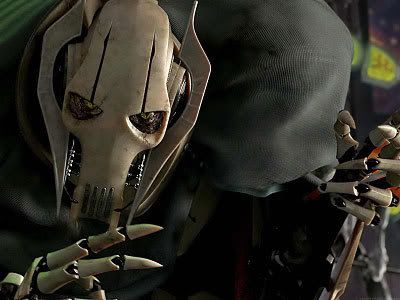
                  For my money, I prefer a paradigm more like the scene mentioned above from the movies themselves.  Jedi are pretty cool; but they're not that cool.  Battle droids can certainly still threaten them in numbers, and other more capable soldiers--such as hot-shot mercenaries or Mandaloreans, can do so even more easily.  The rules for my m20 Star Wars should reflect that, I think--as do most of the other Star Wars rulesets.  This is based more around keeping the various classes balanced with each other, which is a game design goal that doesn't necessarily line up with a comparable in-fiction setting design goal, but for what it's worth, it does better reflect the fiction of the movies most of the time, at least.  With the exception that cool personalized antagonists seem to always go down like chumps in the movies, due to really bad writing (Boba Fett, the Emperor himself, Jango Fett, Darth Maul, General Grievous, etc.)

                  Speaking of my m20 ruleset, I'm going to make a few adjustments, thus moving the revision to 1.1.1 (from 1.1.)  Mostly, it occurred to me that with my new a la carte classes, which moved the doc from 1.0 to 1.1, I didn't think of going and correcting some references to the old classes in the equipment section, specifically with regards to armor.  Rather than simply edit the references a bit, though, I gave some thought to whether or not I even wanted armor to restrict class abilities so punitively, and decided that I don't.  But I do want there to be some incentive to not necessarily just always go for the heaviest armor you can afford, since that's not really in the swashbuckling vein of Star Wars to have everyone wearing heavy armor all the time.  What I've come up with somewhat based on Kirin Robinson's Old School Hack, actually, which awards Action points (or whatever exactly he calls them; there's a lot of labels out there for the same concept and I often forget which each particular game uses) and awards more in particular for using less armor.  This of course reminded me that while my m20 DARK•HERITAGE ruleset uses them, my m20 Star Wars does not.  It was always my intention to incorporate them, but I never got around to it, I think.  I'd give everyone two Action points per session (that don't carry over from session to session, to encourage you to use them and be more swashbucklery.)  They can be used to add a 1d10 to any d20 roll; an attack, a save, a check, etc.  It can also be used as a "healing surge"--i.e., you burn the action point and get an immediate 1d6 hit points healed back.  If a character is using heavy armor, he gets no additional action points per session beyond these two, but if he uses medium armor, he gets one additional action point.  If he uses light armor, he gets two additional action points, and if he uses no armor at all, he gets three additional action points.  GMs are, of course, encouraged to make sure that players don't abuse this by trying to put on armor right before a fight after already cashing in action points, or any nonsense like that.  I tend to think of Star Wars characters as having a signature set of gear rather with other stuff only picked up as occasions require rather than the D&D paradigm of carrying a caddie with a golf bag full of weapons that can be customized to whatever enemy you're fighting.

                  I'll also add a bit of minor text about cybernetic enhancements a la Darth Vader or General Grievous, but mostly I think I'll just treat it as if it were armor.  General Grievous would, then, have class features of Combat Bonus (not Lightsaber Training, since he can't use his lightsabers to deflect blaster shots, and has no force ability) and maybe sneak attack, since he's a coward who fights without honor, for the most part, as well as heavy armor to represent his cyborg body.  Jack him up to fairly high level--7 or 8, at least, and you've got a decent representation of him as depicted in the Clone Wars, who would be a major threat to most Jedi and certainly to most other characters and any mooks.

                  All of that will get us to 1.1.1--this is mostly fixing a few cascading effects of the change made in 1.1, plus a few other things that I thought of.  Not significant enough, in my opinion, to justify a change to 1.2.

                  The final thought I had was actually orthogonal to Star Wars, and might be relevant to my DARK•HERITAGE ruleset; or would be, anyway, if I used d20 still to represent it.  I use magic rules that are designed to make magic less ubiquitous than in D&D, but it's not really my intention to make it punitive per se, just rarer and as having less of an impact on the game itself.  I've often given some thought to making the concept of the soulknife integral to the setting, although again, they'd be extremely rare in actuality.  However... the rules for the soulknife really kind of suck.

                  But if you think a little bit outside of the box, it may occur to you to use the d20 Jedi Guardian from one of the d20 editions of Star Wars--probably not the SAGA edition, because it changed the rules more, but the Revised one (or the original) would work quite well.  It is balanced, theoretically, to work with the D&D classes (or at least, the Soldier Star Wars class is identical to the Fighter D&D class, so assuming that the Jedi Guardian is balanced for the game that it's in, it should also be balanced for D&D.)  If you assume that the lightsaber is, instead of being a piece of equipment but rather a class feature like the soulknife's namesake class feature, then you're all set to go.  You also need to remove the class Defense bonus (since D&D doesn't have anything comparable, although you could make a case that you'd be better off adding that feature to your other D&D classes instead) and do just a minor bit of work to harmonize the skill list, and you're all set.

                  Like the soulknife, the Jedi Guardian is basically a swashbuckling, lightly armored fighting class (although a much better one than the soulknife, actually) with a minor (relative to a wizard or sorcerer) ability to use some unusual magic that feels different than that of the standard D&D spellcasters.

                  Of course, if I want to adapt this archetype into my m20 ruleset, I'd have to do it a little bit differently, but it helps that I already have a Jedi archetype via my m20 Star Wars rules that I could add in with basically no effort at all.  And I really like the idea as an unusual class choice in a D&D game, especially since I like to focus on the non-standard when I'm in D&D anyway.

                  Monday, January 05, 2015

                  Clone Wars Lost Missions

                  The following is cut and pasted from a portion of a review on Amazon for the Lost Missions DVD (or Blu-ray, to be specific.)  I don't have that; I watched them on Netflix streaming, where they were labeled as Season 6.  I want to get my hands on the DVDs or Blu-rays though, to see the featurettes and other supplementary material, which have in general been excellent for this series.
                  I have something of a love/hate relationship with "The Lost Missions."  The Cartoon Network Clone Wars was a landmark series. It's billed as a "bridge series" between Episodes 2 & 3, but over the course of five seasons, its tentpole arcs thematically eclipsed the prequels to the point where "The Clone Wars" now qualifies as a covert remake rather than a midquel. The redesign of Anakin and the introduction of Ahsoka which drastically altered the core character dynamics (and vastly for the better) only reinforces this. Watching this series reduces "Revenge of the Sith" to a mere expository piece about Hayden Christensen doing a very poor imitation of "Anakin" taking his lava bath and getting his new wardrobe. Everything else about Episode 3 feels like a rehash now.
                  Because of that, I actually feel "The Wrong Jedi" was the perfect ending for the series and so I had some strong misgivings about the announced Bonus Content (aka "The Lost Missions") as I felt it was tacking on an unnecessary appendage to a story that already had a clear through-line that came to an amazingly emotional close.
                  Anyway, I don't mind seeing "The Lost Missions" as kind of a spin-off, if you will, and I'm also aware of the fact that the Season 5 finale wasn't meant to happen at that point in the show; the original intention, prior to the Disney purchase of Lucasfilm, was that the Clone Wars would continue into a season 6 or even 7 before coming to a finale.  "The Wrong Jedi" and the arc to which it belongs, was pulled ahead, so to speak, to end the fifth season so that the show itself could end thematically well.  In that sense, the complaint of the reviewer is a little misplaced; these episodes (and the rest of the Clone Wars Legacy project, for that matter) should properly be viewed as episodes that precede the finale of Season Five, if you will, which otherwise wouldn't have happened as early as it did.

                  Other than that, I completely agree with him that the Clone Wars should really (if one wants to remain a fan of the franchise) be viewed as the rehabilitating "true story" of the era, and the prequels themselves be seen as just a bit of live-action exposition that bookend the series, to some degree.

                  I've been re-watching the series again; starting with the pilot movie.  So far I'm almost three-fourths of the way through the first season, so I have a ways to go, needless to say.  Although to be fair, it's not as much material as it might otherwise seem.  Each episode is 22 minutes sharp (plus about 30 seconds of credits) so that it can fit in it's original TV half hour time slot and allow time for commercials.  Most of the seasons (exception is 5, which was two episodes short compared to the others) pack on to four discs, that have five or six episodes each.  That means that each disk of each series is approximately equivalent to a full-length movie.  Or, in other words, each season is approximately four movies, and the entire run is equivalent, counting the pilot movie, to twenty one movies.  Not an insignificant amount of content, but not overwhelming either.

                  The series continues to improve as the seasons progress; both in storytelling complexity and sophistication, as well as in technical elements (animation and special effects, etc.) so it's always a little hard to start at the beginning and work my way up sometimes.  I'm reminded, however, that even in the beginning, it was a solid piece of work.

                  Anyways, here's a playlist on Youtube for the Son of Dathomir; a comic book converted to a video of sorts.  It's a good way to get the story, I suppose.  I would greatly have preferred to see it as an arc of actual episodes, but what can you do; that'll never happen now, with all of the principles who worked on The Clone Wars diverted to Star Wars: Rebels instead.  And here's another playlist of the Crystal Crisis on Utapau story arc, which was a little further along.  The voice acting and pre-viz animation was all complete, so really all we end up missing is the final animation.  Between those two playlists, each of which represents a story arc that we didn't get, and the upcoming "Dark Disciple" novel, we're about as up to date on the seasons that might have been as we're likely to get.

                  The only sad thing is the unfortunate, listless, whimper-like way in which this all happened.  The creator managed to salvage that by coming up with a good series finale nonetheless, but there was obviously more story to be told; and frankly, not just a few open questions that were never answered.

                  Tuesday, December 23, 2014

                  Star Wars Heritage

                  I've been doing so many Star Wars posts that it has been (temporarily, at least) completely over-running my blog.  I'm thinking of coming up with a temporary banner that reflects it.  But, honestly... I probably won't.  Following my recent refocus, after all, Star Wars related posts are completely on-topic, along with DARK•HERITAGE posts; of which I don't have a lot of "new" material in the works anyway; it's more repackaging existing material.  So today is... more Star Wars.  More Old Republic specifically.

                  I haven't played it much lately, but I've watched a lot of a fairly detailed Smuggler play-through.  I'm starting to find the plotting, the writing, and the interminable stupid NPCs and their stupid quests to be tedious beyond belief.  It's almost impossible for me to believe, at this point, that I'd actually play this thing all the way through.  The game simply isn't very good.  What a shame; it's a great concept; and it's a great take on the setting (mostly.)  There's some great visual design associated with the game.  It looks pretty good (although it doesn't really look terribly better than over ten years old Knights of the Old Republic now that I mention it) but it's simply too tedious and cringe-worthy to justify playing it through.  The writing is worthy of the prequels, both in terms of roll-eyes plot holes and nonsense and in terms of face-palm bad dialogue.

                  As an aside, it apparently won Game of the Year by MSNBC back in 2011 or 2012 when it was newer.  That probably tells you quite a bit about it right there.  MSNBC.  Ugh.

                  But if I had Kathleen Kennedy or Tony To's job, what would I do to salvage the concept of the Old Republic?  Assuming that licensing rights allowed me to?

                  Create an animated ensemble cast TV show, probably!  Not unlike Star Wars: Rebels or the earlier Clone Wars show except with at least one big difference: I'd take an archetypal character from the game: one for each of the eight main character classes, actually: and kinda sorta rewrite their plots from the game, mingle them together somewhat, and spread them out over several seasons worth of action.  Some of the constraints of the game: most notably the need to keep players busy so they keep coming back, hence the inclusion of so many asinine and banal quests for completely unlikable and unsympathetic NPCs, will be eliminated.  In fact, all kinds of writing and pacing constraints can be replaced with some that actually work for the new medium.

                  You can't do anything about SJW except not hire them to write or supervise your product, I suppose.  In general, although they're not completely immune from it, the Marvel and LucasFilm divisions of Disney seem to have managed to avoid the worst of SJW excesses ruining their fun in their entertainment products, however.  I'm hopeful that they can still pull it off.

                  Tuesday, December 16, 2014

                  Star Wars: The Old Republic

                  http://www.eurogamer.net/articles/2012-11-26-star-wars-the-old-republic-re-review

                  My son has started a Bounty Hunter game, and I'm about to ditch my aged (to the point where I've forgotten most of what I've done) bounty hunter game (after coming within a hair's breadth of finishing the second planet, Dromund Kaas.)  I've watched about six hours now--in small chunks at a time--of a Smuggler play-through.  Although the recorder/player did include some flashpoints (Hammer Station, for instance) and space battles, it's a mostly heavily edited playthrough--much of the running around and fighting of respawning stock bad-guys and whatnot is not shown; it focuses much more on the dialogue, the quests, and the boss fights.  Although I'm itching to play the game a bit myself, I'm not at all blind to many of its faults.  The article linked right there, unfortunately, mentions one of the biggest ones--the free-to-play option is almost spitefully punitive compared to the subscriber option; to the point that it's occasionally frustrating to even bother with.  That said; it's still Star Wars, and it's still a reasonably fun game, or at least my past experience with it was fun.  But it's disappointing to see that it didn't live up to its potential.  The biggest problem, which is mentioned almost off-hand in the "re-review" above is that it wants to be an RPG, not an MMO, and it would be decent if it focused on being one, instead of tacking on MMO and pay-to-play options out the wazoo.

                  Here's my (not necessarily exhaustive) list of things that it should have done better, or not done at all:
                  • Options for character creation are extremely limited.  I still remember playing the demo with all of the race options.  Cutting it back to basically human, cyborg and zabrak feels like a slap in the face.  If it were an off-line RPG, a "super-RPG" if you will (it's really almost like 8 RPGs in one; one for each character class, which each have a story of equivalent size and magnitude to the earlier Knights of the Old Republic game) with all of the options available up front, I'd be a lot happier with the result.
                  • Along those lines, I'm not quite sure what in the world they were thinking with offering four body types and only making one of them (maybe two if you're generous) an attractive one to pick.  Who wants to be the scrawny little runt, or Tubby the Jedi Knight?  It's great to offer options, but if realistically you don't have good options, then what's the point?  All of the fat people in the Old Republic galaxy is a really odd choice.  I suspect weird SJW "inclusiveness" being a factor there; the designers wanted to allow fat people to feel heroic, or something equally banal and inane.  For male characters, the big beefy option isn't terrible, but I can't really see ever picking anything other than option 2 for body type.  Ever.
                  • Among the MMO specific (and necessary) items that's really kind of bloody annoying is the fact that enemies respawn fairly quickly so that they can be there available for the next guy to come along.  Occasionally this isn't a bad thing; you can count on respawning bad guys to be a source of potentially unlimited (albeit tedious) XP, for instance, and when you don't feel like fighting them, you can hang back and ride on the coat tails of someone else who just cleared the area for you, I suppose.  Mostly, though--I'd just kind of prefer that I could kill the enemies and then they stay dead so I can count on the area being cleared again when I pass through a second time.
                  • Another one is the multi-player missions, flashpoints, and the like.  Now, I like the idea of side quests, but I'm supremely annoyed, honestly, about having to recruit someone else to go along with me, and then hope that that works out.  What I'd rather do is be able to bring along two companions (as in Knights) and have the difficulty geared so that they could be won in single-player with two companions along.  I find all of the endless "run around killing tons of bad guys so you can fetch something" quests very tedious after a while, and it's nice that they're optional (to a point) but they could easily be less tedious if we could just do them in solo player mode offline.
                  • Speaking of which, I know that the personal side-quests are part and parcel of the genre and they give players something to do without having to always be focused on the main task and all, but this actively dilutes from the Star Wars feel, frankly.  Not only that, many of the side treks are silly and petty.  From relatively early on in the smuggler story, for instance, you've got that poor nautolan guy on Coruscant who's looking for his girl friend or wife or whatever, who left him to go join a dancing troupe.  The whole thing is just awkward and embarrassing.  I can't believe anyone thought that was a good idea to write.  The brother and sister guys on Taris who are yelling at a soldier because their farm was under attack by rakghouls, and yet the soldier explaining to them over and over again that the area wasn't cleared for settlement yet, came across as extremely whiny and entitled.  We're supposed to sympathize with these guys?  I was more inclined to let them rot.  On the plus side, it is a great object lesson on some of the details of r/K-selection theory.  The writers clearly literally can't understand a scenario in which resources are too limited to allow everyone to have everything that they want.  There's actually a lot of whiny, entitled dialogue.  It's really tedious listening to the sob story of every stupid schmuck in the galaxy.  Most of whom, quite literally, are extremely stupid.
                  • That said, another non-Star Wars feeling detail--the Republic aren't really the good guys.  I'm not quite sure what they were going for, but constantly showing Republic officials as either inept or corrupt (often both at once) might be realistic when it comes to real federalized government bureaucracies, but it sure doesn't feel very much like Star Wars.  It'd be a lot better if the Republic weren't portrayed as a bunch of flawed and therefore angsty do-gooders, but were instead a very light government presence who was more about ensuring freedom rather than providing a bunch of other odd and unexpected services to a gaggle of whiny, demanding, spoiled brats who claim citizenship.  The Rebellion in the original Star Wars saga wasn't a big bureaucracy, it was a flat meritocracy of can-do independent types; not unlike the settlers of the Old West or the patriots of the American revolution (which no doubt was done to some degree on purpose.)  BioWare has lost track of what Star Wars means, and that's a bad thing.  Then again, BioWare is a bit notorious for becoming a sink of SJW political correctness, so in retrospect, maybe that shouldn't be too surprising.  Sigh.  And for that matter, George Lucas himself these days sounds an awful lot like an SJW, so I think that's a battle that's been lost, for whatever it's worth.  It's not like ownership by Disney is likely to return it to anything else.
                  Ultimately, nothing compares to the open-ness of an actual face-to-face pen and paper RPG, such as my Star Wars m20 system, or the Edge of the Empire game by Fantasy Flight (or d20 Star Wars by Wizards of the Coast, or d6 Star Wars by West End Games, or whatever other home-brew you've come up with using GURPS, or Unisystem, or Savage Worlds or whatever in the world you use.)

                  Of course, this doesn't compare with the sensory experience of Star Wars, which--in spite of George Lucas' dissatisfaction with it in later years--was a huge part of the draw from the very beginning; the special effects of the Star Destroyer filling the screen for the better part of thirty seconds, the screaming of the TIE fighters overhead, the snapping and crackling of the lightsabers as they clash, the surprisingly emotive sound effects of characters like R2-D2 or Chewbacca; no matter how much one tries to describe them (and I've read a lot of Star Wars novels where writers have tried) it's an unsatisfying substitute.

                  I hope, still, to get the Star Wars gaming experience that I really want someday, but I don't necessarily expect it.  My expectations are rather finicky, and unlikely to be met by anyone.

                  EDIT: And as I go through more of the Smuggler storyline details on Youtube, I'm amazed and amused (although not in a good way) that the "Smuggler" character has a moral objection to the smuggling operation of Tyrodall.  Just idiotic.  The smuggler who dislikes smuggling.  That particular plot hole, while not monumental (it's really just kind of a side-quest type thing) is worse than any in the movies.  Then again, maybe it was the choices that the player made that you don't necessarily have to make... although you do if you want to get light side points.  Ridiculous.

                  EDIT 2: I should give credit where credit is due, however, to the brilliant visual design and soundtrack for the game, as well as the setting set-up, at least.  Absolutely no complaints there.  I've been listening to the soundtrack for quite a long time, actually.  The original 17 tracks are available on a CD that is... well, mostly unavailable nowadays, although I snagged a copy when they were still on sale at a reasonable price on Amazon.  And then, BioWare released most of the rest of the tracks as free mp3s which are still available on their website.  The best stuff borrows themes and cues from the original score of the movies, of course, but there's good stuff all around.  I find many of the the various cantina songs to be remarkably and surprisingly charming.  "Average Brown Wookie" is probably my favorite of these (in part because of the name) and "Run Kessel Run" has the most iconic musical references to the Cantina Band song of the first movie.

                  Here's a youtube playlist of the entire 45 track collection.  https://www.youtube.com/playlist?list=PLC06B7C9CF80A3731 which includes the original soundtrack plus all of the extras.  Get yourself a good youtube to mp3 converter if you can't find the original CD anymore, and you could be listening to the entire Old Republic music during your own Star Wars RPG sessions.

                  EDIT 3: I should point out that the game itself uses not only its own original music, but also re-uses a lot of music from Knights of the Old Republic, which is also a BioWare game.  If you really want your own gaming session to sound like you're playing Old Republic then you probably need to find that soundtrack somewhere too... if you're really particular.  In my experience, the KotOR soundtrack isn't really all that memorable, or even listenable except as innocuous background music, but that's OK.  One might ask, why not go straight to the source; the movie soundtracks are readily enough available, and are... well, are the original?  My answer there is that individual tracks in the movies tend to change mood and tone quite a bit, often in ways that might be jarring during a game session.  Also, the music is so familiar to fans of the movies (at least to me) that I can often picture in my mind exactly what's happening at any point in the movie just by hearing the music.  This is, needless to say, a bit distracting.  The Old Republic music, on the other hand, avoids this by sounding like Star Wars without sounding like a specific Star Wars moment from the motion picture soundtracks.  To give one example: the opening cues of the track "Deception, the Sith Warrior" uses the musical cues of the Emperor from Return of the Jedi, but gives them a powerful, fast-tempo march feel that, in effect, makes it sound like "The Imperial March"; otherwise known as Vader's Theme.  This concept of taking one musical cue but making it sound like it belongs in a totally different Star Wars song gives the track resonance; it certainly sounds like it belongs with Star Wars; just not from any particular movie exactly.

                  EDIT 4: The absolutely crazy apologetics for rakghouls and nexu is just bizarre, not to mention the "space PETA" group that you have to deal with to get Drooga the Hutt interested in dealing with you again.  The "morality" of the game is becoming a major hindrance for my enjoyment, quite frankly.  That said; I think the storylines have elements that are worth raiding for my own potential games, mostly by completely ignoring the completely imbecilic side quests and focusing on the main stuff to use as raw building blocks with which to construct the framework of a game for me to run on my own.

                  EDIT 5: And now with both Alderaan and Cademimu, we're getting tons of appeasement as the "good" choice.  Neville Chamberlain would be proud of this narrative.

                  Star Wars m20 v. 1.1

                  As threatened in my last post, I made some updates to the Star Wars m20 setting document and character sheet.  For some reason, I don't have the small character sheet original source file, so it's not updated for the time being (although if I can get to it this evening, I'll do it at home where I have the ability to easily modify the pdf file directly.  Plus, I think I have the original source file stored there anyway.)

                  Anyway, here is the modified rules file:  http://jdyal.webs.com/StarWarsM20.pdf

                  And here is the modified character sheet:  http://jdyal.webs.com/StarWarsCS.pdf

                  The character sheet is best used if printed "duplex" style with the character information on one side of the sheet, and the starship/vehicle information on the other side.  The small character sheet includes both on one side of one page, but since it includes outdated information about classes, you'll have to fudge it just a little bit to make it work, until I can get around to fixing it.

                  Monday, December 15, 2014

                  Old Republic classes as m20 Star Wars archetypes: The Smuggler

                  After dropping out near the end of the second planet on my bounty hunter playthrough, I've been motivated to try it again (haven't had time, but I've had motivation.  Looking to figure that out soon...)


                  However, I've completely lost my place with my bounty hunter.  I'm thinking of starting all over again, as a male human smuggler, I think (to be turning into a Gunslinger.)  Back in the day before The Old Republic became free to play, I played 15 levels (the demo maximum) with a female human smuggler character, and thought it was fun--and in many ways very comparable to the bounty hunter slash powertech anyway.  I've also been watching an edited playthrough with the smuggler class (mostly just the conversations and cut scenes, but with some "boss fights".  It's long--156 linked 15 minute youtube videos--but about four hours in, I'm not tired of it yet.  The same guy who posted this did one of each of the eight classes, it looks like.  I can't imagine I won't feel Old Republic youtube fatigue long before I get there, but at least in the meantime, I'm enjoying it.

                  With my own m20 Star Wars game (including the seeds of a 1,000 years post-Jedi setting), I have four classes, soldier, scoundrel, expert and knight.  This doesn't map exactly to the totally different type of system that Star Wars: The Old Republic uses, but rather, I see the Old Republic classes as archetypes that can be created using m20 classes in a variety of ways.  They're really more role-playing hooks rather than mechanics hooks, but I still see them as interesting interpretations of Star Warsiana that can be useful to me in my own m20 Star Wars game.


                  Let's start with the Smuggler, since I'm watching a playthrough of that class right now.  The Smuggler is, of course, the Han Solo archetype--heroic, but kind of reluctantly, with a patina of bad-boy attitude and Alpha male cockiness.  I see him also as a combination of the good-guy swashbuckler; a kind of British privateer like Captain Peter Blood combined with the Old West gunfighter thrown in.  A small amount of political French Résistance or American Revolutionary War partisan fighters, although they're not overly concerned with politics for the most part.

                  Quoting The Old Republic gaming material, the smuggler is meant to be cunning.  Smooth-talking, sneaky, and outside of the formal authority structure, they move easily through either the legitimate or underground worlds--although keep in mind that the legitimate world, as shown on places like Coruscant, is pretty Underworld-like.  Although the bounty hunter is meant to be a "bad guy" class allied (at least nominally) with the Sith Empire, the smuggler is his counterpart in most respects, and a smuggler could actually be a bounty hunter (lower case) by trade.

                  The Smuggler divides into two advanced classes, either the Gunslinger of the Scoundrel.  The Gunslinger focuses even more on becoming a cowboy in a space western, and adds to that demolitions, sharpshooting and dirty tricks, while the scoundrel focuses on dirty tricks, his scattergun, and--oddly--some healing abilities.  That last is almost certainly a feature required for MMO "balanced party" play and it seems curiously out of place with regards to the archetype itself.  Since I don't have advanced classes, they can be collapsed down into some firearms specialties, demolitions, and dirty tricks.

                  Because the Smuggler class in SW:ToR and the Scoundrel class of m20 Star Wars are both loosely based on the same archetypical character, Han Solo and his "ilk", it seems that the Smuggler archetype would best be represented by a character with the Scoundrel class with some cool guns, some customized light armor, and--of course--a hot rod space ship.  However, a character who focuses more on being a gunslinger than a scoundrel could credibly recreate this archetype with the Soldier class as well.  If your GM allows a little house-ruling, you could hybridize the two classes to get a nearly perfect Gunslinger; a soldier who, instead of a +3 to Physical takes it to his Subterfuge as the Scoundrel does.  Another option would be to take neither and take an affinity as an Expert; that way you can Demolitions or Vehicle Piloting.

                  Heck, it just occurs to me that I don't have Demolitions listed as an affinity, and each of the three non-Knight classes have two abilities; I can officially modify the document (version 1.1?) to allow these "hybrid" classes.  Maybe I'll even name them!  I like the concept of making a la carte classes the way I've already done with races.  Until I get the files updated, here's the skinny on this concept:
                  Class special abilities:
                  • Combat bonus: +1 to Damage and attack at 1st level.  +2 at 4th, and +3 at 8th.
                  • +3 to a skill
                  •  Sneak attack: add Subterfuge modifier to damage roll when sneak attacking.  May require successful subterfuge + Dex check to sneak up on the character in the first place.
                  • An Affinity: the ability to reroll a check if desired if it falls within the spectrum of a specialized area.  This includes (but may not necessarily be limited to): Vehicle Piloting, Vehicle Repair, Droid Repair, Computers, Medicine, Investigation, Nobility, Deception, Stealth, Wilderness Survival, Acrobatics, and Demolitions.
                  • Lightsaber Training: can use combat bonus, but only when using a lightsaber (the ability grants the use of the weapon as well, including the ability to make a new one during downtime if the original is ever lost.)  Also, any unarmored character with this ability can add ½ his character level (rounded down) to AC, and can, instead of attacking, deflect missed blaster fire back at anyone shooting at him (rolls as if making a blaster attack, can only apply to missed shots; hits still do damage as normal and cannot be deflected.)  If the character doesn’t move or take any other action, he can use his lightsaber to “fight defensively) by adding +4 to his AC against blaster attacks.  Missed attacks when “fighting defensively” can be deflected.
                  •  Soldier: Combat Bonus and +3 to Physical skill
                  • Scoundrel: Sneak Attack and +3 to Subterfuge skill
                  • Expert: One affinity and +3 to Knowledge Skill
                  • Knight: Lightsaber Training and +3 to Force skill
                  However, since all classes as a combination of two abilities, you could conceivably create other classes as well.  Here’s some alternate class configurations:
                  • Gunslinger: Combat bonus and affinity Demolitions
                  • Bounty Hunter: Combat bonus and Sneak Attack
                  • Agent: Sneak attack and affinity Stealth
                  • Sith Witch: +3 Force and Force affinity

                  The “standard” classes are as follows:
                  If you don’t take the +3 to Force skill at character creation (normally only available to Knights) then you can’t use the Force skill at all, except occasionally defensively, on the occasions when you make an opposed Force skill, as in to resist a Jedi mind trick.
                  There isn’t really any way to create any type of Knight other than using the Knight class, since the lightsaber and Force use take up the two class abilities, leaving no room for anything else.  Tough.  Knights are supposed to be rare and unusual, not commonplace with a variety of styles.  This, of course, is contrary to the class selection in Old Republic, which has no fewer than half of the options as varieties of Knights.

                  New m20 Iconics: Ottvar Aeldstan

                  Ottvar is a hard man, and a very large one as well.  Unless drunk, he's a man of fairly few words and a sour demeanor.  Ottvar served as a young man with the Variagoi Guard in Terassa itself, but after making a fair bit of money, he tired of the regimented life, and struck out on his own.  He returned to his homeland in the north, where he found himself increasingly in conflict with bandits of Terassan stock and wandering Untash tribesmen, so he tired again, and headed back into more settled Terassan lands, where there were fewer of his race, but many semi-Terassanized people who saw him as a long-lost kindred spirit.

                  Although he dislikes violence, he is good at it, and has usually found work as a hired guard, soldier, mercenary or other field in which the potential for violence was paramount.  But what he really ached for was more settled work, and he used his savings from his time as a Variagoi to buy a farm, settle down, get married, and work in a small village.  He enjoyed this work for only a short time, however.

                  A wandering clan of Tarushan gypsies passed through.  It's not clear if they were traveling with an incognito vampire or ghoul cult, or if they simply had a vicious bokor among them, but Ottvar's wife--and many others of the village--were kidnapped, and most were killed.  Ottvar led the villagers, mostly hardy farmers of scramasaex and nordero heritage, in an effort to recover them.  Ottvar's own wife, turned into a rather nasty zombie, was put down by his own hand.

                  After this, his heart was no longer in farming.  He gave custody of his plot of land to a good local friend and went to Porto Liure.  Falling in with the group those who hunt supernatural threats and protect innocents from their depredations has given him some meaning, and he takes pride in what he does and what he has become.

                  Ottvar is large and extremely strong.  With barbarically styled blond hair, piercing pale eyes, a fabulous moustache, and deeply tanned and freckled skin, he's easy to spot among the mostly olive-skinned and dark-haired ethnic Terassans who make up the majority of the folks of Porto Liure, and his name and a pale shadow of what he actually does is known to many in the city.  Few, even among the criminals, are willing to get in his way--not only because he is very large, strong, potentially violent and intimidating, but because his service to the city is known and respected by most.

                  Character sheet:
                  Name: Ottvar Aeldstan
                  Class/Level: Fighter 3
                  Race: Human (scramasaex)
                  Sex: Male
                  Height: 6'2"
                  Weight: 240 lbs.
                  Hair Color: Blond
                  Eye Color: Gray
                  Skin Color: Tanned
                  STR: 18 (+4)
                  DEX: 12 (+1)
                  MND: 12 (+1)
                  Hit Points: 33
                  Armor Class: 18 (medium armor)
                  Athletics: +7
                  Communication: +4
                  Knowledge: +4
                  Subterfuge: +4
                  Survival: +4
                  Melee To Hit: +8
                  Ranged To Hit: +5
                  Magic To Hit: +5
                  Wealth on Hand: 24 gp, 16 sp, 57 cp
                  Weapons: Claymore 1d10 + 5 damage
                  Rifle 2d8 + 1 damage 300 ft.
                  Other Equipment: Chain shirt (medium), backpack, bedroll, winter blanket, traveler's outfit, fish hook, flint and steel, lamp, waterskin, pack horse, saddlebags
                  Spells: None
                  Notes:

                  Monday, December 08, 2014

                  Gaming in the new year

                  One might notice my general lack of gaming topics lately (which in turn, has caused this blog to slow down considerably, since gaming topics is its primary raison d'être, while other topics of which I'm a fan and occasionally like to blog have largely been removed to other blogs of mine.

                  Which are also moving slowly, I might add.  Part of this is simple; I've just been really busy, and I feel little intellectual capital remains to blog about things.  This can also be seen by anyone who's noticed that the books I'm reading haven't been updated in a long time either.  But with regards to this particular blog, and it's particular niche, I thought maybe a little more was in order.

                  Our gaming group has gone largely fallow lately.  We're at the point where we play, if we're lucky, once every two or three months or so.  And even then, I haven't been to the last two sessions that we've had, because they ended up falling on days where I had a conflict, but since everyone else was available, they decided it wasn't worth it to hold up the session on my account (a determination that I completely agree with, by the way, for what it's worth, etc.)  This means that gaming has kind of fallen into a state of disrepair when it comes to hobbies that are getting active attention and interest from me.  I've also been feeling that, while it needs a brusque restructuring and reorganization, my own DARK•HERITAGE setting is largely pretty complete--it doesn't really need a lot of new material in order to be useful to me.  Rather, it needs a project to put it to use.  This could be a game I run, although clearly I don't have anything in the hopper that's likely to happen in the near future.

                  Because I'm busy (and tired) when blogging, I'm not able to get excited about blogging about a hobby that I'm doing very little with, currently.  So, in a nutshell, that's why it's slowed way down and gotten very quiet.

                  What do I intend to do, then?  A few things:

                  • Probably mothball some of my esoteric setting development exercises, specifically SOLNOR, ODD D&D, REALMS TRAVELER, AD ASTRA, and HYBRID DREAMLANDS.  I'm not cancelling them exactly, but they are going into "development hell" as they say in the movie biz, to be pulled off the shelf and discussed maybe some more when conditions are more favorable again.
                  • Continue (or start, really) the restructuring and reorganizing of the flagship DARK•HERITAGE setting that was precipitated by the dying of free wikispaces wikis, and migration to Google Sites.  One thing that I've been very interested in doing for a long time is literally redrawing the map, renaming a few sites, and having it all established as a digital file that I can link to.  Discussing my setting in the abstract without showing a map has been difficult for me, as I'm a bit of a cartographic kinda guy; I've always loved a good fantasy setting map.  Give updates here as this progresses, including cutting and pasting some of the content that I think is interesting enough to warrant it here.
                  • Continue with my development of a 1,000-years Post Jedi Star Wars setting.  Maybe even attempt to run something in this space for my younger boys.
                  • Continue to update my other blogs, including my hiking and backpacking blog in particular (my paleontology, electronic music fan-dom and fighting game blogs don't have much going on, and probably will remain so for the foreseeable future.)
                  • Figure out some way to jump-start my long lingering fiction attempts in my flagship DARK•HERITAGE setting.  Finding time and mental energy to devote to to writing fiction has proven difficult at the end of long and busy days, but I'm going to come up with something, because if I don't, I'll be extremely disappointed.

                  Tuesday, December 02, 2014

                  Some Star Wars potential spoilers

                  Don't read this if you're averse to spoilers.  Although these are more truthfully claimed as rumors, not spoilers.

                  https://www.youtube.com/watch?v=89A3wxJGOp4

                  The Rule of Two was bypassed with the foundation of the Inquisitors.  Viewers of Star Wars: Rebels are not surprised.  No New Republic, though?  Cool.

                  https://www.youtube.com/watch?v=u8SoBcq9ZdI

                  Didn't he see the International Trailer?  Rumors: new series on the way for TV; presumably not to replace Rebels, but to run alongside it.  Cool.

                  Monday, December 01, 2014

                  New Star Wars trailers

                  Yeah, yeah... you've already seen it.  And what's the deal with my lack of activity?  Well, the second is harder to answer, so I'll leave it for now and just link up to the two new trailers.  Two? Sure, you saw the international version too, right?  It's totally different than the US trailer.


                  Friday, November 07, 2014

                  New m20 Iconics: Ibbisin Nannar

                  Ibbisin Nannar is a hamazin kemling expatriate.  Born in glittering Simashki to a concubine of a leading light of the Cherskii Mafia, she was at a young age viewed as potentially useless and nearly put out on the street.  However, a friendly trainer for the Mafia saw in her a spark of potential; a ruthlessness and deviousness, willingness to take risks, and talent as a thief, and she was allowed to remain, and even trained by the assassins guild within the Mafia.  In this, she excelled far beyond her trainer's expectations, yet still she was passed over in favor of stronger and even more ruthless men in her class.  Correctly perceiving, at the young age of 16, that she was a liability to the Mafia if they weren't going to use her, she escaped Simashki and traveled south, eventually arriving in Porto Liure.

                  Ibbisin has an intimate acquaintance with The Shadow.  In Simashki, she was raised in a cell that still clung to the Old Ways; the original charter of the Cherskii Mafia that is largely forgotten by most who remain in the organization today, especially those who live expatriate lives.  She was tutored and educated in arcane arts, although she herself is no spellcaster, and fears The Shadow tremendously.

                  On arriving in Porto Liure, she had little to her name other than her skills, so she quickly put them to work as a cat burglar, and before long she had amassed a fairly significant bit of wealth.  She soon found, however, that she had brought upon herself unwanted attention not only by the Watch in Porto Liure, but also from other criminals and organized crime, including that of the local Cherskii Mafia.  Of course, she had no reason to suspect that the local Mafia would be aware of her connection to that of Simashki, but this scared her into keeping a lower profile.  After fencing her goods, she found that she had enough to set herself up as a student at the Academy, and at the age of 17, was an independent young girl living in the dormitories.

                  She was fated to find herself still in trouble, however--her room-mate, a Terrasan girl named Natalia Miroz was caught in the Fall of the Church of Starry Wisdom.  Somewhat reluctantly, Ibbisin helped her room mate escape trial and sure sentencing to execution by firing squad (witchs are traditionally shot and their bodies burned in Porto Liure, by law).  Natalia is still out there in Porto Liure somewhere, in hiding, and using her growing arcane power to bring woe to the city that condemned her and her colleagues to death.

                  Ibbisin fell in with Vaz do Camões a year ago--now four years after the Fall of the Church.  While still young, she is experienced and hardened, and her fear and respect for the supernatural has grown.  She immediately saw the value in working with a group that is pledged to combat its baleful influence in the city, and agreed to join the small group (at the time, it was only Vaz do Camões himself, and his "bodyguard" Ottvar Golovskin.

                  Ibbisin does not live on the Rua like most of the rest of the group (for one thing, it's proximity to the Church of Starry Wisdom makes her uneasy)--rather, she maintains a presence at the Academy, posing as nothing more than a student.  Now that she no longer has to pay for her own tuition, room and board, she intends to continue studying for as long as she's allowed; not only does she enjoy learning for its own sake, but she is well aware that the temptation many students have to delve into knowledge that should be left alone brings many threats to the Academy itself.  She has positioned herself with a minor staff role in the Biblioteque at the Academy, and keeps an eye open at all times.  Although she is retired as a cat burglar, and her training as an assassin never actually culminated in working as one, she is still extremely stealthy, and uses her skills to further the aims of the iconics' group.

                  Character sheet:
                  Name: Ibbisin Nannar
                  Class/Level: Rogue 3
                  Race: Kemling (hamazin)
                  Sex: Female
                  Height: 5'5"
                  Weight: 125 lbs.
                  Hair Color: Black
                  Eye Color: Yellow
                  Skin Color: Sooty dark gray
                  STR: 13 (+1)
                  DEX: 16 (+3)
                  MND: 14 (+2)
                  Hit Points: 26
                  Armor Class: 16 (light armor)
                  Athletics: +3
                  Communication: +3
                  Knowledge: +3
                  Subterfuge: +6
                  Survival: +3
                  Melee To Hit: +4
                  Ranged To Hit: +6
                  Magic To Hit: +5
                  Wealth on Hand: 21 gp, 13 sp, 4 cp
                  Weapons: Machete 1d6 + 1 damage
                  Bow 1d8 damage 500 ft.
                  Pistol 2d6 damage 100 ft.
                  Other Equipment: Leather armor (light), Bedroll, Bell, Candle, Chalk, Courtier's outfit, Explorer's outfit, Crowbar, Flint and steel, Grappling hook, Hooded lantern, Lock, Mirror, Rope, Signet ring
                  Spells: None
                  Notes: Sneak attack, Night vision

                  Thursday, November 06, 2014

                  Game books as a gateway into gaming

                  Although I technically played D&D (once) before, or at least about the same time as I stumbled across the concept of the interactive book, I think it's fair to say that the interactive book had a much stronger impact on me and helped grease the skids so that I would later be attracted to the notion of gaming in the first place.  In the late 70s and throughout much of the 80s, there were a whole host of these kinds of books, most of them spawned by success of the very first series, Choose Your Own Adventure.  I discovered them in an English class in probably 3rd grade or so?  Possibly 2nd?  I ended up buying about three dozen of them over the years, many of which I still have (although not all.)  I believe the first one I read was actually the first one period: Cave of Time, although it later turned out that a book I read later, Sugarcane Island in the Which Way Books series was actually the true first book in the series, published in a small imprint.  The ones I knew were the ones published by Bantam and widely available almost everywhere after they had been in print in limited form for some time.  One of my favorites was the first Which Way book, The Castle of No Return, which was a fair bit darker than most of the actual CYOA's, and which featured a haunted house theme, basically--but which might also instead have turned into a spy or thriller type theme, depending on what choices you made.

                  Of course, I also liked a lot of the actual, original CYOA series; Third Planet from Altair, The Cave of Time, The Race Forever, By Balloon to the Sahara, Space Patrol, Escape, and others still remain fixed in my memory as fond remembrances of my childhood.  I actually tried to look some of them up at the library, and I found that while back in print again, they have all new art and modified text.  Reading The Race Forever without the old Paul Grainger art and being able to pick my Toyota Jeep was just plain wrong.  It didn't take.  Sadly, that's not one that I managed to keep.  One of these days, I'll probably seek out a used copy.

                  It didn't take long before people with ties to the gaming industry decided to make use of the concept.  There were actually official D&D CYOA books, called Endless Quest, although I don't remember actually liking them much.  Rather, I liked the ones that actually had a few character sheets, some rules, and expected you to roll dice and enact combats by yourself against monsters.  One thing that these did, also, was greatly increase the number of sections by not limiting themselves to one section per page.  The first I discovered of these were the Fighting Fantasy Gamebooks, which are still probably the best and most iconic.  Luckily, however, I didn't discover the first in the series first, because Warlock of Firetop Mountain, while considered an iconic classic by some, was really frustrating and frankly kind of ugly.  Instead, I ended up with Forest of Doom and City of Thieves first (although I later bought maybe half a dozen others.)  As you can imagine if you've read my old posts on my setting, the latter was right up my alley especially.  Although I didn't retain either of my copies of those over the years, I have since bought a used copy of City of Thieves again.  What great artwork that book had!  The cover art, on the other hand, was a bit sketchy.  On the other hand, the cover art for The Forest of Doom caught my eye immediately.  It's not a bad book, but it wasn't as good as some of the others that I read.  City of Thieves is still a good read, but the "system" in the books is laughably inadequate.  You're better off ignoring it completely and just reading through.

                  In the other hand, the Lone Wolf books had a decent system, and that was part of the fun.  You could actually equip your character, and have a few noticeable differences in how the book unfolded depending on how you did so.  The Lone Wolf books also had a thread, or "meta story" that unfolded across the titles, and its own setting, which was enumerated in a separate book (which I own.)  I no longer have any of the old Lone Wolf books (other than the setting book), but hey, guess what?  You can read them for free online, thanks to the generosity of the creator and copyright holder!  Check it out!  I had, at one point, more than half a dozen Lone Wolf books, but only the setting book, or The Magnamund Companion still remains in my possession.  I especially recall really enjoying this bit of cover art here, although altogether the series was quite good.

                  Lastly, the final (and my favorite) series was Tolkien Quest, which only had a few entries before being renamed Middle Earth Quest (this shouldn't be terribly surprising given my decades long love affair with the work of Tolkien.)  This was then later cancelled before the majority of the entries once listed were actually published.  It was produced by I.C.E., the publishers (and developers) of Middle Earth Roleplaying (MERP), a reasonably popular game of the 80s that was semi-compatible with their generic roleplaying system, Rolemaster.

                  Although I've never actually played any MERP, I do have a copy of one of the editions of it that I bought years ago and can't bring myself to throw away (even though I literally haven't pulled it out to look at it in years, and I've become somewhat disenchanted with the execution over time.)  The Tolkien Quest books actually allowed for you to play using MERP characters, although it also came with its own system.  The Tolkien Quest system was somewhat lightweight compared to MERP (which was somewhat lightweight compared to its parent system Rolemaster; but let's face it, the entire I.C.E. output was notorious for its compexity) but it was still significantly more complicated than anything that another gamebook provided.  Rather, I think where Tolkien Quest really shined was its ability to emulate a hex crawl of sorts.

                  There was a map on glossy cardstock included with the book that had numbered hexes on it.  The text of the book itself was broken up into two main sections (not counting the rules; I guess I should make that three sections.)  One of them was very typical for gamebooks, and had numbered sections that you read, you'd make selections and choices and then be instructed to go to another section based on your choices and selections.  But another vast section was keyed to the map.  To actually progress through the book, you would start out in hex, and once you did everything you could in that hex, and read all of the sections that you might have had to read for that hex, you simply moved to a new hex--any new hex that was adjacent to the one you just left.

                  The first (and in my brief experience, the best) of these books was Night of the Nazgûl, which had your character starting off in Bree shortly prior to Frodo's exit from Hobbiton.  You were tasked by Gandalf (if I recall) with making your way to Hobbiton to warn Frodo to leave at once.  The map gave you a fairly straight road to cross, but if you went to the bridge that crossed the Brandywine, you'd eventually come across a Black Rider and be in trouble, which would encourage you to explore the cross country hexes a bit.  This allows you to, for example, explore the Barrow-downs or the Old Forest.  Or perhaps visit some parts of the Shire or Bree-land that are mentioned briefly but not really seen in the text of The Lord of the Rings such as Tuckburough, Scary, Stock, Frogmorton, Archet, etc.  This hex crawl exploration was truly brilliant, I thought, but it didn't work quite as well for areas that were smaller (such as the other of the two books in the series that I originally bought, which took place on Weathertop, and also had "dungeons" below the fallen tower.  Of course.  :/)  It also didn't work quite as well on the third book that I picked up later, which took place in Mirkwood, featured a visit with Radagast, and had a rather bland overland map without much in the way of interesting or useful features to explore, really.

                  Just for the heckuvit, and because it wasn't hard to find them online, here's a link to the west and east sides of the Night of the Nazgûl map, just so you can see what it looks like.

                  Friday, October 31, 2014

                  Happy Halloween!

                  My favorite holiday.  And my favorite "Halloween carol..."