Wednesday, April 22, 2015

Happy San Jacinto day

A day late and a dollar short, but nonetheless; happy San Jacinto Day!

I've always felt a great sense of belonging to the culture and nationality of Texas. Made of up Appalachian borderlanders, mostly, who had come to America after fighting along the Scottish-English border and in northern Ireland, these borderlanders hated the elitist plantation owners of the south and the totalitarian Yankee busy-bodies of the north equally, they continued west in an attempt to find a place where neither would tell them what to do. Finally ending up in Texas, where they were sandwiched between hostile Mexican forces that shot them on sight, and even more hostile Comanche forces that would raid, kill, torture and enslave on sight, the Texans developed a bellicose "Don't Tread on Me" personality that is unmatched by any other subcultural unit within the US. I am the proud heir of that tradition. As I said earlier, San Jacinto Day marks the day, on paper, that Texas gained its independence, but the reality was that it was a much more prolonged process.
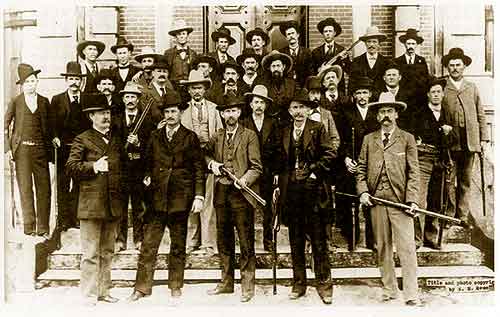

Quoting some stuff that I posted years ago, actually authored by my fathers, who is a doctored US historian, adds a bit more nuance to that short summary above:


On a hot and dusty 6 August 1843, Jacob Snively disbanded his punitive expedition at Fort Bird on the Trinity River, northeast of present-day Fort Worth, Texas. With the cooperation and collusion of the Texas national government, Snively had formed his expedition to punish Mexico for a series of depredations including the debacle of the Mier Expedition, the Mexican sack of San Antonio (the Mexicans did this twice), and other raids. Snively’s 150 Texans roamed around the Santa Fe Trail looking for Mexican soldiers or traders upon whom they could reap retribution. You see, Texas had won its independence from Mexico, but Mexico did not recognize the new republic or its borders. In fact, Mexico belligerently refused to recognize them—hence the raids and a pernicious “shoot on sight” policy. Seven years had passed, and if anything, relations between Mexico and Texas had worsened. Mexican soldiers killed Texans on sight. Texans reciprocated. Snively’s expedition was part of the response. 
The Snively Expedition was symptomatic of a series of problems that faced Texas, and ultimately the USA in the wake of the successful Texas Revolution of 1836. Sam Houston, Mirabeau Lamar, Stephen Austin and others all believed that once they had defeated the Mexicans, then “these United States” (as they were then called) would welcome Texas as the newest candidate to unite with the other states.  
Unfortunately, political and military realities precluded the US from annexing Texas. Slavery snarled the political process. Since the Compromise of 1820, there was something of an uneasy truce between slave and free states, and Texas would have unquestioningly come into the Union as a slave state. Only the German immigrants, Sam Houston, and some scattered free thinkers were opposed to slavery, and they hardly constituted a majority or even a political force—Houston was drummed out of the governor’s office shortly after the revolution. 
Militarily, the US was totally unprepared for war with Mexico or anyone else in the 1830s. While the US recognized Texas independence, and a majority of Americans favored Texas annexation, the government did not and would not recommend annexation—filibusters by John Quincy Adams and others effectively stalled the process. The inevitable result was that Texas’ time as an independent nation lasted over ten years. It remained a hot topic for more than a decade. 
Of course, Mexico did not recognize Texas and nurtured hard feelings about the Texan’s victories. Bitterness prevailed, and lethal Mexican depredations resulted. Any Texans caught by Mexico were summarily executed, and there developed an animosity and fear all along the Texas frontier, roughly where I-35 runs today. Jacob Snively and his expedition were to punish Mexico for their “lawless murders,” unremitting raiding, and theft. Neither the Texans nor the Mexicans would submit nor would they surrender. There was no immediate solution to the bloodshed. 
But that was not the only knife held against the throats of the Texans. On the north and the west was an even more implacable enemy, the Comanche. Warfare with the Comanche had always been one-sided in favor of the Comanche for the simple reason that they possessed all of the advantages: They rode the fastest horses. They were probably the best horsemen in history, or at least they tied the Mongols. They also possessed the only repeating weapon until the 1840s: Writing in 1834, Colonel Henry Dodge observed that while galloping, young Comanche warriors could drop down on either side of the horse and loose arrows under the horse’s neck, rapidly launching 5-6 arrows before the first arrow hit the ground. Anglo-Europeans had single-shot pistols and muskets. Try shooting a six-foot long musket from a galloping horse. Try reloading a musket or pistol from a galloping horse. 
The Comanche owned no goods, built no towns or villages. Thus, hunters could not easily find them to engage or destroy them. Comanche wealth consisted of horses; a successful warrior could have over 1,500 horses and 8-10 wives. They fought to the death; there was no Comanche word for the concept of surrender. Nevertheless, they were not “stand and fight” warriors. They hit, destroyed, captured or killed, and rode away. But if you cornered one, watch out! Comanche leisure recreation consisted of torturing captives and they were very ingenious at inflicting maximum pain without inflicting death. Scalps were the means of keeping score. Captive women were gang-raped before being enslaved or murdered. Men were tortured on the way to being killed. Captive babies were routinely drug behind galloping horses until dead. Only small children were saved, usually to be brought up either as slaves or, rarely, as members of the tribe. These were not people you would invite to your house for dinner. The Comanche defeated the Apache, the Tonkawa, the Blackfoot, and every other surrounding Indian tribe—additionally, they also defeated the Spaniards. Alone among Native American tribes, they rolled back the advancing white frontier. One easily runs out of superlatives when describing their warrior prowess and their cruelty. The Ute word for Comanche meant: “those people who like to kill us.” 
Between the Mexicans who killed them on sight and the Comanche who killed them on sight, there was no breathing space for diplomacy, no capability for alternatives--in fact, no alternatives, period. So what’s the upshot of all of this for the Texans? They had to fight. A Texan, who wasn’t instantly capable or willing to become lethal, did not survive. The legacy of these decades of strife finds reflection in Texas attitudes for generations. Texans like Audie Murphy, the most decorated soldier of World War II, viewed themselves as loyal to whatever cause they were in. The Texas Brigade in the Civil War was one of the most tested and violent units of that sanguinary and violent conflict. The Texas National Guard, called up in World War II as the 36th Division, participated in Salerno, Anzio, Monte Lungo, San Pietro and the Rapido River campaigns. The division garnered 107 Medals of Honor, 2,354 Silver Stars, and 5,407 Bronze Stars—all at a truly horrendous loss: 3,131 KIA and 13, 191 WIA. In other words, the entire division succumbed to casualties. However, it did not shun the fight. They did not discourage. The Texans would die, but they would not surrender. 
This decades-long series of confrontations created other effects, as well. The Goodnight-Loving cattle trail, which snaked from Texas to Colorado and Montana, detoured way south and west into New Mexico before traveling north—why? To avoid the Comanche. Lubbock and most of West Texas was not seriously settled until the Comanche defeat was complete and the Comanche was on the verge of extinction. There was no living with the Comanche. 
This three-sided struggle, Mexicans and Comanche against Texans, went on for years and created, in part, some of the popular cultural themes we associate with Texas. Hard-fighting, quick to take offense, quick to make friends (you needed them on the frontier); Texans became what they had to become to survive. That way of life was forged in combat. 
The Mexican threat largely went away with the Treaty of Guadalupe Hidalgo ending the Mexican-American War in 1848. But the Comanche continued butchering settlers and soldiers well into the 1890s. 
The beginnings of change in the struggle between Texan and Comanche occurred with the creation of a novel institution and the characters that populated the institution. The institution?—the Texas Rangers. 
After the Texas Revolution, settlers from the east and south came to Texas. The land had to be surveyed before it could be sold. The Comanche, while utterly not understanding anything about surveying, knew that the surveyors were forerunners of more settlers. Therefore, the Comanche routinely hunted and killed all surveyors. In response, young ne’er-do-wells were hired by the Texas government to protect the surveyors. Most of them were also killed, but these men, the rangers” who tried to protect the surveyors became the beginnings of the Texas Rangers. The survivors, by a sort of natural selection, became as determined as their enemies. The initial average life-span of a Ranger was something on the order of six months--if that long, until one of their number, John Coffee Hays, realized that the Comanche could be beaten by using the Indians’ own relentless tactics. 
“Jack” Hays, who had been in some hair-raising defensive battles with the Comanche, recognized that on defense against the Comanche, you had little if any choice but to die. He was one of the lucky ones—he did not. But he learned from the experience. He realized that only by attacking was there any chance at all. His small band of Rangers drilled repeatedly, charging, firing two pistols and a musket (3 shots) and then galloping away before anyone could give chase. It worked. 
Hays came to Texas from Tennessee in 1838 and began surveying, then protecting surveyors. He made a name for himself because he could protect his men. Almost motherly to his own command (he dressed all of their wounds himself), he was ice-cold unflappable in combat. Unconcerned about what the enemy could do to him, he thought only of how to take the fight to his enemy—it was all about offense. By 1840, Hays was captain of the San Antonio station of the Rangers, which was now officially recognized by the Texas government (although there is no record that the government initially ever paying them). Regardless, Hays created a new kind of Ranger who was well-mounted, super aggressive and skilled at warfare of any kind. Utilizing Apache or Tonkawa scouts as trackers (both tribes hated the Comanche, as did the Blackfeet, Utes, Kiowas, etc.). Hays’ Rangers became the guerrilla fighting force that Special Forces and the Marines developed well over a century later. They never made fires but always cold-camped. They traveled light and during moonlight. They never bathed nor took off their clothes; they were always ready to fight. Hays’ elaborate drills took 3-4 months of daily practice in riding and shooting before his new recruits were ready—an unprecedented effort. However, the results were impressive. In the fall of 1840, Hays and 20 Rangers encountered over 200 Comanche. Hays led his Rangers in a furious charge; each discharged his 3 shots (two pistols and a rifle). Unnerved, the Comanche fled, its leader shot dead. 
Summer of 1841, Hays pursued a band of Comanche that were raiding and killing near San Antonio. He tracked them for over 70 miles then attacked them. Near present-day Uvalde, about a dozen took cover near in a very dense thicket. Realizing that the thicket precluded bow and arrow fighting, Hays and two of his rangers entered the thicket with knives and pistols. One by one they killed the Indian warriors mostly hand-to-hand, while keeping the rest of the company outside to prevent Comanche escape. Only two Comanche did escape. Hays and his partner killed the other ten, mano a mano. The Mexicans put a huge price on Hays’ head; the Comanche feared him more than any enemy. 
Always outnumbered and outgunned, but never outwitted or out fought, Hays, in his ten ears as a Ranger, lost men, but he never lost a fight. Although some were pretty close.
He and his Rangers joined with Zachary Taylor in the Mexican War. They made a huge impression on all and sundry—they wore no uniforms, equipped themselves (by this time the Texas Rangers had discovered bankrupt Samuel Colt’s revolver, the Anglo repeating weapon), and rode everywhere. They didn’t like taking orders from the Army. Rangers didn’t dismount and they didn’t walk. 
 
Seventy-five Rangers charged 1,500 Mexican cavalry and drove them from the field. The Texas Rangers became legends. The Colt revolver was discovered by the rest of the world after the Texans demonstrated its violent power. 
After the Mexican War, Jack Hays left Texas for the gold fields of California where he became one of the first sheriffs of San Francisco County (hanging many a criminal), founded Oakland, California, ranched in San Mateo County for awhile, and died a ripe old age.

Monday, April 20, 2015

RPG Mysteries

Here's a great article on playstyle.  Specifically, it talks about how to successfully run a mystery game, which is often believed by many RPGers to be unrunable as an RPG scenario.  It is my experience that that is not true; you can have great mystery scenarios, but you need to be a good GM who understands how to run one.  If your experience is more "traditional"-which unfortunately tends to run towards "railroad," then mystery scenario success will probably elude you, and your attempts to do so will probably crash and burn with frustration on both sides of the GM screen.

This article is better than my own ruminations on the subject, because I developed the ability to run them more as an art rather than as a skill; i.e., I never really consciously thought too much about how what I did worked.  This article spells it out in greater detail than I could, because it talks about things that I did more subconsciously rather than consciously, and it develops steps for success that I didn't always necessarily think of.  Although I've had a good time running and playing mysteries in the past, and feel like it's something that I'm capable of well enough, this article even gives me a bunch of great pointers that I can apply to make my mystery scenarios even better.

Due to the choice of source material that I choose to emulate, I actually am much more likely to run this types of thing than any other type of scenario, actually.

http://thealexandrian.net/wordpress/1118/roleplaying-games/three-clue-rule

Thursday, April 16, 2015

Of Hugos and Puppies

While I haven't been posting here much, I've actually been quite active online the last few weeks.  Much of that has been following (and commenting) on the ongoing drama associated with the Hugo awards this year.

https://www.lewrockwell.com/2015/04/allan-davis/leftists-attack-libertarian-sci-fi/

Read that article.  It's a pretty good summary of the situation.  I haven't wanted to make a big summary here, because it's a lot of work, frankly, to retype all of that information in my own words, so I'll just link to that as the gist of it.

There's more, of course, and I may weigh in from time to time between now and the actual announcement of the awards.

To be fair, I'm finding my own sympathies starting to lean more and more towards the Rabid Puppy agenda rather than the Sad Puppy agenda.  I'm not sure that the Hugos can be saved via Reconquista, and I'm not sure that it's even worth it to do so.


Wednesday, April 01, 2015

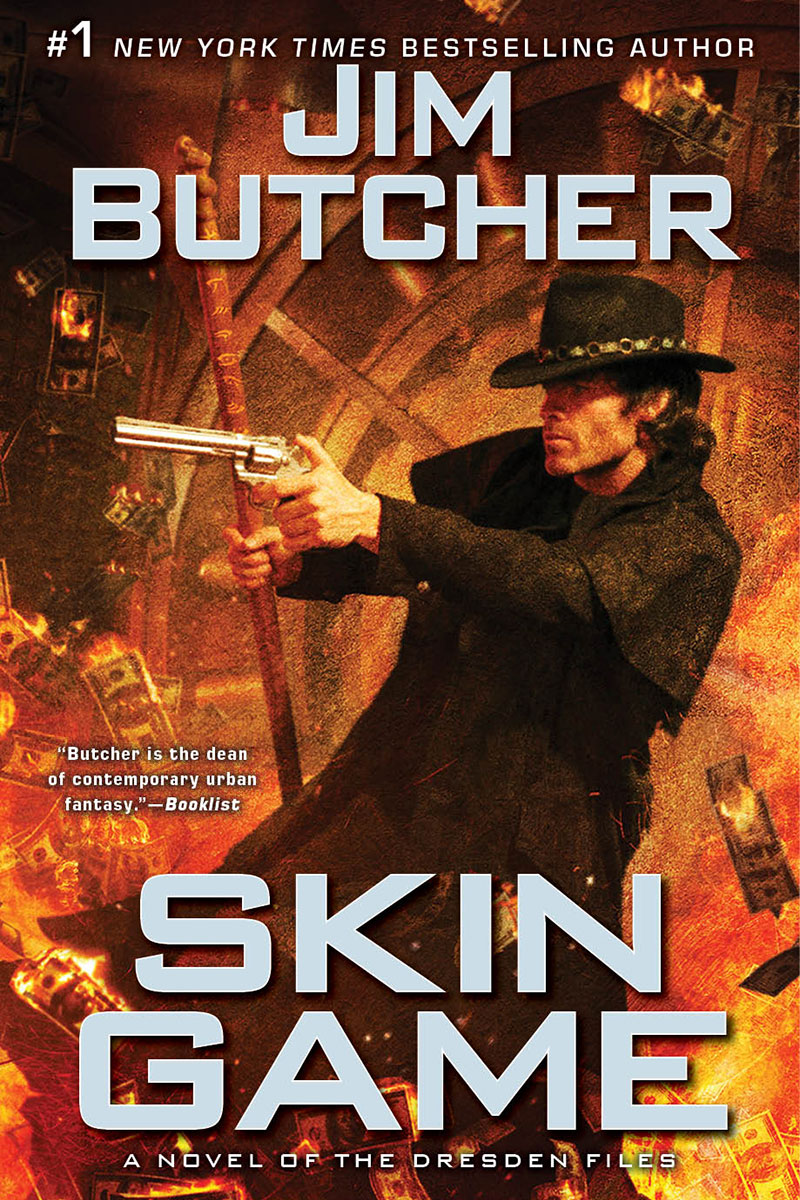
Skin Game

Very belatedly, I finished reading Jim Butcher's Skin Game last night; the 15th and most recent entry in the Dresden Files series, of which I've long been a pretty big fan.  It's unusual for me to be so late in reading an entry in this series (coming up on nearly a year since it was first released) and it's unusual in that I read it very slowly; actually, I had been only about half way through it for the better part of four weeks when I got stuck in a repair shop waiting on new tires, a front end alignment, and replacement ball joint and tie rods (pretty expensive; not recommended if you can help it) for me to plow through about 150 pages and get within striking distance of the finish yesterday.  Once I got there, of course, the book fell into place very quickly.

And it's not because it was a weaker entry in the series.  Proven Guilty and Ghost Story are the weakest entries, and this book is significantly better than either of them.  It may not be as good as some of the best of them either (like Dead Beat, Small Favor, Changes, etc.) but it's a worthy entry.  No, the culprit is more complicated and has everything to do with me.

If you're a fan of the series and haven't read this yet, you should.  I recommend it.

What does it bring new to the table?  Ever since Changes in particular, each volume has had rather dramatic changes to the status quo of Harry's world, his relationships, his friends and enemies.  One thing that I'm a little surprised and disappointed in, however, is that the White Council itself has been largely absent for three books in a row; other than a small cameo of The Gatekeeper in Cold Days that actually has little to do with his membership on the council anyway.  Mab and the Winter Court of Fairies makes, as she has in the last several books, a heavy-handed appearance.  To be honest with you, I'm a little bit fatigued with fairy business in the series, and would like to see a return to... something else.  Anything else.  What about that Jade Court of vampires, huh?  Who are they?  Are we going to find out?  I don't see that changing anytime soon; certainly not before the next book, but maybe we'll be able to see it change in the next book, which is supposedly now going to be called Peace Talks.  Between whom?  The big war of the last few books was between the White Council and the Red Court, and it ended four books ago.

The Denarians feature dramatically, and are dramatically changed too, as a result of this book.  Harry's relationships with Maggie and Murph change dramatically.  And, he has another daughter of sorts, although it's not human, it's an intellect spirit; a kind of young, female version of Bob.  The Knights of the Sword feature importantly, and also see significant change as an organization.

Butcher has shown in several occasions that he's good at crafting really incredible scenes; snippets that have to be read over and over again, because they're just really good and stand out above the rest of the novel, even.  In this case, for me there were two scenes, and both were rather quiet, interpersonal dialogue interactions rather than big action scenes.  When Harry and Maggie first speak was just extremely well-written and emotional.  And when Harry and Hades have an interview together--yes, that Hades--it's another one of my favorite scenes in the book.  I'm actually quite pleased to see Greek mythology finally get its due in the series.  It was overdue.

I'm not going to worry too much about spoiling here, since the book is nearly a year old and anyone who's been following the series has probably already read it.  Rather, let me talk about what I'd like to see coming in the near term for the series.  The plan was, give or take a few books, I suppose, that there would be twenty "case" books followed by a big three-part finale.  That makes for only five more case books.  Of course, the case books have done a lot to set the stage for the finale.  But more needs to be done.

This dalliance with being the Winter Knight and the heavy involvement with the fairies seems like a tangent.  The lack of any kind of contact with the White Council also feels the same way.  I'd like to see Harry (and Molly) find a way to more or less amicably end their fairy involvement and get back into White Council business.  There's still a lot of corruption in the White Council that needs to be rooted out and found.  There's still little--if really anything at all--that we know about the so-called Black Council and Nemesis; heck, we never even suspected such a thing until Cold Days, which also told us little if anything about it.

Although maybe I'm being a little harsh.  One of my friends, Cory "Barsoomcore" Reid once said, of his scary, Ten Who Were Taken like super-villainous characters, that they all believed that they were saving the world.  Sometimes from each other, but certainly from something.  Conversations Harry had with Deidre of the Denarians makes me wonder if they aren't in that same vein.

Anyway, I'm excited to see the series continue.  But I'm excited to see it start going somewhere, which to be fair, it's done a fair bit of in the last five books or so, where major upsets to the status quo which existed for most of the first ten books was verboten.  But I do feel like it's been treading water just a bit with this major fairy side-story.

Monday, March 23, 2015

New m20 Iconics: Gruzia Pazmany

Gruzia Pazmany is an elderly Tarushan woman, and is an almost iconic representation of a witch.  Her personal history is unknown to any but Manoel himself, but it is clear that she has allied herself with Manoel and his team.  Although his other allies (i.e., the other iconic characters) are suspicious of her and disconcerted in her presence, they accept Manoel's recommendation of her.  She lives in the Rua de Xavier house, but appears to only rarely emerge from her own quarters.

Her story, as related to Manoel himself, is a tragic one.  Brought up in a traveling Tarushan Gypsy caravan, her group included a minor vampire as the leader.  She was often fed upon, but not to the point of death (obviously) and was inculcated into the mystic arts by the vampire.  She was also abused in every way imaginable, and lived a life of constant terror.  When her beloved sister was killed by the vampire, she finally had had enough and made use of her magic to disable and then flee from the group.  She was not powerful enough to defeat the vampire, but managed to escape, at least.

Hidden for years in Porto Liure, she was astonished to find that some of her group were in town.  Traveling Tarushan gypsies rarely (if ever) voyaged by ship, but for some unknown reason, the vampire had been drawn to Porto Liure and was attempting to set up shop permanently here.

By this point, Gruzia had made Manoel's acquaintance, and the two of them, along with Manoel's "bodyguard" Ottvar, were able to successfully hunt and eliminate the vampire, one of the seminal events that led to the founding of the group of iconics.

Gruzia is elderly, but not as old as she looks.  Blasted and withered by her use of sorcery, she has now retreated into an advisory role, for the most part, but she will still occasionally involve herself in events as needed.

Character sheet:
Name: Gruzia Pazmany
Class/Level: Expert 3
Race: Human (Tarushan)
Sex: Female
Height: 5'3"
Weight: 105 lbs.
Hair Color: White
Eye Color: Brown
Skin Color: Pale
STR: 9 (-1)
DEX: 13 (+1)
MND: 14 (+2)
Hit Points: 22
Armor Class: 12 (no armor)
Athletics: +4
Communication: +4
Knowledge: +7
Subterfuge: +4
Survival: +4
Melee To Hit: +2 (+4 using light weapons)
Ranged To Hit: +4
Magic To Hit: +5
Wealth on Hand: 33 gp, 1 sp, 14 cp
Weapons: Dagger 1d6 Damage, 50 ft. if thrown
Pistol 2d6 + 1 damage 300 ft.
Other Equipment: Glass bottle, candle, flask, ink, inkpen, hooded lantern, lock, mirror, flint, torch, peasants outfit, Nameless Cults, Eltdown Shards.
Spells: Mind Grab of Shaggai, Eye of the Mi-Go, Withering Blast of the Lliogor, Cryptic Circle of Itrito, Benevolence of Tinar, Binding of the Poltergeist, Phantasmal Mirage of Gaziyet, Hayaz's Rupturing, Breath of Cthulhu, Eyes of Lucifer, Invocation of Ahm I, Tongue of Cadazzo, Blasphemous Piping of Azathoth, Invocation of Ahm II, Hejaz's Cleansing Touch
Notes: An imp serves as her familier

Tuesday, March 10, 2015

The Hex-King

Baal Hishutash in the far north of the Kindattu Mountains, and nearby Tahrah at the mouth of the Mundu River, have apparently lost contact with the rest of the Baal Hamazi cultural area.  Refugees have been streaming southward, and they refer, in vague and garbled rumor, to the return of the first Priest-King; someone claiming to be Hutran Kutir, the semi-mythical founder of the Baal Hamazi Empire.  He's not happy that his empire has fallen apart to squabbling city-states and hordes of nomadic tribal barbarians, and he's dead-set on reestablishing his empire again by force of the sword--and he's not interested in anyone's stories of competing claims to the throne, appeals to freedom and equality, or excuses that this is nothing more than a somewhat prolonged interregnal break.  This empire is his, and he wants it back.  Now.

Of course, those rumors are garbled.  What exactly is going on up north in the last few months, and why?  Although my idea for this predates the rise of ISIS by some years, I see this as a similar phenomena; an idealogue appealing to romantic and nationalistic notions to swiftly conquer and establish a new state in the area, and a threat to the somewhat steady and stable city-states that already exist, as well as any border regions, since this new state is fiercely and violently expansionist.  But, so far it's only taken on an area of rather uninhabitable wilderness; the Hamazi Canyonlands, a large area that today resembles parts of the Colorado plateau, specifically the Canyonlands National Park and Grand Staircase-Escalante National Monument, and the northern Kindattu Mountains, a range of alpine peaks that runs north-south just to the east of the Canyonlands, and the very north of the Indash Salt Sea; a large endorheic sea that would be equivalent to Lake Bonneville.  Because this area is so desolate and inhospitable, in general, this newly established and conquered state has to expand.  The lands of Baal Hishutash can not support a much higher population than already exists there, and Tahrah exists mostly on fishing and trade; it is surrounded by salt flats that are completely non-arable.

Rather than answer directly what the story is with this Hex-King, as he's called, let me explore some possibilities, and then we'll see which of them I like better at some future date when I need to define it.  I see basically three main ideas, although all of them have subtle shades of nuance that can also be applied.

1) Hutran Kutir really did return.  It was prophesied, according to some (although nobody can find where this prophecy was documented, and it may be propaganda generated after the fact) that he would return in the Empire's darkest hour to save it--a. la King Arthur.  The current state of the Empire certainly supports this interpretation, as the Empire has essentially ceased to be entirely, and it would take a new conquering of the now independent city-states to reestablish it.  The mechanism of this return would be unknown, but Hutran Kutir had powerful sorcerous allies, the equivalent of a member of the Heresiarchy, and he may have been able to access magic that enabled him to live indefinitely.  Of course, if that's the case, then where has he been the last several centuries since his reign?

2) Hutrain Kutir has been brought back from the dead.  This is significantly different in scope from the option above; it posits that essentially Hutran Kutir is some kind of revenant, ghost, or other type of undead returned from his tomb in the sand-buried ancient capital of Baal Hamazi.  This isn't necessarily a stretch either; at least one of his rumored advisers during his life was a vampire from Tarush Noptii.

Not that Hutran Kutir even in his normal living state wouldn't be a nightmare tyranny run amok, but this is, of course, significantly worse; an empire of the Undead ruled by an undead Hex-King wouldn't just be a nightmare for the oppressed, it would be a nightmare to any who live.

As an aside, either of the first two means a new, major sorcerer appeared on the scene essentially out of the blue.  This will no doubt significantly impact the delicate balance of power and tense, Cold War-style peace that exists today between the members of the Heresiarchy.

3) A more prosaic option, of course, is that "Hutran Kutir" is an impostor; someone else who merely is using his legacy and his legend to claim power.  This doesn't mean that this impostor is some chump; in fact, if this is the case, most likely it's one of the Heresiarchy posing for the time being as Kutir in an attempt to quickly amass an army of fanatical soldiers and a mortal kingdom of some means.  This will also, needless to say, spark the rest of the Heresiarchy into action once it becomes known what's going on.

Tuesday, February 24, 2015

De/Vision Greatest Hits

In 2013, after their latest full length CD release (Rockets + Swords), De/Vision released a retrospective, 25 Years - Best of Tour.  It has 33 tracks on it.  I'm a pretty big De/Vision fan, and I have all of their regular albums, and manymost, evenof their CD singles and remixes, although I don't necessarily have all of their compilations, live albums, and there's a remix or two out there that I haven't tracked down yet, no doubt.

Anyhoo, I've created my own Greatest Hits list, and because the original CD limits itself to 33 tracks, so have I.  For some songs, I'm picking specific remixes which qualify.  In some of these cases, the remix substantially changes the tone or feel of the song, so another version cannot be assumed to substitute for the one I picked.  Anyway, this is just a semi-random music post, just for fun.  All songs are in alphabetical order by song title, and where it comes from is listed as well.
  1. "Be a Light To Yourself [Paralyzed Remix]" - From The Mix 3.0
  2. "Binary Soldier" - From Rockets + Swords
  3. "Blue Moon '99" - From Remixed (Ltd 2-CD version), but also appears on Blue Moon '99 single
  4. "Boy Toy" - From Rockets + Swords
  5. "Brothers In Arms [Extended Version]" - From Brothers In Arms single
  6. "Deliver Me" - From Monosex
  7. "Digital Dream [Electroclash Mix by DJ Ram]" - From Digital Dream EP
  8. "Dinner Without Grace '98" - From Zehn
  9. "Drifter" - From Monosex
  10. "Drifting Sideways [Gigi D'Agostino Viaggio Mix] - From Underconstruction 3 Remix
  11. "Flash of Life [Melancholic Mix]" - From Popgefahr - The Mix (German version)
  12. "Flavour of the Week" - From n00b
  13. "Foreigner [Original Version]" - From Void
  14. "Hear Me Calling" - From Monosex
  15. "Heart-Shaped Tumor [Neurotic Mix]" - From Heart Shaped Tumor single
  16. "I Regret" - From Fairyland?
  17. "I'm Not Dreaming Of You" - From 6 Feet Underground
  18. "Life Is Suffering" - From n00b
  19. "mAndroids" - From Popgefahr
  20. "Plastic Heart [Renegade of Noise Floor RMX]" - From Popgefahr - The Mix (German version)
  21. "Rage [Mesh-Tantrum Mix]" - From Popgefahr - The Mix (curiously, this version is on both the German and the North American releases)
  22. "Ready to Die [Hearhere Mix]" - From Popgefahr - The Mix (this one is also on both releases)
  23. "Silent Moan" - From Two
  24. "Slaves to Passion" - From Monosex
  25. "Subtronic" - From Subkutan
  26. "Take Me To The Time [Memphis Mix]" - From Remixed (Ltd 2-CD version)
  27. "Try To Forget '98" - From Zehn
  28. "Turn Me On [Rename Vocal Club Mix]" - From Turn Me On  single
  29. "Twisted Story [Rob Dust Remix]" - From Popgefahr - The Mix (both versions)
  30. "Until The End of Time" - From Popgefahr
  31. "We Fly... Tonight [Night Flight Remix]" - From We Fly... Tonight (Remixes) although I have it as a bonus track on my version of Monosex (which for whatever reason, when I ordered from Amazon, I got the Japanese, not the German version of the CD)
  32. "What's Love All About [Kant Kino Remix]" - From Popgefahr - The Mix (North America version)
  33. "Your Hands On My Skin [Sonnet Shuttle Mix]" - From Remixed

Monday, February 23, 2015

Neanderthals in Dark•Heritage

I've done it. I'm trashing the race selection a bit in DARK•HERITAGE and replacing changelings and Neanderthals both with a totally different mechanic.  Both are no considered to be merely cultural differences of the same race.  And both use a slightly modified version of an m20 Orc mechanic that I found and adapted.  I feel that both of the mechanics that I did have didn't really focus enough on the core concept of the race, which now focused through the lens of this Neanderthal Predation Theory as described by Danny Vendramini.  I'm not very interested in his take on the evolutionary psychology aspect of the theory (plus, I find the r/K-selection applied to human evolutionary psychology much more convincing.  I don't necessarily believe Vendramini's theory at all, although I do find it attractive from an aesthetic perspective as applied to fantasy.)  Let me summarize the salient points:

  • Our view of Neanderthals--both from behavior and from appearance, is colored by a strong anthropomorphized lens.  In reality, the Neanderthals were a different species of humanoid, and our attempts to render them as human is flawed from the get-go.
  • In terms of appearance, we have generally done a poor job of rendering the skeleton as if it were any other prehistoric animal, and instead used criminal forensics techniques that are suited to reconstructing humans, not humanoids.  To whit:
    • Neanderthals eye sockets are much larger than humans, meaning that we've made their eyes all wrong in reconstructions.  This also suggests that Neanderthals might have been much more nocturnal in their habits, and could see better in the dark.
    • Neanderthals eye sockets are in a much higher position on the head than in humans.  And their skulls, in profile, have a much more "great ape" like profile than human-like profile.  They look like big-brained chimpanzees.  All of these features combined mean that Neanderthals almost certainly wouldn't have looked very human-like.
    • There's no reason to believe that Neanderthals would have lost their body hair.  No other primate, except humans, have ever done so.  Since Neanderthals lived in the same environment as woolly mammoths, woolly rhinos, cave bears, etc. they almost certainly had thick fur of their own.
  • Although Neanderthals don't have out-sized canines, like most other primates, due to environmental necessity, they were almost certainly nearly obligate carnivores rather than omnivores or gatherers.
  • Although shorter, in general, than humans, they have a much more robust skeleto-muscular system, and were almost certainly significantly stronger.
  • Neanderthal cannibalism is well (although newly) documented.  Their inclination to predate on humans, then, seems easy enough to accept, albeit somewhat speculative.
  • The notion that Neanderthal/human interbreeding is the result of sexual predation is also speculative, but not hard to believe.
I've decided that the Neanderthals of the Cavusto Steppes and the wildlings of the Shifting forest and other temperate forests of the north are merely cultural expressions of the same race, in the same way that kurushi and terrasans are.  Why not?  They're both expressions of the same general idea; savage, dangerous, wild men who are in a sense subhuman.  Having the wildlings be watered down werewolves or the Neanderthals being guerilla fighters can all be done as cultural.

I'm going to say that due to generations of wife-stealing from human populations in the forests up north, that genetically the Neanderthals of the north are less ape-like and more human-like in their appearance, although they maintain a purer cultural approximation to the Neanderthal ancestral position.

Also; Neanderthal is a name that is rooted in the real world, being named, of course, for the actual Neanderthal, or Neander Valley, Neander being a Grecized version of the German name Neumann.  Neanderthal literally means Neumann's Valley, and of course, makes no sense as a label in DARK•HERITAGE itself.  Names used to describe them in setting include woses (especially wood-woses in the north, where they are boreal in habitat most often), sasquatches, wildlings, and man-apes.

The revised rules in m20 (which means that I'll need to update the document again, sigh) are as follows:

  • Neanderthals, regardless of place of origin, gain a +4 to their STR stat and -2 to their MND stat.  They also gain as well as a +1 to their Survival skill, and -1 to their Communication skill.

Friday, February 20, 2015

Neanderthals in the setting

I've long had Neanderthals as a race available in DARK•HERITAGE.  I've long gone for a very anthropomorthic interpretation of Neanderthals, which is the default, really.  Images published recently by National Geographic and others support this view.  See below:


But what if that's wrong?  What if that's optimistic, in fact?  What if the Neanderthals were very, very different?


Not sure if I will change the interpretation of Neanderthals in my setting or not, but I have to admit, this new interpretation is... really, really interesting.  I might!  The only reason I would maybe consider not doing it, is that it essentially overlaps the wildling race that I already have.  I'm not sure that I have a need for both.  But that was already kind of true anyway.

Thursday, February 19, 2015

New m20 Iconics: Faraaz Al-Hasib

Jann in Porto Liure are somewhat rare.  Many of them are more associated with the port's rival city, Sarabasca.  But many pirates, merchants, and other assorted adventurous types call no port home, necessarily, and thus jann do wander the streets of Porto Liure in small numbers.  Often sticking together, they are not politically important, but due to their exotic accents, cuisine, dress, and their association with a rival super-power to the eastern end of the Mezzovian, they often tend to attract more attention than they'd wish.

This is not the case for Faraaz Al-Hasib.  Al-Hasib is comfortable being the center of attention, and in fact, that is his favorite place to be.  He's been in Porto Liure since he was a very young boy, actually, and has never called anywhere else home, although he was brought on a ship from Sarabasca by his mother at some point, who was fleeing a husband who had decided to have her and her son killed so that he would be free to remarry.

It turns out this did not help in the long-run, as her husband was publicly humiliated by her flight, due to the cultural traits of the jann in Sarabasca.  His influence faded, his desired new bride was spirited away from him by her family, who no longer wished to ally themselves with him.  He was forced to spend much of his fortune tracking them down in an attempt to regain sufficient honor to recover socially in Sarabasca.

But Al-Hasib's mother was not idle.  On arriving in Porto Liure, the first thing she did was spend the portion of her fortune that she was able to abscond with having young Faraaz trained by master fencers, politicians, and others--trained to navigate treacherous waters.  He was also enrolled in religious schools, and even swore vows and was ordained as a minor vicar or curate.  It took five years, but in Faraaz's 16th year, his mother was found by a bounty hunter.  By now, Faraaz was a skilled fencer, among other things, and he killed the bounty hunter in a fiery duel fought in the streets and witnessed by many.  Three months alter, Faraaz's father himself came searching for him, and Faraaz was forced to kill him in a duel as well.

That was now nearly ten years ago, but as a still young man in his mid-twenties, Faraaz has enjoyed his reputation about town as a dangerous fencer.  On the death of his father, a not inconsiderable fortune was passed to him, although he has gambled or some of it away, spent a good deal more on an elaborate funeral and mausoleum for his mother when she passed away of natural causes a few years later, and the rest he keeps saved, living off of interest and speculation when he can.

Alone among the group that fights The Shadow, he is neither overly afraid of it, nor is he touched by any tragedy or trauma.  Although he practices his religious vows very little, he feels confident that his vestments offer him some degree of protection from the supernatural.  Manoel Vaz do Camões is worried that Faraaz is overconfident and reckless, in particular with his use of some sorcerous incantations, but so far he has kept his worries mostly to himself, and Faraaz is too head-strong to listen to his warnings anyway.  However, Manoel keeps a careful eye on Faraaz, to make sure that he doesn't slip over into becoming one of the group's targets if he falls from his place.

Character sheet:
Name: Faraaz Al-Hasib
Class/Level: Fighter 3
Race: Jann
Sex: Male
Height: 5'11"
Weight: 185 lbs.
Hair Color: White
Eye Color: Yellow
Skin Color: Red
STR: 10 (+0)
DEX: 18 (+4)
MND: 11 (+0)
Hit Points: 29
Armor Class: 21 (medium armor)
Athletics: +6
Communication: +3
Knowledge: +3
Subterfuge: +3
Survival: +3
Melee To Hit: +8 (using light weapons)
Ranged To Hit: +8
Magic To Hit: +4
Wealth on Hand: 33 gp, 20 sp, 4 cp
Weapons: Rapier 1d6 damage
Dagger 1d6 Damage, 50 ft. if thrown
Pistol 2d6 + 1 damage 300 ft.
Other Equipment: Breastplate (medium), glass bottle, candle, priest's vestments, noble's outfit, flask, ink, inkpen, hooded lantern, lock, mirror, sealing wax, signet ring, spyglass
Spells: Peal of Clanging Woe, Eye of the Mi-Go, Cushion of the Shantaks, Voice of the Ghost, Grip of the Bloodspawned
Notes:

Tuesday, February 17, 2015

Fadwerk!

Heh.  Nice.


The Academy at Porto Liure

The Academy is one of the districts, or neighborhoods, of Porto Liure, the signature setting of DARK•HERITAGE.  It is, of course, a place of learning, but it is also more than that.  It is also an entire community.

Established by a charter almost 150 years ago, when Porto Liure was still a newly christened independent city-state, having won its independence through attrition from a tired and disinterested fading Terrasan Empire, the Academy is one of the oldest institutions in Porto Liure.  The "Father of Porto Liure," Jacobo Bernat, saw the Academy as one of a few key elements necessary in the long term to establish the legitimacy of Porto Liure as something more than a pirate haven, a "wretched hive of scum and villainy," and he made very generous offers to notable academics and experts in various fields to emigrate to the city to help found it.

In addition, he saw the Academy as a tool that could benefit the city more directly.  The children of young elitists, the core of the new nobility of Porto Liure needed to be taught in Geography, History, Military Theory, Politics, Theology and more.  There is also a cadet department, where the soldiers and sailors who represent the city itself are trained.  For the most part, this is now where the officers of the Watch and the Navy are trained.

Each of the subjects above has their own Hall on the Academy grounds, which are surrounded by a wall, and are secured by armed guards.  Each Hall has offices, lecture halls, and a library.  Most of the faculty live attached to their Hall as well, in spacious dormitories.

In addition to these facilities, there are a number of dormitories for students.  More and more, students are elitists, the children of rich industrialists, shipping magnates, or the nobility, and more and more they come from all over the Terrasan sphere of influence to study at the Academy.  To be fair, most of these students aren't necessarily interested in furthering their education, but going abroad to study is a prestige activity, and signals to their peers that they have the money and influence to send their sons--and sometimes even daughters--to Porto Liure to enroll in the Academy.

In addition to the departments, there are a handful of "independent" professors and researchers on staff, many of whom teach one-off courses in more esoteric fields of knowledge.  And there are even some who teach nothing, but who have managed to become almost "celebrity scholars" who do research that brings a great deal of prestige to the university. One example of the latter is the explorer Barral Pessagnoz, who spent six months trapped in Isin, first described the Wose Basin and the Tether and explored ruins near Eltdown.  His colorful travelogues have been published all over the Terrasan sphere and have been very popular.

Although it's kept officially quiet, rumors persist that there are "hidden colleges" within the Academy; a college and faculty devoted to sorcery and witchcraft, for instance, with a Hall that is based underground in spacious tunnels and caverns.  To most, this is part of the charm of Porto Liure, the Port of Ghosts; the notion that superstition and rumors abound.  Of course, to others, the threat is best taken more seriously.  It is true that spoiled and entitled students are prone to get involved in all kinds of things that should be left alone, and that the dregs of Porto Liure are lives not worth much to the officials of the city, or anyone else, but are sacrifices really made in chambers below the Academy meant to summon daemons from the Realms Beyond?  Despite official denials, the rumors persist.


Friday, February 06, 2015

Correcting the propaganda about the Crusades

Great article.  I always love a good historical treatment.  And I'm not even Catholic!  Although I find myself more and more sympathetic to Catholics in recent years than I used to be.

http://www.catholicculture.org/culture/library/view.cfm?recnum=4461

Wednesday, February 04, 2015

An interesting facebook exchange...

Normally, I don't do these kinds of posts, but .... man, I just can't resist.  Don't be this guy.  Please.

In a discussion about vaccinations on Facebook, this is the last part of an exchange.  The name of my .... fellow discourser is changed to protect the pitiable.

Let me set the stage.  First off, I'm in favor of vaccines.  I like 'em. I have 'em.  My kids have 'em.  But I'm not in favor of ignorance or propaganda, especially when, as we've seen in the news recently, it's being used as a peer pressure bludgeon, or to influence public debate in such as way as to cede more of our freedom to the bureaucratic tyrants of the government.

So, I pointed out the following:


Joshua Dyal To add more grist to the debate; measles cases in the US dropped 91.5% in 1960. TWO YEARS before the vaccine was available. 

The notion that the vaccine led to the near eradication of the disease, sadly for proponents of government coerced vaccinations, is not supported by the evidence.
5 hrs · Like

Joshua Dyal http://jid.oxfordjournals.org/.../189/Supplement_1/S1.long

We use cookies to enhance your experience on our website. By continuing to use our website, you are...
JID.OXFORDJOURNALS.ORG
5 hrs · Edited · Like · Remove Preview

Joshua Dyal  AND.... in spite of the scary pictures, I've spoken with about half a dozen people who have memory of the time before measles vaccinations in the last day or so. All of them said getting measles was a right of passage; almost everyone got it, and it wasn't much scarier than getting the flu.

Polio, on the other hand, was scary.
5 hrs · Like

Some Guy  "Although the first 2 elimination efforts did not achieve elimination, they resulted in a substantial reduction in measles incidence: An average of 1.3 cases per 100,000 population was reported during 1982–1988, compared with an average of 313 cases per 100,000 during 1956–1960 (figure 1). Nevertheless, a resurgence of measles occurred during 1989–1991, again demonstrating the serious medical burden of the disease. More than 55,000 cases, 123 deaths, and 11,000 hospitalizations were reported [7]. Two major causes of this epidemic were vaccine failure among a small percentage of school-aged children who had received 1 dose of measles vaccine and low measles vaccine coverage among preschool-aged children. "
2 hrs · Like

Some Guy "On the basis of the lessons learned from the measles resurgence and the first 2 elimination efforts, the elimination strategy for the third effort was refined. Four major lessons were learned. First, high coverage with the first dose of measles vaccine is required by age 2 years to prevent measles in preschool-aged children. Second, school students require especially high levels of immunity because of their high risk of exposure to measles. Higher immunity can be achieved with 2 doses of measles vaccine. Third, well-implemented state requirements for immunization are very effective in achieving high 1-dose measles vaccine coverage among students (requirements that were amended to achieve high 2-dose coverage). Fourth, molecular epidemiology is a powerful tool for tracking measles virus strains and for identifying potentially endemic strains [10]."
2 hrs · Like

Some Guy Your study Joshua....
2 hrs · Like

Joshua Dyal What about it? I did the math based on the numbers presented. Did you? The number of cases reduced over 90% prior to the introduction of the vaccine. Therefore, the measles vaccine can hardly be credited with the elimination of the disease. Some selective quoting doesn't change that.
2 hrs · Edited · Like
Some Guy it's not selective. It's vital. You ignoring the actual findings of the study and pretending it supports your claim. Which a quick read of the study shows that it does anything but that.
2 hrs · Like

Joshua Dyal No, I'm reacting to the data and ignoring the commentary. You're doing the opposite.

One is the scientific approach. The other.... well, it is not.
2 hrs · Like
Some Guy sure thing
2 hrs · Like


Joshua Dyal Fine. Then answer this: if the vaccine is so crucial to the containment of measles, explain how the number of cases dropped by over 90% in the ten years or so PRIOR to the introduction of the vaccine. Rather than focusing on the red herring of what happened since then, just explain that phenomena.

I'll tell you one thing: the answer is NOT in the study. It made no effort whatsoever to address that. Your reading of the study has nothing whatsoever to do with the reason I linked it, which was to highlight that particular data point. You're distracted by the study's commentary and ignoring the actual crucial data point, which it doesn't discuss.

But it's there nonetheless.
2 hrs · Edited · Like

Some Guy Have you read a scientific survey? The written part explains the numbers. The two are not independent. Try reading something before posting it and making yourself look like a fool.

    The study says that nutrition and improved healthcare are the reasons for the decrease.
    2 hrs · Like


      Joshua Dyal Heh. Yes, frequently. Have you ever interpreted data, or do you always simply rely on the canned interpretation provided to you? I promise, although you may not see it, I am not the one looking like a fool. The logical formula is quite simple: 1) over 90% of the reduction in measles cases occurred between 1956 and 1960. 2) the measles vaccine was not available until 1962. 3) unbelievably, I have to spell this out apparently, but ergo it is impossible to credit the measles vaccine with the reduction in measles cases. At best, it can be credited with cleaning up the little that was left after measles had already been rendered a non threat in America. That may not have been the point that the author of the paper was attempting to make, but it is clearly an unavoidable conclusion of the data anyway.
      2 hrs · Like

        Some Guy Wow you found something that is so obvious that even the scientists who wrote this survey didn't see it. You should call their academic institutions and report them for making super basic mistakes.

        Face it, you're making stuff up in a sad attempt to save face.
        2 hrs · Like


          Some Guy What figures or charts are you referring to?
          2 hrs · Like

            Some Guy Where are you getting these numbers that are so radically different than those who performed the survey reported?
              2 hrs · Like
              Joshua Dyal Are you for real? Are you sure you read the study? Or did you just skim and and gloss over the numbers and the dates? You're now demanding that unless I reproduce them in graphical form--preferably in bright primary colors, no doubt--that you will refuse to understand it?

              Let me spell out in childishly simple terms the thrust of my argument, backed up with numbers from the article I linked (which was the reason I linked it, foolishly believing that those who read it would have a reading comprehension greater than your average box of rocks):

              1) Prior to 1956, per the introduction to the study, roughly 4 million Americans contracted measles each year.

              2) Between 1956-1960, just over half a million cases were reported annually. Surely, even you can see that is a dramatic drop.

              3) Similarly measles related deaths plummeted from an average of 5,300 annually between 1912-1916 to 450 annually between 1956-1960; the 91.5% decrease I referenced earlier. And that is unadjusted for the substantially higher population--adjusted, it's much higher (but I'm not going to bother with it, because the lower number is still sufficiently dramatic to prove my point.)

              4) In 1962 the measles vaccine is introduced and approved by the FDA.

              5) The study references three measles eradication efforts and subsequent spikes that postdate the advent of the vaccine. NONE OF THESE SPIKES ever rise to anywhere close to the 1956-1960 numbers. In fact, in the 1989-1991 "spike" he refers to as the worst of them, the numbers are, averaged per year, 18,000 cases reported and 41 deaths. Again; compared to over half a million and 450 respectively during 1956-1960 and 4 million and 5,300 respectively in the Teens.

              6) In 2004 this paper is written, discussing the efforts to use the vaccination to eradicate the last few percentage points which remained after over 90% of the cases had ALREADY been PERMANENTLY REMOVED FROM THE SYSTEM SEVERAL YEARS PRIOR TO THE INTRODUCTION OF THE VACCINE. The author makes NO EFFORT to explain away the fact that measles had already had a greater than 90% retreat PRIOR to the vaccine; he merely points that out as a matter of historical context.

              7) A few hours ago today, I post a link to this study, not to discuss the efforts to eradicate the disease--even though admittedly that is the main point of the paper, but to point out that it had already had an incredible decrease PRIOR to the advent of the vaccine, which proves conclusively that the vaccine cannot be credited with the reduction in the disease in the US, barring some kind of time dilation that's unknown to our current understanding of physics where the vaccine eliminates the disease BEFORE the vaccine even exists.

              Normally, I wouldn't mind just pointing this out to anyone who doesn't see the implications on their own in a friendly manner, but you've been so unrelentingly smug, arrogant, and condescending, plus for some reason you decided it was a good idea to call me a liar, that I'm happy to take your petard, which you've so blissfully ignorantly offered me, and hoisted it away. All of these numbers are in the first (admittedly longish; maybe you got distracted) paragraph of the article. I hesitate to speculate, but I can only presume that you skimmed through the article, glossed over both numbers and dates without even registering them at all, read the efforts to reduce the last few percentage points of measles cases and--rather spectacularly, I might add--jumped to the fallacious conclusion that I was somehow making up both my numbers and my analysis, because you are either incapable or unwilling to understand data, numbers, dates, or even most text, and can only chew on pre-digested commentary spoon-fed directly to you.

              I freely admit that some schadenfreude, even of those who are REALLY asking for it isn't exactly a Christ-like attribute. But I never claimed to be perfect. I merely claimed to be able to read, and make logical conclusions from the information I read.
              50 mins · Edited · Like

                Some Guy You are a lost cause.
                25 mins · Like


                  Joshua Dyal Sigh. I'm wasting my time. Even at the elementary school level summary, you're not tall enough for this ride.
                  13 mins · Like